
Home Nurse vs Medical Attendant at home in Kolkata: Which One Does Your Family Actually Need?

Ask ten families in Kolkata what the difference is between a home nurse and a medical attendant and most will give you a vague answer, or the same answer for both. It's an understandable mix-up. Both show up at the house, both wear some form of uniform and both are there because someone can't manage entirely on their own anymore.
The confusion usually surfaces at the worst possible time, right after a hospital discharge, when a family is asked to arrange care within a day or two and has no real framework for what each role can and can't do. This piece exists to fix that gap. At Avante Health, we get variations of this question constantly, so here is a straightforward look at what separates home nursing services in Kolkata from medical attendant support and how to work out which one your family actually needs.
What a Home Nursing services in Kolkata Actually Handles
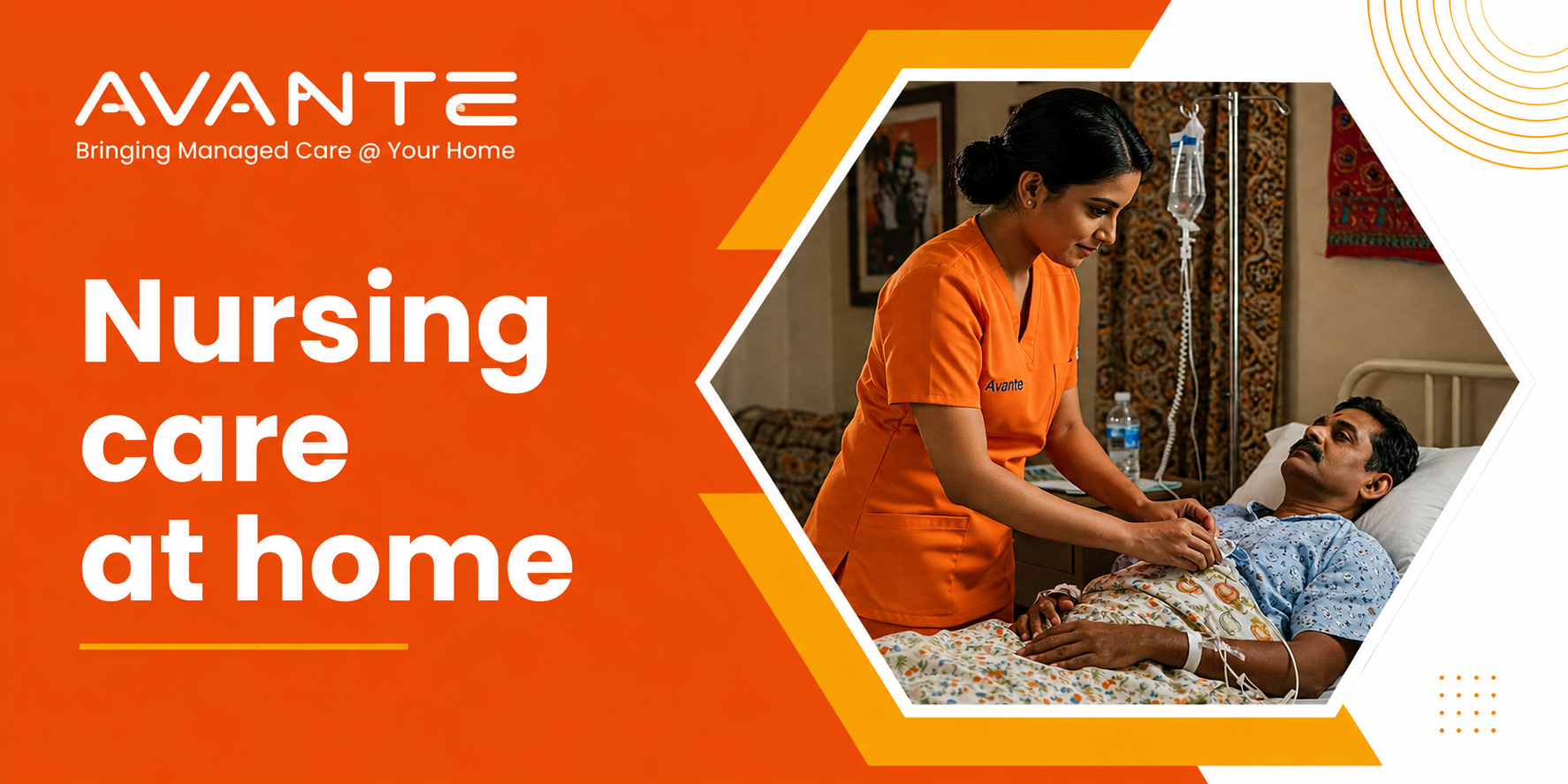
A Home Nurse is a licensed professional clinical nurse and all other considerations stem from this alone. They have the capacity to provide patients with injections, handle IV drips, bandage injuries, keep track of vital signs with a clinical perspective and not just generally and spot complications before taking action instead of reporting them.
This is the person you want handling an IV drip at home in Kolkata, a catheter change, or medication that needs to be timed and dosed precisely. Nurses also communicate directly with the treating doctor, translating what's happening at home into language the physician can use to adjust a treatment plan, something a non-clinical caregiver isn't trained or authorised to do.
What a Medical Attendant at Home in Kolkata Actually Handles
A medical attendant at home in Kolkata, sometimes called a bedside assistant, covers the physical and personal side of caregiving. Bathing, dressing, feeding, helping someone move from bed to chair, keeping a bedridden patient repositioned so pressure sores don't develop, these are the daily, hands-on tasks that take up hours rather than minutes.
Nothing is any less important than the clinical aspect of healthcare. This is simply another area of expertise. An excellent attendant is trained in safe handling techniques, basic hygiene procedures and recognizes symptoms severe enough to alert the family or the supervising nurse of them. This person doesn't, however, perform any procedures that fall under the category of medicine.
The Line Between the Two and Why It Matters
Simply put, the nurse does the treating while the attendant assists. The nurse could inject or deal with wounds; the attendant helps the person dress and stays by their side throughout the night. Vaccination of the elderly at home in Kolkata is one instance where the distinction can be drawn. There is a decision involved regarding dosage, location and post-injection monitoring, which means this is a nursing procedure, not the responsibility of a medical attendant.
The importance of that statement lies in the fact that mistakes here result in tangible harm. Using a patient care assistant where wound dressing or drug dosing is required does not address the medical need. Using a nursing team where all that is needed is company, mobility aid and a person to stay overnight is usually more expensive than necessary.
When You Need One, the Other, or Both
Plenty of situations call for just one role. A patient recovering from a minor procedure who is mobile and stable might only need an attendant for a couple of weeks. A patient who needs daily wound care but is otherwise independent might only need scheduled nursing visits and nothing more.
A lot of real cases sit in between, though and that's where combining both roles makes sense. Post hospitalisation care at home in Kolkata often works this way: a nurse handles medication, monitoring and any procedures, while an attendant manages the day-to-day physical support so the patient isn't left alone for long stretches. The same logic applies to palliative care at home in Kolkata, where clinical symptom management from a nurse runs alongside the attendant's role in keeping the patient comfortable and looked after around the clock.
Chronic conditions have almost the same sequence in a much longer period of time. A patient suffering from diabetes or heart disease needs a nurse’s assistance several times a week while the attendant covers other daily activities.
A Mistake Families Often Make
One pattern comes up again and again. Families assume a broader home care service in Kolkata will automatically sort out which professional does what and skip explaining the actual medical situation clearly at the start. That gap in information is usually where mismatched care happens, not because the provider doesn't know the difference, but because nobody asked the right questions at intake.
The fix is simple, if a little unglamorous. Before arranging either service, write down exactly what the patient needs done each day, medically and physically and hand that list over. A reasonable provider will tell you plainly whether that calls for a nurse, an attendant, or a combination, rather than defaulting to whichever service happens to be easier to staff that week.
How Avante Health Approaches This
With Avante Health, there is no attempt to make nurses and medical attendants interchangeable. From the outset, we begin by taking an assessment of the clinical and physical requirements of the patient and build the treatment plan around those.
It could be the nurse for the IV drips and monitoring or the attendant for the daily care or even the two of them working in tandem, but one thing is for sure: we will continue to be in touch via the treating doctor and the follow-ups rather than leaving everything in the hands of a caregiver and disappearing from the scene. Trying to understand what is the exact requirement of your family? Dial +91 8100 6363 73 or drop an email to [email protected].
Frequently Asked Questions
1. Can I change from a medical attendant to a home nurse if the patient's condition changes?
Yes. If a patient's medical needs increase during recovery, the care arrangement can be reassessed. A nurse can be added when clinical procedures, closer monitoring, or medical assistance become necessary.
2. Can home nursing and attendant care be arranged for different durations?
Yes. Care needs may range from several hours of assistance on a daily basis to 12 hours, 24 hours, or overnight care. This can be planned depending on the condition and dependency of the patient.
3. What information should I provide when arranging home care?
The provider needs to know the condition of the client, his/her medications, mobility levels, hospital/surgery history, necessary medical treatment and types of personal assistance required by the patient.
4. Can home care continue after a patient's condition improves?
Yes. The level of care may change depending on how independent the patient becomes. For instance, the level of attendant care may be reduced as the patient recovers.
5. Can family members coordinate with the nurse or attendant during home care?
Yes. The relatives will still be able to play a role in the health of the individual and inform the designated healthcare practitioner of any developments that may have occurred.


