

A garden rarely fails all at once. It drifts: a bed gets watered a little too often, a shrub misses its pruning window, mulch thins out unnoticed, and by midsummer the whole yard looks tired without any single dramatic cause.
A simple seasonal plan prevents that drift. The gardening tips and plant care guides at Zoned Garden walk through each job in detail, and this plan arranges the essentials into four short routines that repeat every year.
Spring: Wake the Beds Up Gently
Start by clearing winter debris from beds and borders. Fallen leaves and dead stems shelter slugs and fungal spores, but clear them on a dry day so you are not compacting wet soil with every step.
Cut back last year dead growth once new shoots show at the base. Cutting too early removes the plant own frost protection, while cutting too late wastes the energy it spent pushing through old stems.
Feed the soil before feeding the plants. A layer of compost worked into the top of the beds improves structure, drainage, and moisture holding all season. Soil that is alive and crumbly makes almost every later job easier.
Settle the Watering Early
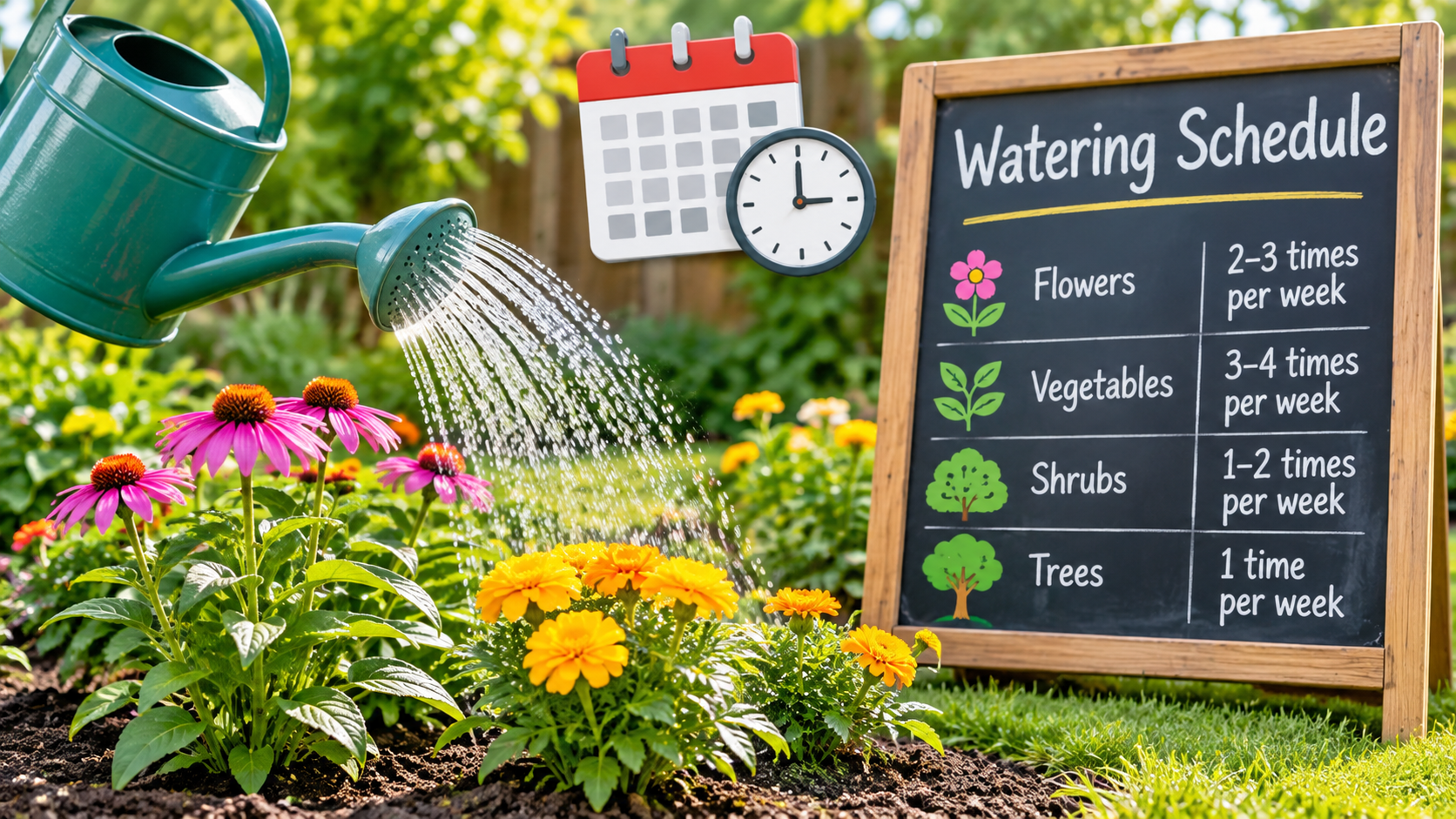
Most garden watering problems are habit problems. Deep watering once or twice a week trains roots to grow downward, where moisture lasts. A light sprinkle every day does the opposite and leaves plants dependent on you showing up daily.
Water in the morning when you can. Leaves dry quickly in the rising sun, which lowers disease pressure, and less water is lost to midday heat. Evening watering is second best, and midday watering in strong sun is mostly waste.
Group thirsty plants together when you plant something new. A bed where everything wants similar moisture is simple to water well, while mixed beds guarantee that something is always too wet or too dry.
Summer: Mulch, Watch, and Harvest Often
Mulch is the hardest working material in a summer garden. A layer of organic mulch around plants holds soil moisture, cools roots, and suppresses weeds before they start. Keep it a few centimetres away from stems so the crowns stay dry.
Walk the garden with a drink in hand a few evenings a week. That relaxed patrol spots aphid clusters, mildew patches, and wilting pots days before they become emergencies. Most pest problems are cheap to solve in their first week and expensive in their fourth.
Pick vegetables and cut flowers little and often. Plants that are harvested regularly keep producing, while plants left holding ripe fruit or fading blooms read it as a signal to slow down and set seed.
Autumn: Put the Garden to Bed Properly
Autumn work decides how spring feels. Plant spring bulbs while the soil is still warm enough for roots to settle, and move or divide crowded perennials so they start next year with room to grow.
Leave some seed heads and sturdy stems standing for birds and overwintering insects. A garden cleared to bare soil in October looks tidy for a week and offers nothing to wildlife for five months.
Spread compost or leaf mould over empty beds before winter rain arrives. Worms pull it down through the cold months, and you inherit richer soil in spring without any digging at all.
Winter: Plan More Than You Plant
Winter is the planning season, and planning is real gardening work. Note which plants earned their space this year and which ones sulked in the wrong spot. A plant in the wrong place will never thrive no matter how well you feed it.
Order seeds and bare root plants early, while the full choice is still available. The popular varieties sell out, and late orders turn into whatever is left rather than what suits your soil and light.
Service the tools. Clean, sharpen, and oil pruners, spades, and shears now, and spring starts with equipment that feels new instead of a rusty reminder of autumn good intentions.
Match Plants to Their Zone
Every garden sits inside a climate zone, and planting inside yours removes half the struggle before it starts. A plant rated for warmer zones may survive a mild winter in yours, but survival is not thriving, and it will demand covers, shelter, and luck every cold year.
Check the zone rating on every label before you buy, not after you plant. Nurseries stock what sells, and what sells is not always what suits your winters. Five minutes of checking saves a season of nursing a plant that was never going to settle.
Soil and light matter just as much as temperature. A sun lover in shade grows leggy and flowers poorly, while a shade plant in full sun scorches by June. Read the spot first, then choose the plant that wants exactly that spot.
Keep a Short Garden Notebook
The gardeners who improve fastest write things down. Note the date a bed was planted, which variety produced best, and where the frost settled first in autumn. Memory quietly rewrites all of this by next spring.
Photographs help even more. One picture of each bed each month builds a record of growth, gaps, and colour clashes that no written note matches. Reviewing last year photos while ordering seeds stops you buying plants you already own.
Small Jobs, Done in Season
None of these routines is long, and that is the point. A garden kept in season asks for short regular attention instead of heroic rescue weekends. Follow the year in this order and the yard stays healthy, productive, and pleasant with far less effort than most people expect.


