
Why Professional Carpet Cleaning Is Different From Regular Vacuuming

A carpet can look clean after a thorough vacuuming session, yet still hold onto dust, stubborn stains, unpleasant odors, and other unwanted debris. That is because the dirt visible on the surface represents only a small part of what can collect inside carpet fibers over time. Regular vacuuming helps maintain appearances, but it does not provide the same level of cleaning as a professional treatment.
Understanding the difference between routine carpet care and professional carpet cleaning can help homeowners make better decisions about maintaining their floors. Both methods serve an important purpose, but they address different cleaning needs. Knowing what each one can accomplish makes it easier to keep carpets looking attractive, feeling comfortable, and lasting longer.
Vacuuming Handles Surface Dirt, Not Every Layer of Your Carpet
Vacuuming is one of the simplest and most effective ways to maintain a carpet between deeper cleaning sessions. It removes loose particles such as dust, crumbs, pet hair, and everyday debris before they become more deeply embedded.
However, carpet fibers are designed to trap particles. Their textured structure can hold onto fine dust, oily residues, and small contaminants that ordinary vacuuming may not completely remove.
Even a powerful household vacuum has limitations. Its performance depends on factors such as suction strength, brush design, carpet thickness, and how frequently the area is cleaned.
For example, a living room carpet might look perfectly presentable after vacuuming, but areas beneath furniture or along frequently used walkways may still contain accumulated soil.
This is why vacuuming should be viewed as routine maintenance rather than a complete solution for carpet care.
What Makes Professional Carpet Cleaning Different?
The biggest difference is the depth and method of cleaning. Professional carpet cleaning uses specialized equipment, appropriate cleaning solutions, and techniques designed to address soil that ordinary household equipment often leaves behind.
Rather than concentrating primarily on loose surface debris, professional methods target contaminants lodged deeper within the carpet.
Specialized Equipment Reaches Deeper
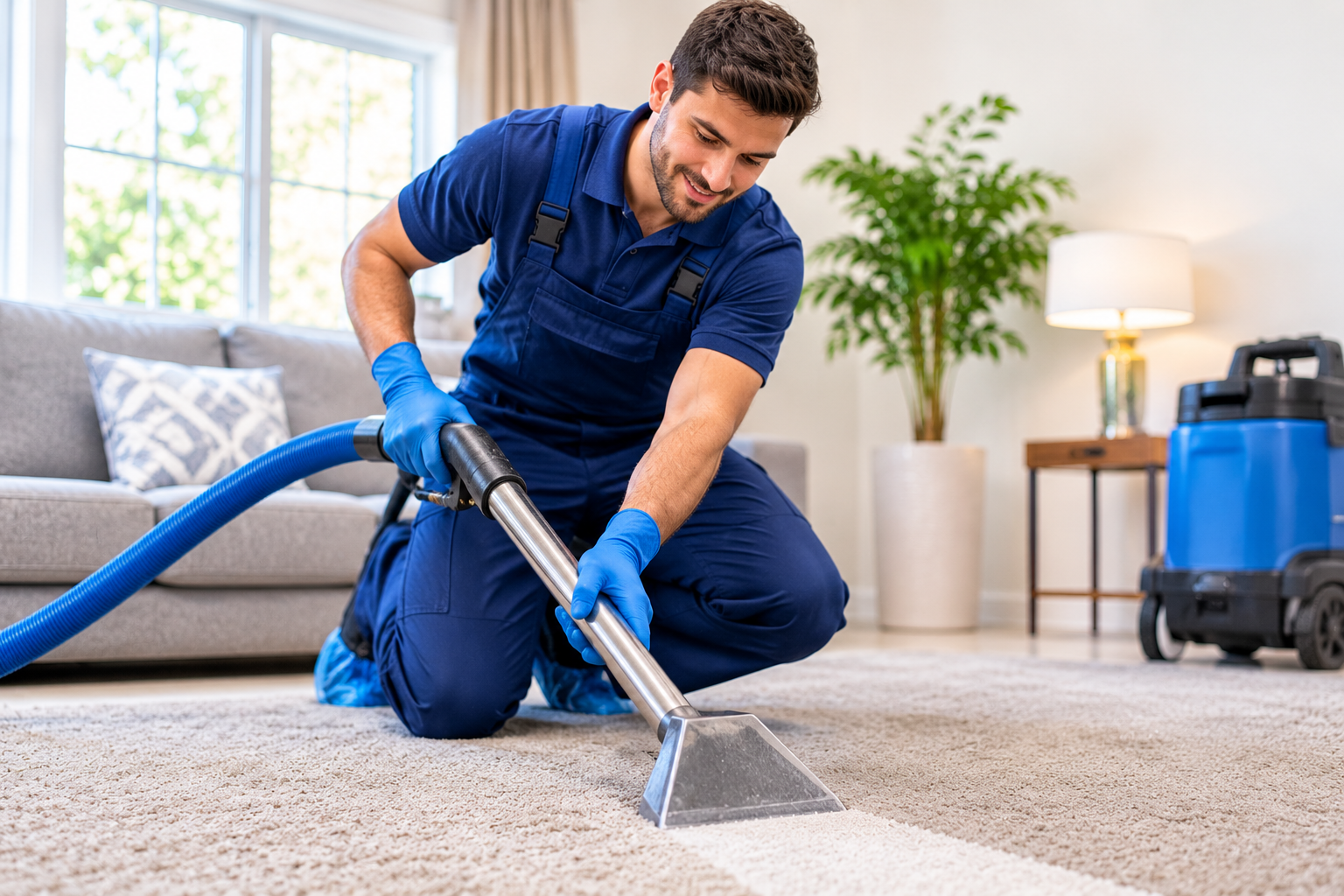
Professional carpet cleaning equipment is generally more powerful than standard residential vacuums. Depending on the cleaning method, technicians may use hot water extraction machines, specialized agitation equipment, and commercial-grade extraction systems.
Hot water extraction, for instance, involves applying a suitable cleaning solution, loosening embedded soil, and extracting the resulting moisture and debris.
The process helps remove accumulated contaminants that routine vacuuming cannot effectively reach.
Not every carpet requires the same treatment. A technician should consider the carpet's material, construction, condition, and manufacturer's care recommendations before selecting a cleaning approach.
Cleaning Solutions Address Different Types of Soil
Household vacuums remove dry particles, but they cannot dissolve greasy residues or break down many types of staining.
Professional carpet treatments can use cleaning solutions formulated for particular soil conditions. These products help loosen substances that have bonded to carpet fibers.
For instance, a dining room carpet may collect food spills and oily residues, while a hallway may accumulate soil carried inside on shoes. Each situation can require a different cleaning approach.
Using the right product matters because an unsuitable chemical or excessive application can leave residue or damage sensitive carpet materials.
Why Carpets Can Look Clean but Still Need Deep Cleaning
One of the most misleading aspects of carpet maintenance is appearance. A carpet does not necessarily need to look visibly dirty before it benefits from a deeper cleaning.
Some forms of buildup are difficult to recognize without examining the fibers closely.
Embedded Dust and Everyday Particles
Fine dust can settle between carpet fibers, particularly in rooms that receive frequent foot traffic. Household activities, open windows, footwear, and moving furniture can all contribute to the accumulation.
Vacuuming removes much of this material, but particles trapped deep within dense carpet construction may remain.
Over time, this buildup can contribute to a dull or worn appearance.
Pet Hair, Dander, and Lingering Odors
Homes with pets often face additional carpet maintenance challenges. Hair, dander, muddy paw prints, and occasional accidents can introduce different types of contamination.
Vacuuming is useful for removing loose hair, but it may not completely address odor-causing residues left behind by spills or accidents.
A suitable deep-cleaning treatment can help remove these residues, although some severe stains and persistent odors may require specialized treatment.
Residue From Previous Cleaning Attempts
Sometimes, carpets become dirty again surprisingly quickly after a homeowner attempts spot cleaning.
One possible reason is leftover detergent. Applying too much cleaning product or failing to remove it properly can leave a sticky residue that attracts additional dirt.
Professional cleaning can help address this problem through appropriate rinsing and extraction techniques.
The Difference Becomes Clearer in High-Traffic Areas
Not every part of a carpet experiences the same level of use. Entryways, hallways, staircases, and living room walkways generally collect more soil than quieter areas.
These sections deserve particular attention because repeated foot traffic can push debris deeper into the carpet.
Consider a hallway carpet that receives daily use. Even if it is vacuumed several times a week, its central walkway may gradually become darker than the areas along the walls.
Vacuuming helps remove loose debris, but deeper cleaning may be needed to address accumulated soil and restore a more consistent appearance.
Professional attention can be particularly useful for:
- Hallways and entryways: Areas exposed to outdoor dirt and frequent foot traffic.
- Living rooms: Spaces where family members spend considerable time.
- Bedrooms: Carpets that collect dust, hair, and everyday debris.
- Staircases: Narrow surfaces that can be difficult to clean thoroughly with standard equipment.
- Dining areas: Locations where food and drink spills are more likely.
Paying attention to these areas can help prevent localized buildup from becoming a larger maintenance problem.
Can Professional Cleaning Help Extend Carpet Life?
Carpet replacement can be a significant household expense, so maintaining existing flooring is often a sensible priority.
One factor that contributes to carpet wear is the presence of abrasive soil. Small particles trapped between fibers can create friction as people walk across the surface.
Over time, this repeated contact may contribute to a flattened or worn appearance, particularly in busy areas.
Regular vacuuming helps reduce loose abrasive material, while periodic deep cleaning addresses additional soil that remains embedded.
A balanced maintenance routine can include:
- Vacuuming regularly, with additional attention to busy areas.
- Cleaning spills promptly using products suitable for the carpet material.
- Avoiding excessive moisture when treating stains.
- Moving furniture occasionally to prevent uneven wear patterns.
- Scheduling deeper cleaning when routine maintenance is no longer sufficient.
Neither vacuuming nor professional treatment can reverse every type of carpet damage. However, combining appropriate cleaning methods can help maintain the condition of carpet fibers over time.
How Often Should You Schedule a Deeper Carpet Cleaning?
There is no single schedule that works for every home. The right frequency depends on household activity, carpet material, indoor conditions, and how quickly dirt accumulates.
A home with pets, children, or several daily visitors may require more frequent deep cleaning than a household with limited foot traffic.
Similarly, carpets in frequently used living spaces may need attention sooner than those in guest bedrooms.
Instead of relying entirely on a fixed calendar, watch for practical signs that your carpet needs more than vacuuming:
- Persistent odors that remain after ordinary cleaning.
- Darkened traffic lanes or uneven coloring.
- Stains that repeatedly reappear after spot treatment.
- Fibers that feel sticky or look dull.
- Noticeable buildup around furniture and room entrances.
Following the carpet manufacturer's maintenance recommendations is also helpful, especially for delicate or specialty materials.
When Is It Time to Bring in a Professional?
If your carpet continues to look tired despite regular vacuuming, it may be time to consider a more thorough cleaning method.
Professional assistance is particularly worthwhile when dealing with widespread soil buildup, stubborn stains, recurring odors, or carpets that have not received a deep cleaning for an extended period.
The cleaning method should always match the carpet's construction and condition. Before booking a service, ask about the proposed cleaning process, products used, expected drying time, and any precautions needed for your particular flooring.
For homeowners looking to address accumulated dirt without relying on repeated household cleaning attempts, Local Cleaning Services Inc. offers an option to explore professional cleaning assistance. The company can help homeowners consider their carpet cleaning needs and determine an appropriate approach for maintaining their flooring.
Give Your Carpet More Than a Surface Clean
Vacuuming remains essential for everyday carpet maintenance, but it cannot replace the deeper soil removal that specialized cleaning methods provide. Both approaches work best together: regular vacuuming controls everyday debris, while professional carpet cleaning addresses the buildup that household equipment may leave behind.
A carpet that looks clean is not always free from embedded dirt, and waiting until visible discoloration appears can make maintenance more challenging. Taking a proactive approach can help preserve the appearance and condition of your flooring.
If your carpets still look dull, hold onto unwanted odors, or show signs of accumulated dirt despite regular vacuuming, consider exploring a deeper cleaning solution. Visit Local Cleaning Services Inc. to learn more about available cleaning services and take the next step toward a fresher, better-maintained home.


