
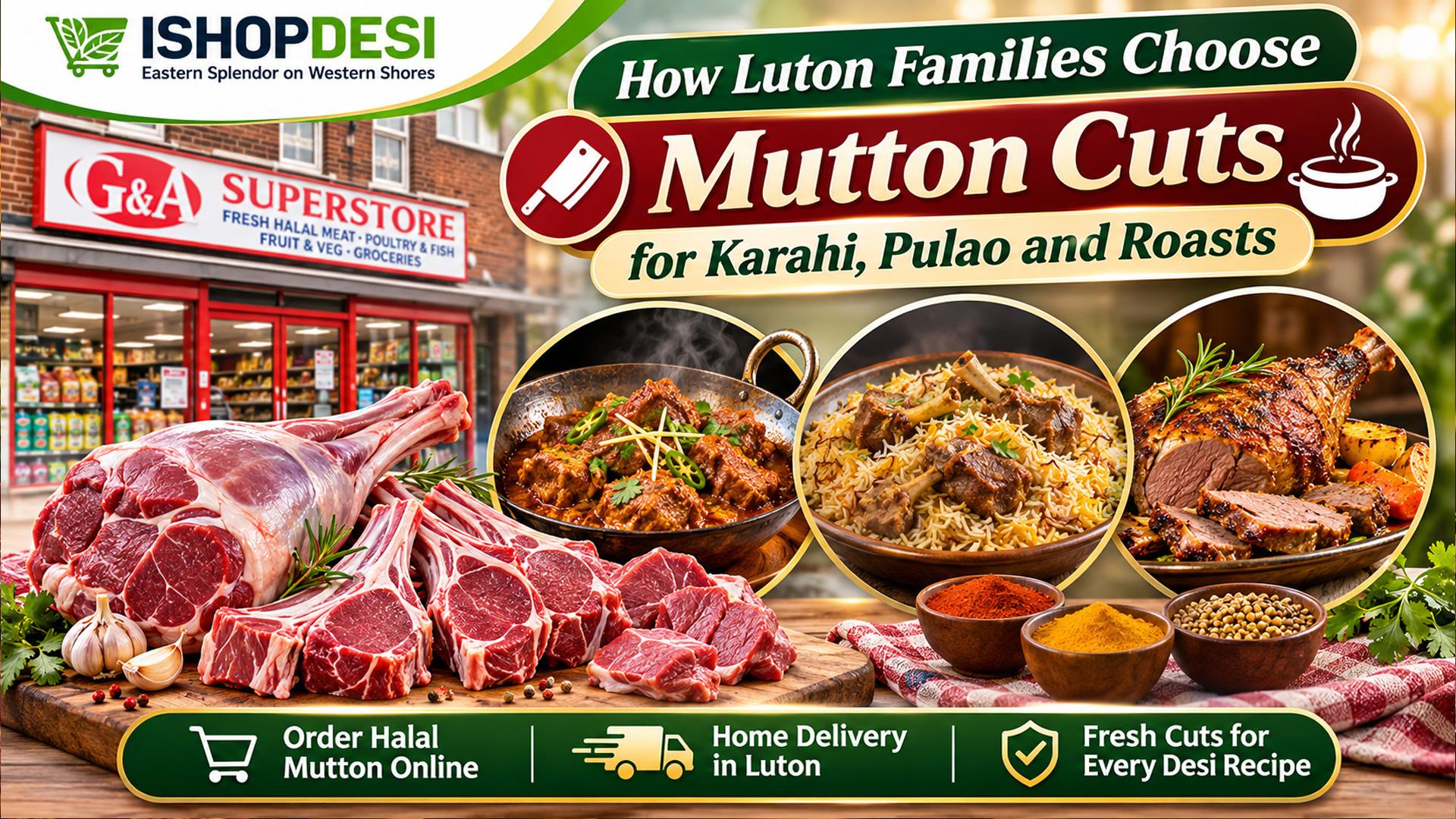
How Luton Families Choose Mutton Cuts for Karahi, Pulao and Roasts

In many Luton homes, the mutton decision starts days before anyone picks up a knife. Who’s coming on Sunday? Is it a karahi night or a pulao night? Will Nani want the bones? Mutton is rarely an everyday meat, so families tend to think carefully before buying it. That thinking says a lot about how desi households cook.
Here’s how that decision usually plays out around the kitchen table.
It Starts with the Dish, Not the Butcher
Most families don’t walk in asking for “a kilo of mutton.” They start with the meal. A karahi for the cousins calls for something different from a quiet yakhni pulao for the household or a roast for a winter gathering. Once the dish is chosen, the cut almost picks itself.
Karahi usually means shoulder or bone-in chops, because the fat and bone keep the meat juicy over high heat. Pulao leans towards leg, which gives clean pieces and a clear stock. A roast is often a whole leg, marinated overnight and cooked slowly.
Then Comes the Question of Bones
Every family has its bone debate. Older relatives often prefer bone-in pieces for the flavour and the marrow. Children often prefer boneless. Guests may be somewhere in between.
Many households settle it with a mix: bone-in pieces for flavour in the pot, and a few leaner pieces for those who’d rather not pick around bones. Ordering two different cuts for one dish is more common than you might think.
Time Decides More Than Taste
Mutton rewards patience, but not every week allows for it. A family hosting on a weekday evening may lean towards tender chops that cook faster, or switch to baby lamb altogether. A slow Saturday is when shoulder and front chops really shine, cooking low until the meat falls from the bone.
Pressure cookers have changed this calculation in many Luton kitchens. Cuts that once needed an afternoon can now be ready in well under an hour, which has made mutton more of a weeknight option than it used to be.
Budget and Batch Cooking
Mutton is an investment for most families, so they make it count. A common habit is buying enough for two meals at once: a karahi tonight and the rest portioned for a pulao later in the week. Leftover karahi often becomes a filling for parathas the next morning.
Bigger occasions, such as aqiqah or a family dawat, are a different matter. That’s when some families think about a half or whole animal instead of individual cuts, and plan the whole menu around it.
Ordering Online Has Changed the Conversation
More Luton families now choose their mutton from home. It gives them time to compare cuts, check the shop’s halal certification and add the rice and masala in the same order. It also takes the pressure off the busy butcher’s counter, where it’s easy to grab the wrong cut in a hurry.
If you’d like a clear breakdown of which cut suits which dish, this cut-by-cut guide to halal mutton delivery Luton compares leg, shoulder, front chops and back chops, with cooking tips for each.
A Simple Rule of Thumb
If you remember nothing else, remember this:
- Karahi and salan: shoulder or front chops
- Pulao and roasts: leg
- Frying and grilling: back chops
- In a hurry: consider baby lamb instead
Whatever you choose, the best mutton dish is the one planned around the people eating it. That’s something every Luton family already knows.


