
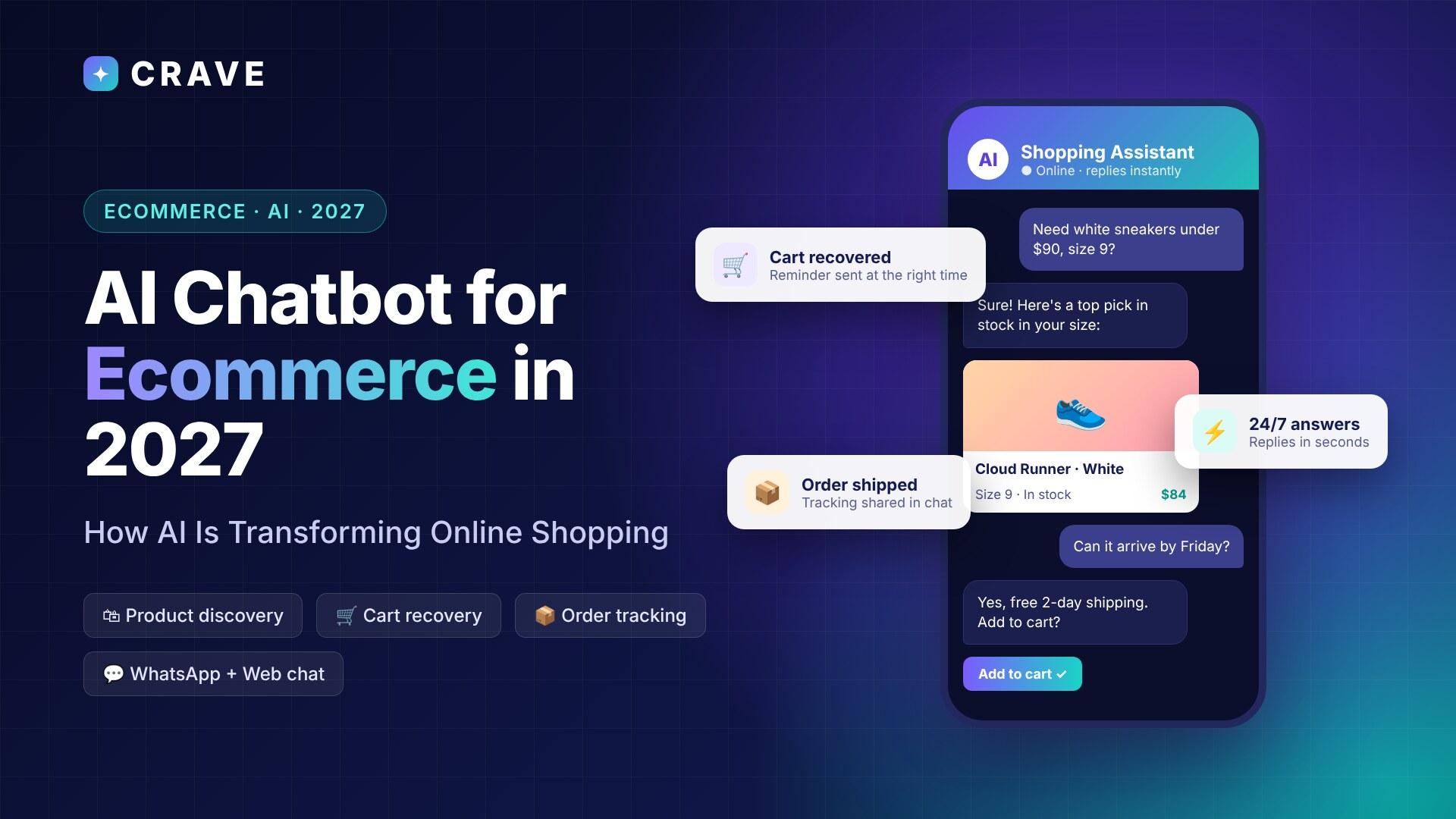
AI Chatbot for Ecommerce in 2027: How AI Is Transforming Online Shopping

Online shoppers don't wait anymore. They ask a question at 11 PM, expect an answer in seconds, and leave if they don't get one. That is exactly why the AI chatbot for ecommerce has moved from a nice extra to a core part of the store in 2027.
An AI chatbot for ecommerce is software that uses large language models to talk with shoppers in plain language. It answers product, stock, shipping and return questions, recommends items, recovers abandoned carts and tracks orders, on your website, WhatsApp and even phone calls. The best ones don't just reply. They take action.
In this guide, you'll learn how these assistants work, what they can do for your store, the numbers behind the shift, and how to pick the right one for your business.
Why AI Chatbots for Ecommerce Matter More in 2027
The way people shop has changed fast. Shoppers now start many purchases inside AI tools, then land on store websites expecting the same instant, conversational help.
Here is what the data shows:
-
AI traffic to retail sites is exploding. According to Adobe's 2025 holiday season report, traffic to U.S. retail sites from generative AI tools rose 693.4% year over year.
-
That traffic converts better. Adobe found that AI referrals converted 31% better than other traffic sources during the 2025 holidays.
-
AI already shapes a big share of sales. Salesforce reported that AI and agents influenced about $262 billion, or roughly 20% of global online holiday sales in 2025.
-
Stores with their own AI agents grew faster. In the same Salesforce data, retailers that deployed AI agents averaged 6.2% year-over-year sales growth versus 3.9% for those that didn't.
-
Lost carts remain a huge leak. The Baymard Institute puts the average documented cart abandonment rate at 70.22%, based on 50 studies.
Put simply, shoppers arrive with more intent than ever, yet most of them still leave before paying. An ecommerce chatbot sits right in that gap.
What Is an AI Chatbot for Ecommerce?
An AI chatbot for ecommerce is a virtual shopping assistant trained on your store's own information: product catalog, prices, stock levels, shipping rules, return policy and FAQs. It uses natural language processing (NLP) to understand what a shopper means, not just the words they type.
This is the heart of conversational commerce, where buying happens through a conversation instead of a menu of clicks.
Rule-based bots vs AI chatbots
Older chatbots followed fixed scripts. Modern AI chatbots work very differently.
Rule-based chatbots:
-
Follow button menus and decision trees
-
Break when a shopper asks something unexpected
-
Need manual updates for every new product or policy
-
Mostly deflect questions to email or a ticket
AI chatbots (2027 standard):
-
Understand free-form questions in many languages
-
Learn from your website pages, PDFs and catalogs
-
Pull live stock, price and order data from your store
-
Take actions like booking a visit, sharing tracking or sending a cart reminder
The rise of the ecommerce AI agent
In 2027, the line between "chatbot" and "AI agent" is blurring. An ecommerce AI agent can complete multi-step tasks on its own, such as checking an order, starting a return and updating your CRM.
The big platforms are pushing the same direction. OpenAI and Stripe released the Agentic Commerce Protocol in 2025, and Google followed with its Universal Commerce Protocol in early 2026. As Checkout.com explains, AI is becoming a new shop window while the merchant's own systems stay the system of record. That means your store needs its own smart assistant that can talk to shoppers and to your data.
How AI Is Transforming Online Shopping: 8 Key Use Cases
Here are the ways an AI shopping assistant changes the buyer journey, from first question to repeat purchase.
1. Instant answers, 24/7
Most pre-sale questions are simple but urgent:
-
"Is this available in size 9?"
-
"Do you deliver to my city, and how long will it take?"
-
"Can I return it if it doesn't fit?"
An AI chatbot for online store answers these in seconds, at any hour. No more "replied too late" messages the next morning.
2. Guided product discovery
Shoppers often don't know the exact product name. They describe a need: "a gift for my dad who loves coffee, under $50." A product recommendation chatbot turns that into a short list of matching items with prices, stock status and photos.
This feels like talking to a helpful store associate, and it shortens the path from "just looking" to "add to cart."
3. Abandoned cart recovery
With roughly 7 in 10 carts abandoned, recovery is one of the highest-value jobs for an ecommerce chatbot. A smart abandoned cart recovery chatbot can:
-
Send a friendly reminder with the exact items left behind
-
Confirm the item is still in stock
-
Answer the doubt that stopped the purchase, such as delivery time or returns
-
Hand off to a human for high-value carts
WhatsApp works especially well here because messages are read quickly and replies feel personal.
4. Order tracking and returns
"Where is my order?" is the most common support question in ecommerce. An order tracking chatbot connected to your store can share live order status (ordered, packed, shipped, delivered) and start a return without a support ticket. Your team saves hours, and customers get answers right away.
5. Smart upsells and bundles
AI chatbots can suggest items that genuinely go together: matching cushions with a sofa, a case with a phone, or a warranty with an appliance. Because suggestions come inside a helpful conversation, they feel like advice rather than a pushy pop-up.
6. Lead qualification for high-ticket products
For furniture, jewelry, electronics and other big purchases, many buyers want to see the product or talk to someone first. An AI shopping assistant can capture budget and timeline, rate how ready the buyer is, and book a showroom visit or a call. Your sales team then calls the hottest leads first.
7. Multilingual and omnichannel support
Shoppers move between your website, WhatsApp, Instagram and phone. A modern assistant keeps one conversation across channels and replies in the shopper's language. This matters for stores selling across regions or to diverse audiences.
8. Insights you can act on
Every chat is customer research. AI chatbots show you what shoppers ask most, which products confuse people, and which questions the bot couldn't answer. Those "knowledge gaps" tell you exactly what to fix on product pages and policies.
Key Benefits of an AI Chatbot for Ecommerce Stores
Here is what store owners typically aim for when they add AI customer service for ecommerce:
-
Higher conversion rates: Answering doubts at the moment of decision helps more browsers become buyers.
-
More recovered revenue: Timely cart reminders bring back sales that would otherwise be lost.
-
Lower support costs: Repetitive questions are handled automatically, so your team focuses on complex cases.
-
Faster response times: Replies in seconds instead of hours, including nights and weekends.
-
Bigger average order value: Relevant upsells and bundles inside the chat.
-
Better customer experience: Shoppers get clear, consistent answers every time.
-
Richer first-party data: Every conversation feeds your CRM with real buyer intent.
Results vary by store, traffic and setup, so track your own numbers before and after launch.
Must-Have Features of the Best AI Chatbot for Ecommerce in 2027
Not every tool is built for selling. When you compare options, check for these features.
Trained on your own data
The chatbot should learn from your website, product catalog and documents (price lists, brochures, policies). It should also let you pick which pages it uses, so it never answers from outdated content.
Live store integrations
A Shopify AI chatbot or WooCommerce chatbot needs real-time access to catalog, stock and orders. Without this, it can't answer "Is it in stock?" or "Where is my order?" accurately.
WhatsApp, web chat and voice in one place
Your customers don't live on one channel. Look for a single assistant that works on your website, on WhatsApp and over phone calls, sharing the same knowledge.
Human handoff
AI should know its limits. When a shopper is upset, the question is complex, or the order is high value, the chat should pass smoothly to your team with full context.
CRM and lead management
Each conversation should create or update a lead, rate its quality and trigger the next step. This turns chat from a cost center into a sales pipeline.
Easy install
Look for a simple script that works on Shopify, WooCommerce, WordPress, Wix and custom builds without slowing your site.
Privacy and compliance
Make sure the vendor explains how customer data is stored and used, supports data deletion requests, and follows the privacy laws that apply to your customers.
AI Chatbot for Ecommerce: Use Cases by Industry
Every product category has its own buying questions. Here is how an AI chatbot for ecommerce adapts to different stores.
Fashion and apparel
Sizing doubt is one of the biggest reasons shoppers hesitate. The chatbot can explain fit, compare sizes across brands, check stock in a specific color and share the exchange policy. It can also suggest matching items to complete an outfit.
Furniture and home decor
These are high-ticket, considered purchases. Shoppers ask about dimensions, materials, delivery dates and assembly. The assistant answers these, shares product cards with live stock, and books a showroom visit or video call for buyers who want to see the piece first.
Electronics and gadgets
Buyers want to know about compatibility, specs, warranties and accessories. A product recommendation chatbot can compare two models in simple terms and suggest the right charger, case or protection plan.
Beauty, wellness and personal care
Shoppers ask which product suits their skin type, routine or concern. The chatbot can guide them through a short quiz-style conversation and recommend a small, relevant set of products, while avoiding medical claims.
Jewelry and luxury
Trust matters most here. The assistant shares certification details, return terms and secure payment options, then hands serious buyers to a specialist quickly.
Grocery, FMCG and D2C subscriptions
Repeat buying is the goal. The chatbot handles reorders, delivery slots, subscription changes and "where is my order?" updates, which keeps customers coming back without extra support load.
Across all of these, the pattern is the same: answer fast, remove doubt and make the next step easy.
How Crave Brings AI Chatbots to Ecommerce and Retail
Crave is an AI sales employee built for stores and D2C brands. It answers shoppers on WhatsApp, your website and calls, then moves each conversation toward a sale.
Here is what Crave offers for online shopping:
-
Website chat that sells: The AI chatbot for your ecommerce website is trained on your own site pages and documents. It answers product, price, stock and FAQ questions, collects details when a visitor shows interest and books the next step. It installs with one line of code on Shopify, WooCommerce, WordPress, Wix, Webflow and more.
-
WhatsApp selling and cart recovery: The WhatsApp chatbot for ecommerce replies, qualifies and books on WhatsApp, and sends cart nudges with the exact items a shopper left behind.
-
AI voice calls: The AI voice agent can call website visitors back within your business hours to qualify them and book a visit.
-
Built for retail: The AI shopping assistant for retail and D2C brands connects with Shopify and WooCommerce for live catalog, stock and orders. It shares order status, starts returns, suggests bundles and routes shoppers to the nearest outlet.
-
One pipeline for every lead: Every chat lands in Crave's built-in CRM and lead flow, rated and sorted so your team calls the right people first.
-
Knowledge gaps: When a shopper asks something new, Crave flags it so you can teach the answer in one click.
If you're still choosing a store platform or planning a rebuild, expert Shopify development and ecommerce website development help you get a fast, conversion-ready foundation first. Brands that need a fully tailored assistant can also explore custom AI chatbot development.
How to Add an AI Chatbot to Your Ecommerce Store: 6 Steps
Getting started is simpler than most teams expect. Follow these steps:
-
Set clear goals. Pick two or three targets, such as faster first response, more recovered carts or more booked store visits.
-
Gather your knowledge. Collect product pages, FAQs, shipping and return policies, size guides and price lists.
-
Connect your store. Link Shopify, WooCommerce or your platform so the bot sees live stock, prices and orders.
-
Choose your channels. Start with website chat and WhatsApp, then add voice for high-ticket products.
-
Define handoff rules. Decide when AI hands a chat to a human, such as refunds, complaints or carts above a set value.
-
Launch, measure and improve. Review knowledge gaps weekly, refine answers and track conversion, recovered revenue and response time.
Common Mistakes to Avoid
Even a great AI shopping assistant can underperform if it is set up poorly. Watch out for these traps:
-
Using generic templates: A bot that doesn't know your products feels useless. Train it on your real data.
-
No live inventory link: Recommending out-of-stock items destroys trust.
-
Hiding the human option: Always give shoppers a clear way to reach a person.
-
Too many pop-ups: Let the chat help, not interrupt. Trigger it at useful moments.
-
Ignoring analytics: Chat logs reveal what's blocking sales. Read them.
-
Over-promising: Make sure the bot only states policies and delivery times you can actually honor.
The Future: AI Chatbot for Ecommerce Trends Beyond 2027
The next few years will push conversational commerce even further. Here are the trends to watch:
-
Agentic checkout: AI agents will complete more purchases on behalf of shoppers across AI platforms, using open protocols like ACP and UCP.
-
Voice-first shopping: More shoppers will talk to stores by voice, especially on mobile and in regional languages.
-
Visual search in chat: Shoppers will upload a photo and ask, "Do you have something like this?"
-
Deeper personalization: Assistants will remember preferences, sizes and past orders (with consent) to make faster, better suggestions.
-
AI-to-AI commerce: A shopper's personal AI may negotiate with your store's AI, so clean product data and clear policies become a competitive edge.
-
Stronger privacy expectations: Transparent data use will be a trust signal, not just a legal box to tick.
Stores that build a solid AI foundation now will be ready for each of these shifts. If you're planning more advanced automations, dedicated AI agent development can extend your assistant into inventory, logistics and marketing workflows.
Conclusion: Turn Every Shopper Question Into a Sale
The AI chatbot for ecommerce is no longer an experiment. In 2027, it is the always-on store associate that answers instantly, guides product choice, rescues abandoned carts and keeps customers informed after purchase. With AI-driven traffic rising and roughly 70% of carts still being abandoned, every unanswered question is revenue left on the table.
The good news: you don't need a big team or a long project to start. A focused setup on your website and WhatsApp, trained on your own products, can begin helping shoppers within days.
Ready to give every shopper an instant answer? Book a free Crave demo to see an AI shopping assistant working on your own products, or compare Crave plans to find the right fit for your store.
Frequently Asked Questions
1. What is an AI chatbot for ecommerce? An AI chatbot for ecommerce is a virtual shopping assistant that uses AI and natural language processing to chat with shoppers. It answers product, stock, shipping and return questions, recommends items, recovers abandoned carts and shares order status on your website, WhatsApp or phone.
2. How does an ecommerce chatbot increase sales? An ecommerce chatbot increases sales by answering doubts at the moment of purchase, suggesting relevant products and bundles, and sending timely cart reminders. It also captures lead details from high-intent visitors so your team can follow up with the right people first.
3. Can an AI chatbot work with Shopify and WooCommerce? Yes. Most modern AI chatbots install with a small script and connect to Shopify or WooCommerce for live catalog, stock and order data. Crave, for example, connects with both platforms and works on WordPress, Wix, Webflow and custom sites.
4. Will an AI shopping assistant replace my customer support team? No. An AI shopping assistant handles repetitive questions like order status, sizing and delivery times. Your team still handles complex issues, complaints and high-value buyers. The best setups include smooth human handoff with full chat history.
5. Is a WhatsApp chatbot good for ecommerce? A WhatsApp chatbot for ecommerce works well because shoppers already use WhatsApp daily and tend to read messages quickly. It is useful for product questions, cart recovery reminders, order updates and booking store visits, as long as you follow WhatsApp's business messaging and opt-in rules.


