
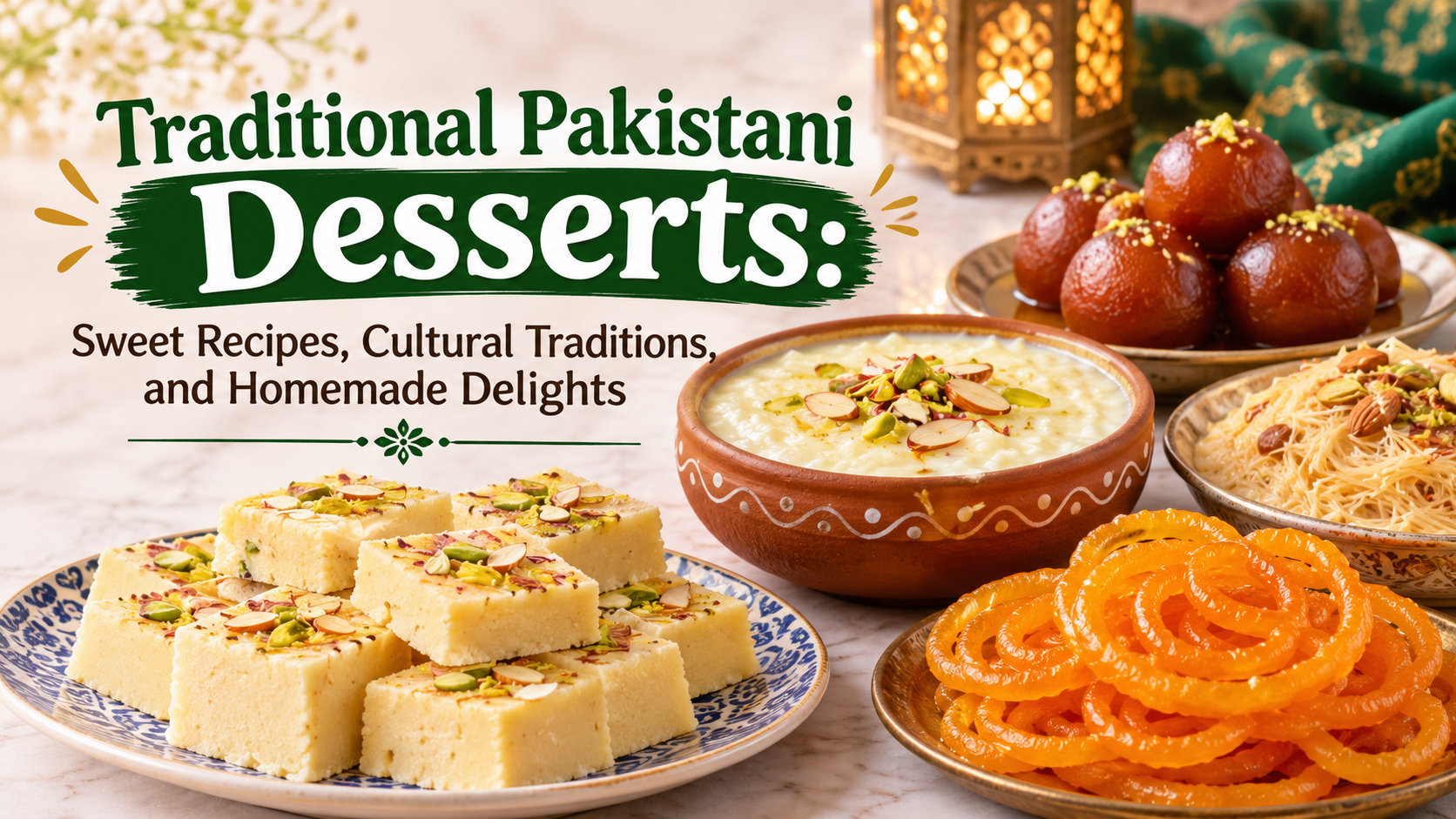
Traditional Pakistani Desserts: Sweet Recipes, Cultural Traditions, and Homemade Delights

Pakistan is a country where food is closely connected to culture, family traditions, and celebrations. While savoury dishes such as biryani, karahi, and nihari are popular throughout the country, traditional desserts hold an equally special place in Pakistani cuisine. From creamy milk puddings to delicious fried sweets, Pakistani desserts bring people together and make special occasions even more memorable.
Whether it is Eid, a wedding, a family gathering, or an ordinary weekend dinner, something sweet is often served at the end of a meal. Many of these recipes have been passed down through generations, with each family adding its own special touch.
If you enjoy exploring traditional recipes, this collection of Pakistani sweet dishes offers inspiration for preparing authentic desserts at home.
Let's explore some popular dessert traditions, essential ingredients, and practical tips for making delicious Pakistani sweets.
1. The Importance of Desserts in Pakistani Culture
Desserts are more than just food in Pakistani households. They represent hospitality, happiness, and celebration. Offering something sweet to guests is a common expression of warmth and generosity.
During Eid-ul-Fitr, families prepare Sheer Khurma, a rich vermicelli dessert made with milk, dates, nuts, and cardamom. At weddings, Gulab Jamun, Rasmalai, and traditional mithai are served to guests. During winter, Gajar ka Halwa becomes a favourite treat in many homes.
Every region has its own dessert preferences, ingredients, and cooking methods. These differences make Pakistani dessert culture particularly diverse.
2. Popular Ingredients Used in Traditional Desserts
The secret behind delicious Pakistani desserts often lies in the quality of their ingredients. Most traditional recipes use simple pantry staples, but choosing fresh and suitable ingredients makes a noticeable difference.
Milk
Milk is an essential ingredient in desserts such as Kheer, Rasmalai, Rabri, and Sheer Khurma. Full-fat milk is commonly preferred because it creates a richer texture and creamier flavour.
Sugar
Sugar provides sweetness and helps create the syrup used in desserts such as Gulab Jamun and Jalebi. The quantity can be adjusted according to personal preference.
Desi Ghee
Desi Ghee is widely used in Pakistani sweet recipes. It adds a distinctive aroma and rich taste to Sooji Halwa, Gajar ka Halwa, and other traditional preparations.
Cardamom and Saffron
Cardamom gives desserts a warm, aromatic flavour, while saffron adds fragrance and a beautiful golden colour. Both ingredients are particularly popular in festive recipes.
Nuts and Dried Fruits
Almonds, pistachios, cashews, raisins, and dates are frequently used as toppings or ingredients. They add texture, flavour, and variety to traditional desserts.
3. Five Traditional Desserts Every Food Lover Should Try
Pakistan offers an impressive variety of sweets. Some are prepared regularly at home, while others are associated with festivals and special occasions.
Kheer
Kheer is a traditional rice pudding prepared by slowly cooking rice in milk with sugar and cardamom. The mixture becomes thick and creamy as the rice softens.
Chopped almonds, pistachios, and saffron are commonly added before serving. Kheer can be enjoyed warm or chilled, depending on personal preference.
For the best results, cook it over a low flame and stir regularly to prevent the milk from sticking to the bottom of the pan.
Sheer Khurma
Sheer Khurma is particularly popular during Eid celebrations. It is prepared using vermicelli, milk, dates, nuts, and aromatic spices.
The combination of dates and dried fruits gives this dessert its distinctive flavour. Some families prefer a thicker consistency, while others enjoy a lighter version.
It is traditionally served to family members and guests on Eid morning.
Gajar ka Halwa
Gajar ka Halwa is one of the most loved winter desserts in Pakistan. Fresh red carrots are grated and cooked with milk, sugar, and desi ghee.
The slow cooking process allows the carrots to soften and absorb the flavours of the other ingredients. Almonds and pistachios are often added as toppings.
It is best enjoyed warm, especially during cold winter evenings.
Gulab Jamun
Gulab Jamun is a popular sweet made from milk solids or milk powder. Small dough balls are shaped, fried until golden brown, and soaked in sugar syrup.
Cardamom and rose water can be added to the syrup for extra fragrance.
The key to making soft Gulab Jamun is preparing a smooth dough without overworking it and frying the balls at a controlled temperature.
Shahi Tukray
Shahi Tukray is a rich bread-based dessert commonly served at weddings and family celebrations.
Bread slices are fried or toasted and topped with thickened sweet milk, known as rabri. Cardamom, saffron, almonds, and pistachios add flavour and decoration.
It is usually served chilled, making it a wonderful dessert for special dinners.
4. Modern Ways to Enjoy Traditional Pakistani Desserts
Traditional recipes remain popular, but modern home cooks are finding creative ways to prepare and present them.
For example, Kheer can be served in individual dessert glasses instead of a large bowl. Gulab Jamun can be paired with vanilla ice cream, creating an interesting combination of warm sweetness and cold creaminess.
Similarly, Falooda can be presented as a layered dessert with milk, basil seeds, vermicelli, rose syrup, and ice cream.
Fruit Custard is another flexible option. Seasonal fruits such as apples, bananas, grapes, and mangoes can be combined with chilled custard for a refreshing dessert.
These modern presentations make traditional recipes suitable for birthday parties, dinner gatherings, and other occasions.
5. Tips for Preparing Better Desserts at Home
Making delicious desserts does not always require professional cooking skills. A few simple techniques can help improve the flavour and consistency of homemade sweets.
Choose fresh ingredients: Fresh milk, quality nuts, and aromatic spices can significantly improve the final result.
Measure ingredients carefully: Baking and dessert preparation often require accurate measurements. Adding too much sugar or liquid can change the consistency.
Control cooking temperature: Many traditional desserts require slow cooking. High heat can cause milk to burn or sugar syrup to become too thick.
Use suitable cookware: Heavy-bottomed pans distribute heat more evenly and reduce the chances of ingredients sticking.
Allow enough cooling time: Some desserts develop a better texture after refrigeration. Kheer, Rasmalai, and Fruit Custard are good examples.
Taste before serving: Always adjust sweetness and flavour according to your family's preferences.
6. Healthier Approaches to Homemade Sweets
Traditional Pakistani desserts can be rich in sugar and fat, but preparing them at home gives you more control over the ingredients.
One simple approach is to reduce the amount of added sugar gradually. Many recipes already contain naturally sweet ingredients such as dates and seasonal fruits.
You can also experiment with smaller serving sizes. Instead of preparing large portions, serve desserts in individual bowls or glasses.
Adding nuts and seeds can introduce additional nutrients and texture. Chia seeds, for example, can be incorporated into milk-based desserts such as Kheer.
However, healthier ingredient substitutions may change the original taste and texture. It is best to experiment with small adjustments rather than changing an entire traditional recipe at once.
People managing diabetes or other dietary conditions should choose ingredients and portions according to their individual nutritional requirements.
7. Pakistani Desserts for Different Occasions
Different occasions call for different types of sweets. Choosing the right dessert can make a gathering feel more special.
Eid Celebrations: Sheer Khurma, Kheer, and traditional mithai are popular choices for Eid gatherings.
Winter Evenings: Gajar ka Halwa and Sooji Halwa are comforting desserts during colder months.
Summer Gatherings: Falooda, Fruit Custard, and chilled Kheer are refreshing options.
Wedding Celebrations: Gulab Jamun, Rasmalai, Shahi Tukray, and other traditional sweets are frequently included in wedding menus.
Family Dinners: Simple homemade desserts such as Kheer and Sooji Halwa are convenient choices when entertaining guests.
Planning desserts according to the season and occasion also makes preparation easier.
8. How to Present Desserts Beautifully
Presentation can make even a simple homemade dessert look attractive.
Use small glass bowls for Kheer and Fruit Custard. Decorate them with chopped pistachios, almonds, or a few strands of saffron.
Arrange Gulab Jamun in a serving dish with a little sugar syrup. For Shahi Tukray, add a layer of rabri and finish with nuts.
For larger gatherings, create a dessert table featuring several small portions instead of serving one large dish. This allows guests to enjoy different flavours without taking oversized portions.
Clean serving dishes, appropriate garnishes, and consistent presentation can make a noticeable difference.
9. Preserving Traditional Recipes for Future Generations
Traditional recipes are an important part of Pakistan's culinary heritage. Many people learn to prepare desserts by watching their parents and grandparents cook.
However, modern lifestyles have made convenient recipes increasingly valuable. Clear instructions, accurate measurements, and easy-to-find ingredients help younger generations recreate traditional flavours.
Families can preserve their favourite recipes by writing them down, recording cooking methods, and sharing them with younger family members.
Experimenting with presentation and ingredients is also a good way to keep traditional desserts relevant without losing their original identity.
Conclusion
Pakistani desserts represent much more than sweetness. They reflect family traditions, cultural celebrations, and the creativity of home cooks across the country.
From Kheer and Sheer Khurma to Gajar ka Halwa, Gulab Jamun, and Shahi Tukray, every dessert has its own flavour and story. With fresh ingredients, proper cooking techniques, and a little patience, anyone can prepare these delicious treats at home.
Whether you are planning an Eid gathering, preparing a winter dessert, or simply craving something sweet after dinner, traditional Pakistani recipes offer plenty of inspiration. Exploring different flavours and preserving family cooking traditions can make every homemade dessert a memorable experience.


