
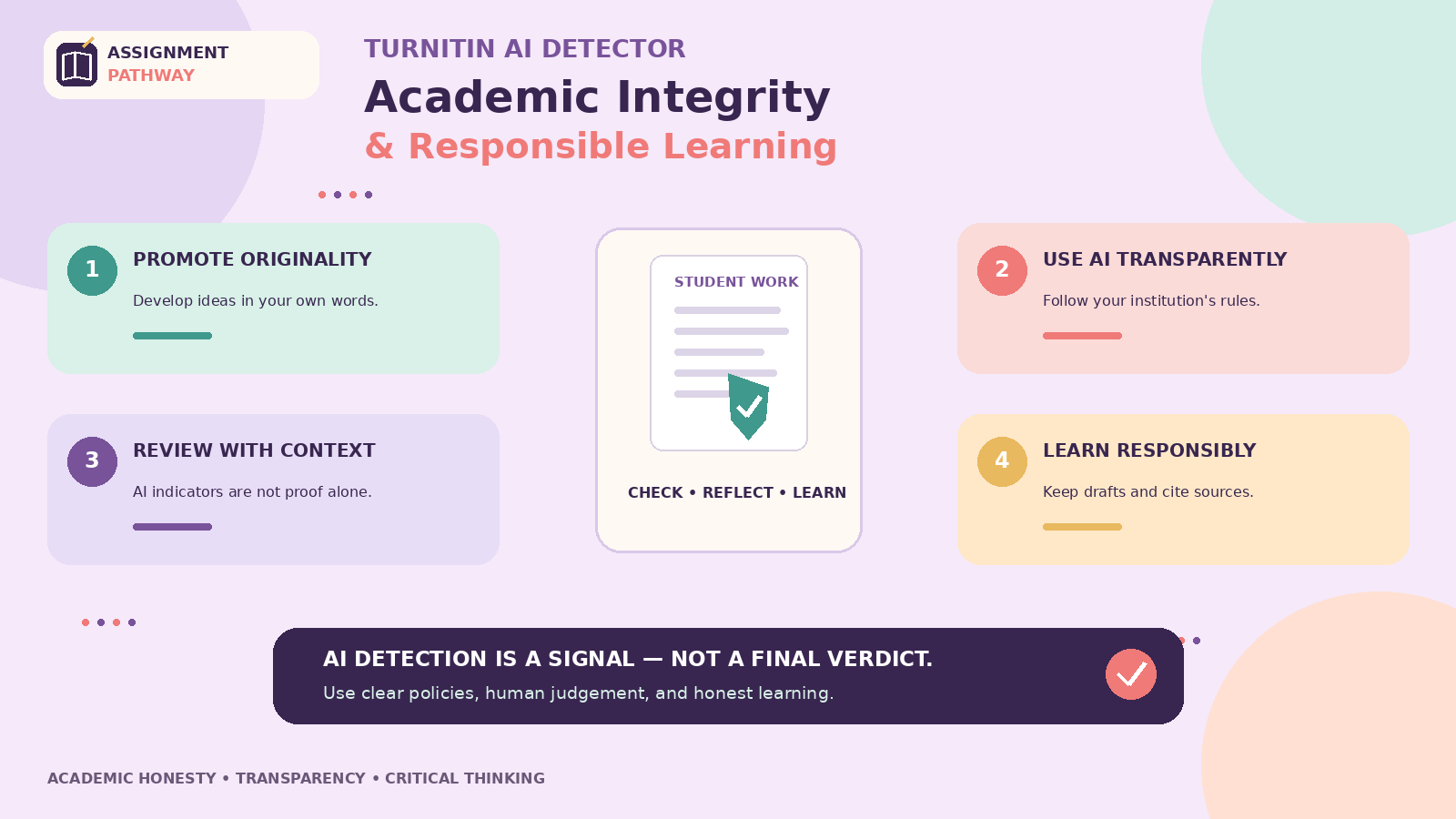
How Turnitin AI Detector Supports Academic Integrity and Responsible Learning

Artificial intelligence has become an increasingly common part of modern education. Students use AI-powered tools to explore unfamiliar topics, organise ideas, and support their writing process. At the same time, universities need to maintain academic standards and ensure that students understand their responsibilities when submitting assignments. The Turnitin AI Detector is relevant to these discussions because it helps educators identify text that may have been generated by artificial intelligence.
Understanding how AI detection relates to academic integrity can help students make informed decisions about technology, improve their writing skills, and approach assignments responsibly.
Understanding the Purpose of Turnitin AI Detector
The Turnitin AI Detector is designed to identify text that may have been generated using AI writing tools. Educators may use its results as one source of information when reviewing student submissions and considering whether the work follows institutional guidelines.
However, AI detection has limitations. A detection result does not automatically establish who wrote a piece of text or prove that academic misconduct occurred. Automated systems can produce inaccurate results, so educators should interpret findings carefully and consider the wider context of an assignment.
Students should understand the purpose of AI detection without assuming that it provides a definitive judgment about authorship.
Why Academic Integrity Matters
Academic integrity means completing educational work honestly, acknowledging sources, and following the rules established by an educational institution. It encourages students to demonstrate their understanding rather than relying entirely on work produced by other people or automated tools.
The Turnitin AI Detector forms part of broader conversations about maintaining these standards in an environment where AI-generated content is increasingly accessible.
Students can support academic integrity by conducting their own research, developing independent arguments, checking factual claims, and citing information correctly. These practices help demonstrate genuine engagement with a subject.
Using AI Tools Responsibly
AI tools can provide useful learning support when students use them within their institution's guidelines. Depending on the assignment rules, permitted uses might include brainstorming research questions, clarifying unfamiliar concepts, or creating a study plan.
However, students should not assume that every form of AI assistance is allowed. They should review assignment instructions and ask their instructors for clarification when necessary.
Responsible AI use includes:
-
Checking facts against reliable academic sources.
-
Reviewing AI-generated explanations for errors or missing information.
-
Developing personal analysis instead of accepting suggestions without evaluation.
-
Following institutional disclosure requirements.
-
Taking responsibility for the accuracy and quality of submitted work.
These habits help students benefit from technology while remaining accountable for their learning.
Turnitin AI Detector and Original Academic Writing
Original academic writing involves more than choosing different words. Students need to understand a topic, evaluate evidence, connect ideas, and explain their conclusions logically.
The Turnitin AI Detector is relevant to discussions about authorship, but students should focus on developing the skills needed to produce meaningful academic work. Reading reliable sources, preparing outlines, and revising drafts can help them express their understanding more clearly.
Keeping research notes and successive drafts can also help students track how their ideas develop. These materials support an organised writing process and can be useful if an instructor asks questions about the work.
Understanding AI Detection Reports
Students and educators may have questions about the results generated by AI detection tools. It is important to understand that an AI detection indicator is not the same as a plagiarism finding or a definitive statement about authorship.
AI detection and similarity checking serve different purposes. AI detection looks for text that may have been generated by artificial intelligence, while similarity checking identifies matching text in available sources.
Neither result should be interpreted without context. Educators should consider the assignment requirements, relevant evidence, and institutional procedures before reaching conclusions about a submission.
If students have concerns about a report, they should seek clarification from their instructor and follow the institution's established review process.
How Students Can Improve Their Writing Skills
Developing strong writing skills is one of the most useful ways to improve academic performance. Students can strengthen their work by following a structured process from research to final revision.
1. Start With a Clear Outline
Before writing, identify the main question and organise the key points that will support the answer. A clear outline helps maintain focus and prevents unnecessary repetition.
2. Research Reliable Sources
Use relevant books, scholarly articles, and credible publications. Compare different viewpoints and record source details to make referencing easier.
3. Explain Ideas in Your Own Words
After understanding a source, explain its main ideas using your own language and reasoning. Provide citations whenever required and distinguish your analysis from information taken from other authors.
4. Review and Revise Your Draft
Check whether the assignment answers the question, presents a logical argument, and supports its claims with evidence. Correct grammar and formatting issues before submission.
5. Follow Academic Guidelines
Check your institution's rules regarding referencing, permitted AI assistance, and disclosure. Following these requirements helps ensure that your work meets the expectations of the course.
The Importance of Human Judgment in Academic Assessment
Technology can support academic review, but educators still need to evaluate assignments thoughtfully. Written work should be considered in relation to its content, evidence, research quality, and the requirements of the task.
When questions arise about potentially AI-generated text, instructors should consider relevant context and follow fair institutional procedures. Students should also have an appropriate opportunity to explain their writing process when required.
Combining technology with human judgment can help institutions approach academic assessment more responsibly.
Conclusion
The Turnitin AI Detector is part of the evolving relationship between artificial intelligence and education. It can help identify text that may have been AI-generated, but its results have limitations and should not be treated as conclusive proof of misconduct.
Students can respond to changing academic expectations by using permitted tools responsibly, conducting reliable research, developing original arguments, and maintaining transparent writing practices. By focusing on genuine understanding and independent learning, they can strengthen their academic skills while adapting to a changing digital education environment.


