
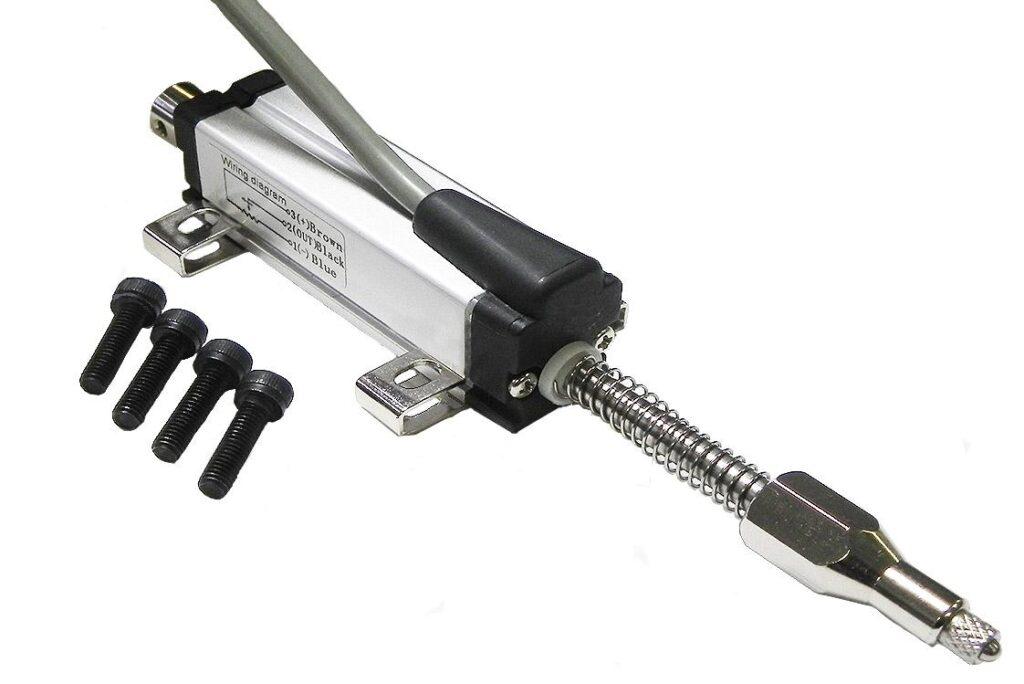
Linear Actuators: How They Work, Types, and Common Industrial Applications

Linear actuators turn energy into straight-line motion, and they sit behind a surprising amount of everyday machinery. A hospital bed raising a patient, a packaging line pushing cartons onto a conveyor, and an excavator boom lifting a bucket all depend on one another. The power source differs from machine to machine, and so do the force, speed, and accuracy on offer. This article covers how these devices produce motion, how the four main types compare, and where each one earns its place in industry.
What Are Linear Actuators?
A linear actuator moves a load along a single axis. Where a rotary actuator spins a shaft, a linear unit extends and retracts a rod or slides a carriage, so it can push, pull, lift, lower, tilt, or clamp. Every linear actuator counts as an actuator, though many actuators, such as the ones that turn valve stems, rotate instead.
Three figures describe most models: the force it can apply, the stroke it can travel, and the speed it moves at. Electric versions usually pair a motor with a lead screw or ball screw. Fluid versions push a piston with oil or compressed air.
How Linear Actuators Convert Power Into Straight-Line Motion
An electric actuator follows a predictable chain from command to position, and seeing the chain makes the parts easier to understand.
· The controller sends a command, such as a 4-20 mA signal or a network message.
· A driver feeds power to the motor at the required voltage and direction.
· The motor spins a screw, and a nut rides along its thread.
· The nut pulls the rod or carriage with it.
· A feedback sensor reports the new position, and the controller corrects any gap.
Hydraulic and pneumatic units skip the motor and screw. A valve routes pressurized fluid to one side of a piston, and the pressure difference drives the rod.
Core Components Inside a Linear Actuator
Six parts appear in most designs, and each one sets a limit on performance.
|
Component |
Role |
Typical Form |
|
Power source |
Supplies energy |
DC motor, stepper motor, pump, or air supply |
|
Drive mechanism |
Converts energy into linear motion |
Lead screw, ball screw, or piston |
|
Rod or carriage |
Carries force to the load |
Steel rod or guided slide |
|
Housing and bearings |
Hold moving parts in line |
Aluminum or steel body with bushings |
|
Limit switches |
Mark the ends of travel |
Mechanical or magnetic switches |
|
Position feedback |
Reports stroke position |
Potentiometer, Hall sensor, or encoder |
Electric Linear Actuators
Electric units have taken over much of the factory floor, largely because they need no compressor, pump, or fluid line. A lead screw actuator relies on sliding contact between the screw and the nut. That friction costs efficiency but tends to hold a load in place when power is cut. A ball screw replaces sliding with rolling contact, which lifts efficiency above 90 percent and gives smoother travel and longer life. A heavy vertical load can back-drive a ball screw, so designers usually add a brake.
Positioning is where electric designs pull ahead. Stroke, speed, and acceleration live in software and can change without touching the hardware. Heat sets the limit. A motor pushing a heavy load for long stretches needs rest time, so the duty cycle deserves a close look at any continuous application.
Hydraulic Linear Actuators
A hydraulic cylinder is a piston inside a sealed barrel of oil. Feed oil to one side, and the rod extends with a force set by pressure and bore diameter. Presses and excavators are the textbook cases, and marine and aerospace systems follow the same logic wherever electric motors run out of strength. The design also shrugs off shock loads and vibration that would damage a screw drive.
The price is infrastructure. A pump, reservoir, filters, hoses, and fittings all sit between the power source and the cylinder, and every connection is a possible leak. Positioning accuracy also trails electric units.
Pneumatic Linear Actuators
Compressed air gives pneumatic cylinders their speed. A valve opens, air floods one side of the piston, and the rod snaps out in a fraction of a second. That suits packaging and assembly, where a cylinder may push a carton or clamp a part thousands of times a day.
Common industrial cylinders top out under about 1,000 pounds of force. Air compresses under load, so holding a position mid-stroke is difficult, and most pneumatic cylinders handle simple two-position moves. Rodless versions fit where space is tight. Compared with hydraulics, the systems are simpler, cheaper, and easier to maintain.
Piezoelectric and Specialized Linear Actuators
A piezoelectric actuator is a block of specialized ceramic that grows slightly when voltage is applied. The motion is tiny, often only micrometers, yet resolution reaches the nanometer range and response is nearly instant. That profile suits microscopes, semiconductor tools, and optical alignment stages, and it rules out general automation.
Linear solenoids sit at the opposite end of the scale. They give a short, fast stroke in door locks and vending machines. Magnetic linear motors skip the screw entirely and move a carriage along a magnetic track, a good fit for high-speed axes that need accurate positioning.
Linear Actuator Types Compared
The table below lines up the main types across the characteristics that drive most selections.
|
Type |
Force |
Speed |
Precision |
Upkeep |
Typical Use |
|
Electric screw-driven |
Low to high |
Moderate |
High |
Low |
Automation, lifts, medical, and mobile equipment |
|
Hydraulic |
Highest |
Moderate |
Moderate |
Higher |
Heavy machinery, presses, marine |
|
Pneumatic |
Low to moderate |
Fast |
Low mid-stroke |
Moderate |
Packaging, handling, and clamping |
|
Piezoelectric |
Very low |
Very fast |
Nanometer range |
Low |
Instruments and microscopy |
Common Industrial Applications of Linear Actuators
Each sector tends to settle on the type that fits its main constraint, whether that is force, speed, cleanliness, or accuracy.
|
Industry |
Typical Actuator |
Task |
|
Packaging and assembly |
Pneumatic and electric |
Pushing, clamping, and transferring products |
|
Material handling |
Electric and pneumatic |
Operating diverters, lift tables, and tilting platforms |
|
Construction and heavy machinery |
Hydraulic |
Moving booms, buckets, and press rams |
|
Automotive and mobile equipment |
Compact electric |
Adjusting seats, lift gates, and implements |
|
Medical devices |
|


