
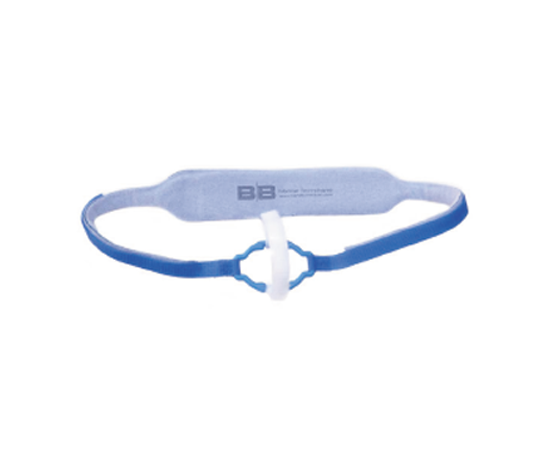
Endotracheal Tube Holder vs. ET Tube Holder: What Healthcare Providers Should Know

Clinicians, purchasing teams, and online searchers use two phrases for the same piece of equipment. An endotracheal tube holder and an ET tube holder are one device, and the difference lies in vocabulary rather than function. The comparison with real clinical weight is between securement methods, since tape and commercial holders carry different profiles for tube stability, skin protection, and workflow. This article clarifies the terminology, reviews what the research shows about holders and tape, and outlines the selection and bedside practices that keep an intubated patient's airway secure and the skin intact.
Endotracheal Tube Holder and ET Tube Holder: One Device, Two Names
The abbreviation ET stands for endotracheal, so an ET tube holder is a holder for an endotracheal tube, and ETT is the matching abbreviation for the tube itself. Clinical documentation, product catalogs, and search queries mix the short and long forms freely. A purchasing specialist may type "ET tube holder," while a policy document may spell out endotracheal tube holder, and both refer to the same category of product.
Other names appear alongside them. Manufacturers and the literature also use the terms tube fastener, endotracheal tube attachment device, and securement device. Each describes equipment that anchors the tube to the patient's face after intubation. The label changes from facility to facility, and the clinical purpose does not. Readers evaluating products or protocols should search under all of these terms to capture the full range of options.
What an Endotracheal Tube Holder Must Accomplish
An ETT is secured for two reasons: to prevent tube migration and to avoid unplanned extubation. The consequences of failure are significant. Unintended removal or dislodgement of an ETT can produce effects ranging from localized trauma and aspiration of oral or gastric secretions to death from a compromised airway. Dislodgement may also cause bronchospasm or tracheal injury.
The method of securement introduces its own risks. Sustained pressure on the lips, cheeks, and oral mucosa can break down tissue over days of ventilation, and the damage often begins beneath the device, where it is hard to see. A well-designed endotracheal tube holder has to hold the tube firmly and protect the skin underneath it, from intubation through extubation. Four goals define that standard:
· Keep the tube at the intended depth under the forces of patient movement, suctioning, and circuit tension.
· Limit pressure and shear on the lips, cheeks, and skin.
· Release quickly enough to permit depth adjustment and repositioning.
· Allow clear visualization of the skin and mucosa for assessment.
The best product for a patient depends on how well it balances those goals in the clinical setting.
Holder Versus Tape: What the Evidence Shows
American Heart Association guidance cited in the literature accepts either tape or a commercial device for securing an ETT. The comparative research gives providers more specific information.
|
Evidence |
Setting |
Finding |
|
Tube movement under standardized tension |
30 intubated patients, tape compared with a commercial holder |
Mean withdrawal of 3.4 cm with tape versus 0.3 cm with the holder; clinically significant movement (over 1 cm) in 97 percent with tape versus 3 percent with the holder |
|
Endotracheal tube securement (ETTS) randomized trial |
Critically ill adults ventilated for at least 24 hours; 298 evaluable patients |
Lip ulcers in 2.6 percent with the fastener versus 7.3 percent with tape (p = 0.053); the composite of dislodgement, lip ulcer, and skin tear was significantly lower with the fastener (p = 0.017); facial skin tears were similar; no ventilator-associated pneumonia occurred |
|
Facial pressure model |
16 securement methods tested in intubation models with pressure sensors |
Commercial devices exerted more pressure on the face than noncommercial devices and allowed rapid, secure movement of the tube from one side of the mouth to the other |
The tube movement study also recorded that six patients with taped tubes needed the traction test aborted before reaching 15 N, because the tape separated from the face or stretched. Separately, a review of the literature noted that two studies found less skin breakdown with commercial holders than with adhesive tape.
The pressure model adds a caution. Commercial holders restrict tube movement well, and that restriction can come with higher facial pressure, which makes skin assessment and cushioning essential with any holder.
Skin and Mucosal Protection: Preventing Device-Related Pressure Injury
A medical device-related pressure injury is localized damage to skin or underlying tissue from sustained device pressure. The ETT is one of the most common devices associated with these injuries in surgical and intensive care patients. Patients with a medical device have been reported as 2.4 times more likely to develop a pressure injury. Reported ICU incidence of ETT-related pressure ulcers ranges from 7 percent to as high as 45 percent, and the injuries become clinically visible 2 to 13 days after intubation.
Prevention protocols share several elements:
· Risk assessment at intubation and at regular intervals.
· Routine repositioning of the tube within the mouth, such as moving it from the center to a corner and back.
· Cushioning of skin areas in contact with the tube and the securement device.
· Scheduled skin and oral assessments, paired with skin and oral hygiene.
Retaping or re-securing a tube requires two people, one to hold the tube and one to apply the device. Facility policy and the manufacturer's recommendations govern the exact technique.
Selecting an ET Tube Holder: Features Providers Should Evaluate
Every ET tube holder involves trade-offs, and a structured evaluation helps teams choose consistently. The checklist below reflects the design goals described in the securement literature.
· Grip and release. The holder should grip the tube quickly and securely without restricting flow, and release easily for depth adjustment.
· Repositioning. The tube should move within the mouth without removing and reapplying adhesive to the skin.
· Skin interface. Adhesive and padding should be gentle and releasable with minimal trauma, which matters most for fragile neonatal and pediatric skin.
· Visibility. The design should allow staff to evaluate pressure points without disassembling the device.
· Patient fit. Adult, pediatric, and neonatal patients need sizes and configurations suited to their anatomy.
· Workflow. Application and adjustment should be intuitive for clinicians who may use the device without extended training.
Facilities can pilot candidate devices on a unit and collect staff feedback on ease of fitting, repositioning time, patient comfort, and security.
Bedside Practices for Maintaining Any Endotracheal Tube Holder
The best device performs only as well as the care that surrounds it. Routine practices include the following.
· Follow the manufacturer's application instructions and facility policy.
· Assess for loose or soiled securement, pressure on mucous membranes, and any change in tube position, including the length at the lips.
· Inspect the face, lips, tongue, and head wherever the holder or tube makes contact.
· Reposition the tube and the contact points on a schedule set by protocol.
· Apply cushioning or protective dressings where policy allows.
· Document skin and oral findings at each assessment.
Consistency across shifts keeps small problems from progressing, and shared protocols make that consistency possible.
Frequently Asked Questions
Is an ET tube holder the same as an endotracheal tube holder?
Yes. ET is the standard abbreviation for endotracheal, and both phrases describe a device that secures an endotracheal tube to the patient's face. Terms such as tube fastener and securement device also refer to the same category.
Does a holder or tape secure an endotracheal tube better?
In a study of 30 patients under standardized tension, tubes secured with tape withdrew a mean of 3.4 cm, versus 0.3 cm with a commercial holder. In a randomized trial of critically ill adults, a combined measure of dislodgement, lip ulcers, and skin tears was lower with a fastener than with tape. The American Heart Association guidance accepts either method.
How common are pressure injuries from an endotracheal tube?
Reported ICU incidence of ETT-related pressure ulcers ranges from 7 percent to 45 percent. They become clinically visible 2 to 13 days after intubation.
How can providers reduce pressure injury risk with an ET tube holder?
Protocols include risk assessment, routine repositioning of the tube in the mouth, cushioning skin in contact with the tube and holder, and scheduled skin and oral assessments. Facility policy sets the specific intervals.
Why do some commercial holders exert more facial pressure?
In a model study of 16 securement methods, commercial devices exerted more pressure on the face than noncommercial devices, while allowing secure movement of the tube from one side of the mouth to the other. That finding supports routine skin assessment and cushioning with any holder.
B&B Medical Technologies: Airway Securement for Adult, Pediatric, and Neonatal Patients
B&B Medical Technologies has served critical care teams from Carlsbad, California, since 1985, and endotracheal tube securement sits at the center of its catalog. The StabilTube, LockTite, ET Tape II, ET Tape, and Baby Tape Plus offer endotracheal tube holder options matched to different patients and care settings. Tracheostomy patients are served by TrachGuard and TrachStay, and the Universal Bite Block in adult and pediatric sizes, together with the Bite Proof Bite Block, protects the tube from patient biting. The company's respiratory line adds the HOPE Nebulizer for continuous aerosol delivery, and its infant CPAP components include the B&B Bubbler, Pressure Relief Manifold, Single Pole Clamp, NEO2-Safe, and nCPAP Cap. Test lungs, the Resistor Kit, Wrap-Safe, and the Accutach Flow Sensor complete the range, giving clinicians equipment for securing, supporting, and verifying the airway at every stage of care.