
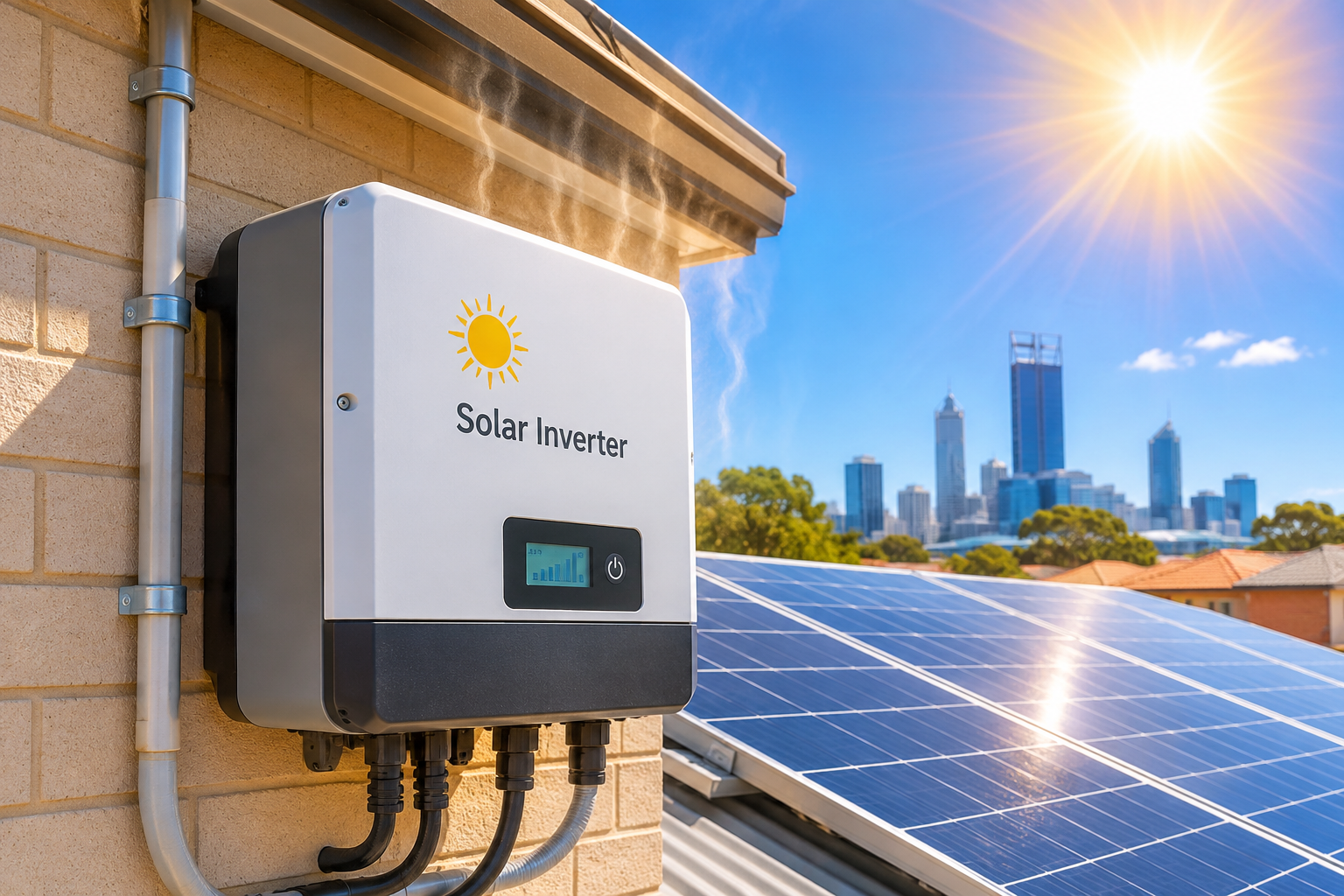
What if your solar panels are generating plenty of electricity on a hot Perth afternoon, but your solar system is producing less power than expected? The problem might not be your panels. It could be the heat affecting your solar inverter.
Perth enjoys long, sunny summers, making solar energy a popular choice for homeowners and businesses across Western Australia. However, while sunshine helps solar panels generate electricity, excessive heat can create challenges for the equipment that converts that electricity into usable power.
A solar inverter plays an important role in your solar system's overall performance. Understanding how Perth's hot weather affects inverter efficiency, temperature derating and equipment lifespan can help you make better decisions when installing or maintaining your solar system.
Let's explore what happens to solar inverters during hot weather and how you can keep yours performing reliably.
1. Why Does Perth's Heat Matter for Solar Inverter Performance?
A solar inverter converts the direct current (DC) electricity generated by solar panels into alternating current (AC) electricity that powers household appliances and business equipment.
Like other electronic devices, solar inverters generate heat while operating. When outdoor temperatures are already high, the inverter has to manage its own operating heat as well as the surrounding environmental temperature.
This can become particularly important during Perth's summer months.
According to the Bureau of Meteorology, Perth Metro's long-term mean maximum temperatures are around 31.4°C in January and 31.7°C in February. These conditions make heat management an important consideration when planning a rooftop solar installation.
For example, an inverter installed on a west-facing wall that receives strong afternoon sunlight may experience more heat exposure than one installed in a shaded, well-ventilated location.
This does not mean solar inverters cannot operate in Perth's climate. Many models are designed for demanding environmental conditions. However, choosing suitable equipment and installing it correctly can make a difference.
2. How Does High Temperature Affect Solar Inverter Efficiency?
Solar inverter efficiency refers to how effectively an inverter converts the electricity it receives from solar panels into usable AC electricity.
Although modern inverters are designed to operate efficiently, high temperatures can affect their performance.
When internal components become hotter, the inverter may need to adjust its operation to remain within safe operating conditions. This can affect the amount of electricity it processes at a particular time.
There are several reasons why this happens:
- Internal heat generation: Electronic components produce heat while converting electricity.
- High outdoor temperatures: Hot summer weather makes it harder for the inverter to release internal heat.
- Direct sunlight: An inverter exposed to strong sunlight can become hotter than one installed in a shaded position.
- Restricted ventilation: Limited airflow can prevent heat from escaping efficiently.
It is also important to understand that solar panels themselves can experience reduced electrical efficiency as their temperature rises. Therefore, lower solar production on a hot day does not automatically mean the inverter is responsible.
Both the panels and inverter should be considered when investigating system performance.
3. What Is Thermal Derating in a Solar Inverter?
One important feature of modern solar inverters is thermal derating.
In simple terms, thermal derating means an inverter automatically reduces its power output when its internal temperature becomes too high.
Think of it as a protective mechanism. Rather than allowing excessive heat to damage sensitive electronic components, the inverter reduces the amount of electricity it processes.
For example, imagine your solar system is operating normally in the morning. As the afternoon temperature increases, the inverter's internal temperature may also rise. If it reaches a specified thermal threshold, the inverter may temporarily reduce its output.
Once the temperature falls, it can return to normal operation, depending on its design and operating conditions.
What can cause thermal derating?
- Extremely hot summer afternoons.
- Poor ventilation around the inverter.
- Installation in direct sunlight.
- Dust accumulation around cooling openings.
- High internal operating temperatures.
Thermal derating is not necessarily a sign of a damaged inverter. It is often a built-in safety response.
However, if your system repeatedly reduces output or displays temperature warnings, it is worth arranging an inspection by a qualified solar technician.
4. Can Perth's Hot Weather Reduce Solar Inverter Lifespan?
Yes. Regular exposure to excessive operating temperatures can contribute to the ageing of electronic components.
A solar inverter contains several components that work together to manage and convert electricity. Some electronic components are particularly sensitive to prolonged heat exposure.
When these components operate at consistently high temperatures, they can experience additional thermal stress. Over time, this may affect their reliability and service life.
However, this does not mean every hot Perth summer will damage your inverter.
The actual lifespan depends on several factors:
Inverter quality: Product design, component quality and cooling technology influence how an inverter handles heat.
Installation location: An inverter installed in an appropriate shaded and ventilated position may experience less environmental heat stress.
Maintenance: Dust, debris and restricted airflow can affect cooling performance.
Operating conditions: Electrical loads, environmental temperatures and system configuration all influence inverter operation.
Manufacturer specifications: Different inverter models have different operating temperature ranges and maintenance requirements.
For these reasons, it is worth reviewing the manufacturer's technical information before selecting an inverter for your property.
5. How to Protect Your Solar Inverter During Perth Summers
The good news is that homeowners can take several practical steps to reduce unnecessary heat exposure and support reliable inverter performance.
Here are some useful considerations for Perth properties.
- Choose an appropriate installation location: Where practical and permitted by the manufacturer, install the inverter away from strong direct afternoon sunlight.
- Allow sufficient airflow: Maintain the manufacturer's recommended clearance around the inverter. Avoid enclosing it in a small, poorly ventilated space.
- Keep the surrounding area clean: Prevent leaves, dust and other debris from blocking ventilation openings.
- Monitor your solar production: Use your inverter's monitoring application to check daily electricity generation and identify unusual changes.
- Pay attention to warning messages: Repeated temperature warnings, unexpected shutdowns or unusual operating behaviour should be investigated.
- Check the inverter warranty: Understand what the manufacturer covers and whether regular servicing or specific maintenance conditions apply.
- Arrange professional inspections: Have a qualified technician inspect the system if you notice recurring performance problems.
Never open an inverter enclosure or attempt electrical repairs yourself. Solar equipment can contain dangerous electrical components even when the system is not actively generating power.
6. What Should You Consider When Choosing a Solar Inverter in Perth?
If you are planning a new solar installation or replacing an existing inverter, choosing equipment suitable for Perth's climate should be part of your decision.
Rather than comparing products on price alone, consider the following factors.
Operating temperature range: Check the manufacturer's specified ambient operating temperature range and understand when the inverter may begin reducing output.
Cooling technology: Different models use different cooling methods, including natural convection and active cooling systems. Consider which design suits your installation environment.
Inverter capacity: The inverter should be appropriately matched to your solar panel system and electricity requirements.
Battery compatibility: If you are considering battery storage in the future, check whether the inverter supports your preferred battery configuration.
Warranty and product support: Compare warranty conditions, manufacturer support and replacement arrangements.
Australian compliance: Make sure the selected grid-connected inverter meets the applicable Australian requirements and is appropriately approved for installation.
In Western Australia, grid-connected inverters must also meet relevant network connection requirements. The Clean Energy Council's updated AS/NZS 4777.2:2020 Amendment 2:2024 inverter product standard came into effect on 23 August 2025. Western Australia's inverter requirements also include the applicable Australia Region B settings for relevant grid-connected systems.
Conclusion: Is Your Solar Inverter Ready for Perth's Summer?
Perth's sunshine offers excellent opportunities for solar energy, but summer heat should not be overlooked when choosing or maintaining a solar inverter.
High temperatures can affect inverter efficiency, trigger thermal derating and contribute to long-term component ageing. The right equipment, suitable installation location and proper ventilation can help manage these challenges.
If you are planning a new solar system or considering an inverter upgrade, take time to understand your property's energy requirements and the equipment specifications.
Solar 365 provides information about solar inverter solutions for Perth homeowners and businesses, helping property owners explore options that suit their solar requirements.
A question for Perth homeowners: Have you noticed your solar system producing less electricity during extremely hot summer afternoons? Understanding how your inverter responds to heat could help you identify what is happening.


