
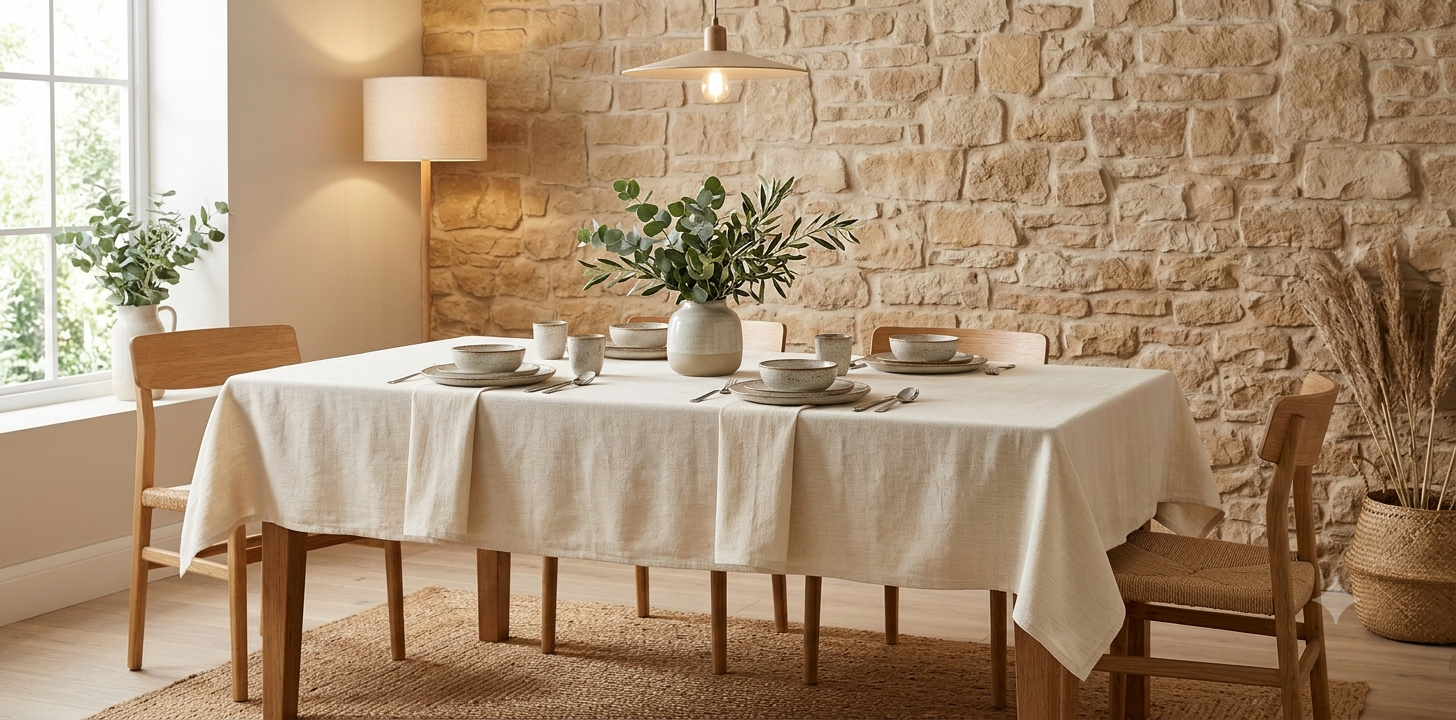
A textured accent wall can give a dining room depth and character without requiring a lot of additional decoration. Whether it features exposed brick, wood panels, decorative plaster, or a subtle stone finish, it can become a natural focal point in the space.
When a dining table sits in front of or near this wall, the table setting should complement its texture rather than compete with it. The right tablecloth, a considered color palette, and simple accessories can bring the different elements together while keeping the room comfortable for everyday dining.
1. Let the Accent Wall Set the Tone
Start by identifying the material, color, and visual weight of your accent wall. A rough brick surface creates a different atmosphere from smooth decorative plaster or vertical wood panels.
If the wall has a strong pattern or noticeable texture, choose a simple Tablecloth to keep the dining area balanced. A plain covering allows the wall to remain the main feature while giving the tabletop a neat, finished appearance.
For a subtle accent wall, you can introduce a small pattern or a contrasting color on the table. The goal is to create a connection between the two surfaces without making the room feel overly decorated.
2. Choose Fabric That Adds a Softer Texture
Textured walls can sometimes make a room feel visually heavy, especially when they use stone, brick, or dark wood. A fabric table covering introduces a softer surface that balances these materials.
A cotton table cloth can work particularly well in this setting. Its natural woven appearance complements rustic and contemporary interiors while adding warmth to the dining table.
Consider the weight and finish of the fabric. A simple, lightly textured design can provide enough detail without competing with the wall's surface.
3. Coordinate Colors With the Wall Finish
The accent wall can provide the starting point for your dining room palette. Look for one or two shades within its material or finish that can be repeated on the table and accessories.
For a brick wall, warm beige, cream, muted green, or earthy brown can create a comfortable combination. A wood-paneled wall may pair well with soft neutrals or gentle contrasting colors. If the wall is dark, lighter table coverings can help brighten the dining area.
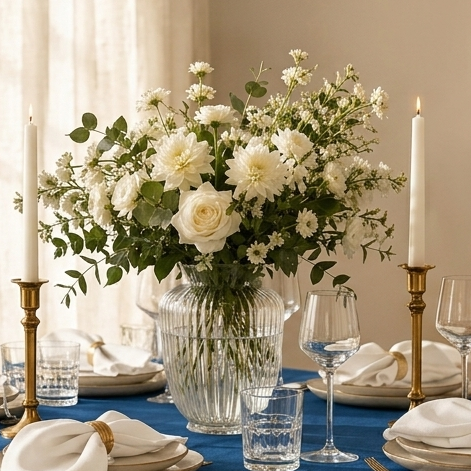
A black table cloth can create a defined focal point against a pale stone or light plaster wall. Pair it with lighter dinnerware and simple decorative pieces to maintain visual balance.
4. Select the Right Covering for Your Table Shape
The table's shape should guide the type of covering you choose. Consider how much space is available around the table, particularly if it sits close to the accent wall.
For a circular dining table, round table cloths provide even coverage and create a softer outline against the wall's structure.
A long dining table can be styled with a rectangle table cloth that follows its proportions. If the dining area is compact, a square table can offer a practical alternative.
Measure the tabletop before selecting a size. Add twice the desired drop to both the length and width to calculate the finished dimensions. Also check that the fabric does not become trapped between the table and nearby furniture.
5. Use Patterns According to the Wall's Design
A patterned tablecloth can add personality, but it should suit the amount of detail already present in the room.
If the accent wall has strong visual features, such as irregular brickwork or pronounced wood grain, a solid tablecloth may be the better choice. This creates contrast through texture rather than introducing another busy pattern.
For a plain or lightly textured wall, square table cloths with a small gingham design can bring a relaxed touch to a compact dining table. Keep the centerpiece and dinnerware relatively simple so the pattern remains easy on the eye.
6. Balance the Wall With Suitable Lighting
Lighting can bring out the details of a textured wall and influence how the tablecloth looks throughout the day.
Natural daylight can highlight the grain of wood panels, the uneven surface of brick, or the finish of decorative plaster. In the evening, warm pendant lighting or wall sconces can create a comfortable dining atmosphere.
Position the main light above the dining table when possible. Avoid lighting that creates harsh glare on the tabletop or leaves the dining area too dark. A well-lit table helps the fabric texture and table setting look inviting.
7. Keep the Centerpiece Simple
When an accent wall already provides visual interest, the dining table does not need a large arrangement of accessories.
A low ceramic vase, a small bowl, or a modest arrangement of greenery can complement the wall without competing with it. Choose materials that relate naturally to the room. For example, pottery can work with plaster finishes, while a wooden serving board may suit a brick or timber wall.
Leave enough space for plates, glasses, and serving dishes. The centerpiece should be easy to move when the table is used for meals or gatherings.
8. Connect the Dining Furniture With the Accent Wall
The dining chairs, sideboard, and other furniture can help link the table to the wall. If the wall features warm wood, consider chairs with a similar finish. For a stone or plaster wall, upholstered seating can introduce a softer element.
You do not need every material to match. A few repeated tones or complementary textures can create a coordinated appearance.
If the room already has several decorative features, keep additional accessories limited. This gives the accent wall enough room to stand out while making the dining area feel organized.
Conclusion
A textured accent wall can give a dining room a distinctive focal point, while a thoughtfully styled table helps balance the overall space. Choose a tablecloth that complements the wall's material and color, consider the table's proportions, and keep accessories simple. All Cotton and Linen offers tablecloth styles that can help bring a softer, coordinated finish to your dining area.


