
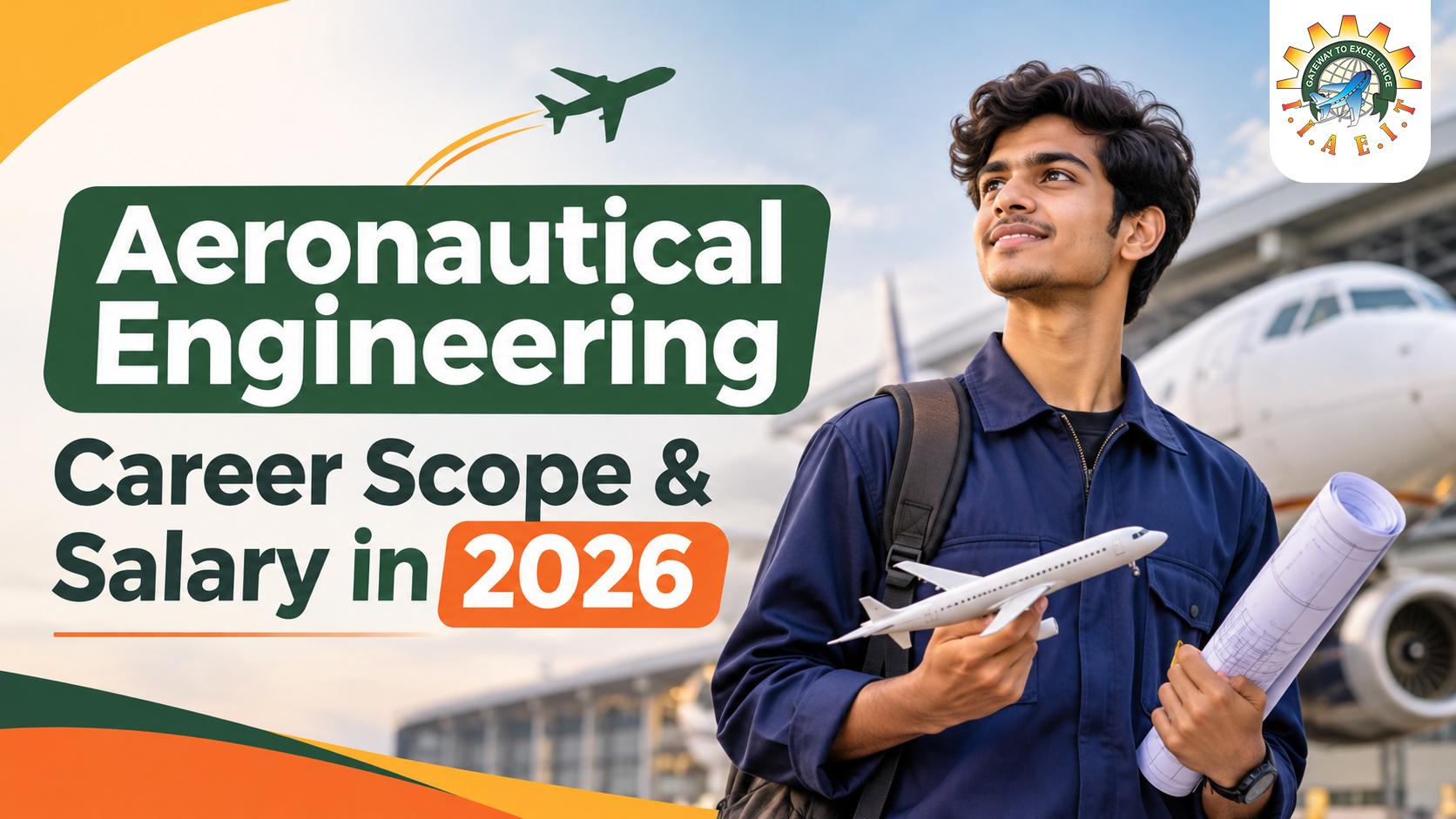

Aeronautical Engineering in 2026: Career Scope, Salary & Future Opportunities
Aircraft technology continues to advance through new materials, digital systems, and improved propulsion methods. These developments create opportunities for engineers across aviation and aerospace industries.
Aeronautical engineering focuses on designing, developing, testing, and maintaining aircraft. It combines aerodynamics, propulsion, aircraft structures, and flight control systems. Students can explore careers in aircraft manufacturing, maintenance, research, and defence. This article explains career options, salary factors, and future opportunities in 2026. It also discusses how IIAEIT supports students pursuing careers in this technical field.
Key Takeaways
-
Aeronautical engineering focuses on aircraft operating within Earth's atmosphere.
-
Career opportunities include aircraft design, testing, maintenance, and research.
-
Technical skills and experience influence salary and career growth.
-
India's expanding aviation and aerospace sectors create new engineering opportunities.
1. What Is Aeronautical Engineering?
Aeronautical engineering involves the design, development, and testing of aircraft. It covers the engineering principles that help aircraft fly safely and efficiently.
The field includes:
-
Aerodynamics and aircraft performance.
-
Aircraft structures and materials.
-
Propulsion systems and engines.
-
Flight mechanics and control systems.
An Aeronautical Engineering course combines these subjects with mathematics, physics, and practical engineering.
2. Career Scope in 2026
The Aeronautical Engineering career scope extends across several industries. Graduates can work in aircraft manufacturing, aviation services, defence, and research.
Common career options include:
-
Aircraft Design Engineer: Develops aircraft components and systems.
-
Aerodynamics Engineer: Studies airflow and aircraft performance.
-
Flight Test Engineer: Evaluates aircraft performance and safety.
-
Maintenance Engineer: Supports aircraft inspection and maintenance.
-
Research Engineer: Develops new aviation technologies.
Career opportunities depend on technical skills, qualifications, and employer requirements.
3. Aeronautical Engineering Salary in India
Salary depends on experience, employer, location, and technical specialisation. Entry-level engineers may earn less than experienced engineers working in specialised roles.
The average salary is around ₹33,147 per month.
Actual earnings may vary considerably across employers and engineering roles.
4. Future Opportunities in Aeronautical Engineering
India's aviation sector continues to expand through aircraft manufacturing and maintenance.
The government is also supporting domestic aerospace manufacturing and defence production.
These developments create opportunities in:
-
Aircraft component design and manufacturing.
-
Aircraft maintenance, repair, and overhaul.
-
Unmanned aerial vehicle development.
-
Defence aircraft research and engineering.
-
Aircraft testing and performance analysis.
Engineers with digital design and simulation skills may find opportunities in advanced engineering projects.
5. Why Choose IIAEIT for Aeronautical Engineering?
IIAEIT offers undergraduate and postgraduate programmes in aeronautical and aerospace engineering.
Its programmes focus on technical knowledge, practical learning, and industry exposure.
Key institutional features include:
-
Dedicated programmes in aeronautical and aerospace engineering.
-
Practical learning through engineering projects and simulations.
-
Industry connections for exposure to aerospace applications.
-
Training across aircraft design, manufacturing, and development.
-
Postgraduate options in aerospace, space technology, and defence technology.
Students can explore advanced study after completing an Aeronautical Engineering degree.
IIAEIT also offers a two-year M.Tech Aerospace Engineering programme for eligible graduates.
6. Skills That Support Career Growth
Aeronautical engineers need strong technical and analytical skills.
Important skills include:
-
Mathematics and engineering mechanics.
-
Aircraft structures and aerodynamics.
-
Computer-aided design and simulation.
-
Problem-solving and technical communication.
-
Knowledge of aircraft safety and testing.
Practical experience can help graduates apply these skills in professional settings.
Conclusion
Aeronautical engineering offers opportunities across aircraft design, manufacturing, maintenance, and research. India's aviation and aerospace industries continue to develop new technologies and engineering capabilities.
An Aeronautical Engineering degree provides the foundation for these technical careers.
IIAEIT offers specialised programmes and practical learning opportunities for aspiring engineers. Students can also pursue postgraduate study to develop advanced technical expertise.


