
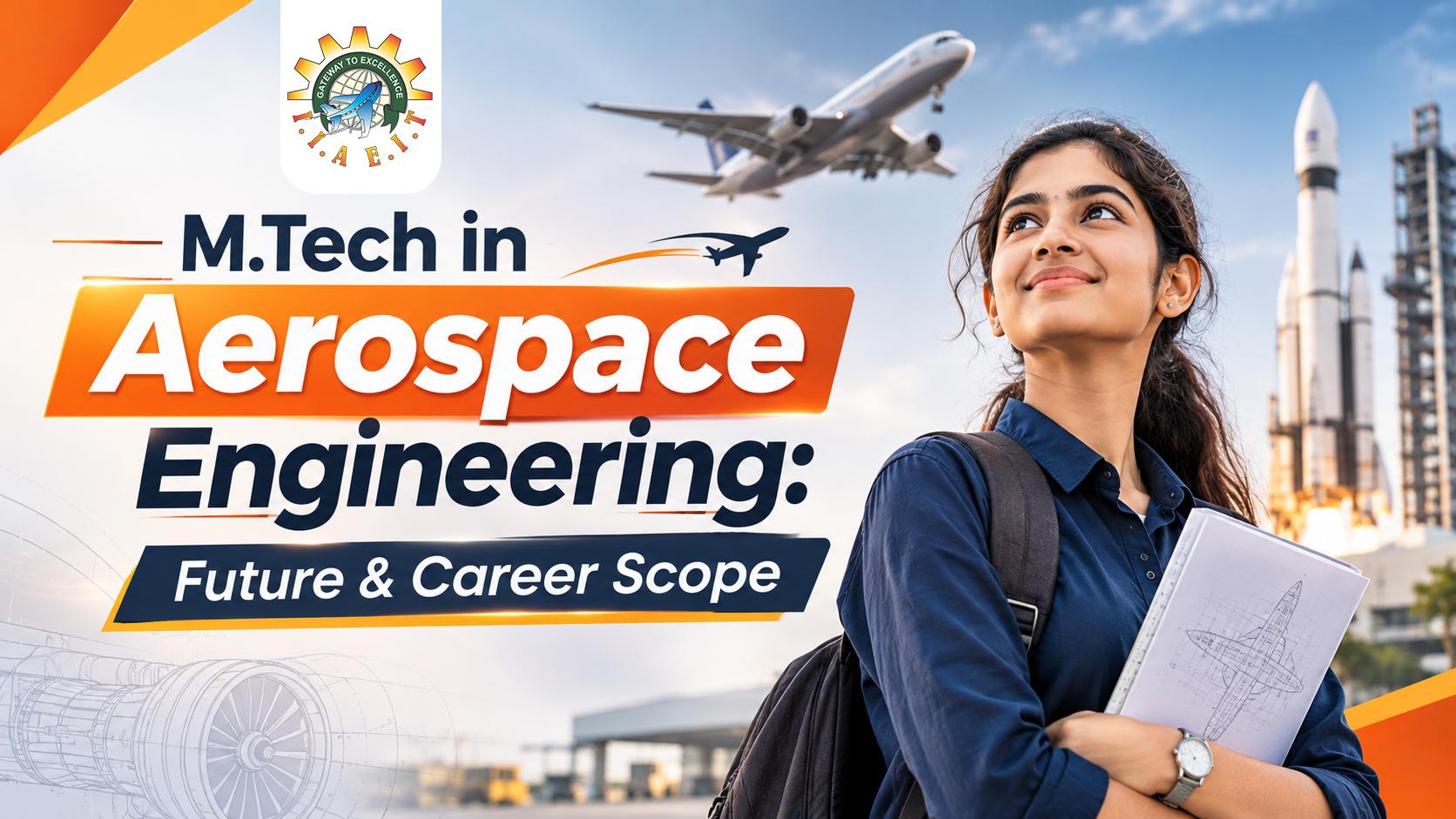
Beyond the Sky: How M.Tech Aerospace Engineering Shapes the Future of Flight
Aircraft and spacecraft are becoming more advanced, efficient, and reliable. Engineers now work on electric propulsion, autonomous flight, and advanced materials. These technologies are changing how people travel and explore space.
An M.Tech Aerospace Engineering degree helps graduates develop the technical skills needed for these challenges. It covers aircraft design, propulsion, aerodynamics, and flight systems. India's growing aviation, defence, and space sectors also create new opportunities for skilled engineers. This article explains emerging technologies, career paths, and the role of postgraduate education. It also explores how IIAEIT prepares students for specialised aerospace careers.
Key Takeaways
-
Aerospace engineering supports aircraft design, spacecraft development, and defence technology.
-
Electric propulsion, autonomous systems, and advanced materials are changing aerospace engineering.
-
India's growing aerospace sector creates opportunities in research, manufacturing, and maintenance.
-
Postgraduate study builds advanced technical knowledge and practical engineering skills.
1. How Aerospace Engineering Is Changing Flight
Modern aerospace engineering combines mechanical engineering, electronics, computing, and materials science.
Engineers use these fields to improve aircraft performance, safety, and fuel efficiency.
Key developments include:
-
Electric and hybrid propulsion systems for more efficient aircraft.
-
Lightweight composite materials that reduce aircraft weight.
-
Autonomous flight systems for unmanned aerial vehicles.
-
Computational tools that improve aerodynamic design and testing.
These developments require engineers who understand both aircraft systems and advanced engineering methods.
2. Future of Aerospace Engineering: Technologies to Watch
The Future of Aerospace Engineering depends on advances in propulsion, materials, and digital design.
Sustainable Aviation
-
Aircraft manufacturers are exploring sustainable aviation fuels and electric propulsion.
-
These technologies aim to reduce emissions and improve energy efficiency.
-
Engineers must develop systems that balance performance, safety, and environmental needs.
Space Exploration
-
Space missions require advanced propulsion, structural design, and thermal protection.
-
Engineers also develop systems for satellites, launch vehicles, and spacecraft.
Autonomous Aircraft
-
Unmanned aircraft support defence, agriculture, surveillance, and disaster management.
-
Their development requires expertise in flight control, navigation, and embedded systems.
3. Aerospace Industry Trends in India
India's aerospace sector is expanding across aviation, defence, and space technology. The Ministry of Civil Aviation supports domestic aircraft and component manufacturing. The government's focus on indigenous defence production also creates opportunities for aerospace engineers.
Important developments include:
-
Growth in aircraft component manufacturing and maintenance services.
-
Increasing private-sector participation in aerospace and defence.
-
Expansion of domestic research and advanced manufacturing.
-
Development of technologies for aircraft, satellites, and defence systems.
These trends increase demand for engineers with specialised technical knowledge.
4. Career Opportunities After an M.Tech
An M.Tech Aerospace Engineering qualification can support careers across several technical fields.
Possible roles include:
-
Aerospace Design Engineer: Develops aircraft and spacecraft components.
-
Aerodynamics Engineer: Studies airflow and improves flight performance.
-
Propulsion Engineer: Works on engines and propulsion systems.
-
Structural Analysis Engineer: Evaluates aircraft strength and safety.
-
Research Engineer: Develops and tests new aerospace technologies.
Graduates may also pursue doctoral research or specialised technical roles.
5. Why Choose IIAEIT for Aerospace Engineering?
IIAEIT offers a two-year, full-time postgraduate programme in aerospace engineering. Its curriculum combines theoretical knowledge with practical engineering applications.
Key programme features include:
-
Coursework covering flight vehicle structures and computational aerodynamics.
-
Practical exposure to computational fluid dynamics and finite element analysis.
-
Project work aligned with aerospace industry standards.
-
Industry connections and exposure to real-world engineering challenges.
-
Learning opportunities across civil and military aerospace technologies.
-
Mentorship from experienced aerospace professionals and academics.
The programme also covers mathematical modelling, flight dynamics, and aerospace design.
These subjects help students develop the technical foundation required for specialised engineering roles.
6. Skills Needed for Future Aerospace Engineers
Aerospace engineers need strong analytical skills and technical knowledge.
Important skills include:
-
Mathematics and engineering mechanics.
-
Aerodynamics and flight dynamics.
-
Computational modelling and simulation.
-
Aircraft structures and materials.
-
Problem-solving and research skills.
Practical projects help students apply these skills to engineering problems.
Conclusion
Aerospace engineering continues to advance through new technologies and research. India's growing aviation, defence, and space sectors offer opportunities for specialised engineers. An M.Tech Aerospace Engineering qualification can help graduates develop advanced technical expertise.
IIAEIT's postgraduate programme combines engineering fundamentals, practical projects, and industry exposure. These features can support students pursuing careers in aerospace design, research, and development.


