
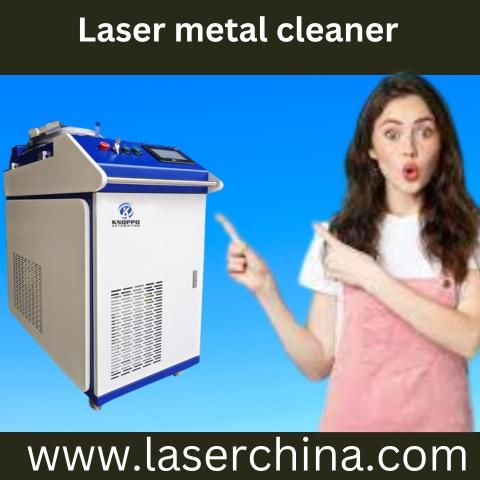
Laser Metal Cleaner: Advanced Technology for Efficient Metal Surface Treatment
Metal surfaces often accumulate rust, paint, oil, grease, and other unwanted contaminants during manufacturing, storage, and daily use. Traditional cleaning methods can require chemicals, abrasive materials, or extensive manual labor. Modern laser technology provides an advanced alternative for removing surface impurities with greater precision and control. A laser metal cleaner is designed to clean different metal surfaces by directing concentrated laser energy toward unwanted materials without relying on chemical cleaning agents.
How Does Laser Metal Cleaning Work?
Laser cleaning uses a focused beam of light to interact with contaminants on a metal surface. When the laser reaches the targeted area, its energy removes rust, paint, oxidation, and other unwanted layers through a controlled process called laser ablation.
The cleaning process can be adjusted according to the material, contamination level, laser power, and required surface finish. Operators can select suitable parameters to achieve consistent cleaning results while reducing unnecessary impact on the underlying metal.
This technology is commonly available in pulsed and continuous-wave configurations. Pulsed systems are frequently selected for precision applications, while continuous-wave systems are used for certain industrial cleaning operations requiring higher processing speeds.
Industrial Applications of Laser Metal Cleaner
A laser metal cleaner can support various industrial processes where clean and properly prepared surfaces are essential. Its applications extend across manufacturing, automotive production, aerospace, metal fabrication, and equipment maintenance.
In automotive workshops, laser cleaning can remove rust, paint, and oxidation from metal components before welding, repairing, or refinishing. Manufacturing facilities use this technology to prepare metal surfaces before coating and bonding processes.
Shipbuilding and heavy equipment industries can also use laser systems to clean corroded metal parts and remove unwanted surface deposits. Additionally, precision engineering companies apply laser cleaning to selected components where controlled surface treatment is important.
Choosing the Right Laser Cleaning Machine
Selecting suitable equipment requires an understanding of the cleaning application. Different materials and contaminants require different laser parameters, so buyers should evaluate their production requirements before purchasing a machine.
Laser power is an important consideration because it influences cleaning speed and the types of contamination that can be processed. Lower-power systems may be suitable for light rust and precision cleaning, while higher-power equipment can support demanding industrial applications.
Buyers should also consider the cleaning area, operating mode, cooling system, portability, maintenance requirements, and available technical support. A reliable supplier should provide clear specifications and application guidance to help customers select appropriate equipment.
Safety and Operating Considerations
Laser cleaning equipment must be operated according to the manufacturer's safety instructions. Industrial laser systems can present serious eye and skin hazards, making suitable protective equipment and controlled working environments essential.
Operators should use laser-rated protective eyewear appropriate for the machine's wavelength and power. Proper ventilation or fume extraction is also necessary because removing paint, coatings, and contaminants can release hazardous particles and fumes.
Before starting production, testing the cleaning parameters on a sample material helps establish the correct settings and avoid unnecessary surface damage.
Why Businesses Are Investing in Laser Cleaning Technology
Industrial companies increasingly look for cleaning solutions that improve production efficiency and maintain consistent surface quality. Laser technology offers an alternative to conventional abrasive and chemical-based processes, particularly in applications where controlled material removal is required.
A laser metal cleaner can be integrated into different manufacturing environments, from small metalworking workshops to larger industrial production facilities. Its application flexibility makes it a valuable option for businesses looking to modernize their surface preparation and maintenance operations.
Final Thoughts
Laser cleaning technology is changing how industries approach metal surface preparation and contamination removal. By providing controlled cleaning without conventional chemical treatments, it offers a modern solution for various manufacturing and maintenance requirements. Choosing the right equipment, understanding application parameters, and following proper safety procedures are essential for achieving reliable results. Businesses investing in a suitable laser metal cleaner can improve their cleaning processes while supporting long-term production efficiency.


