
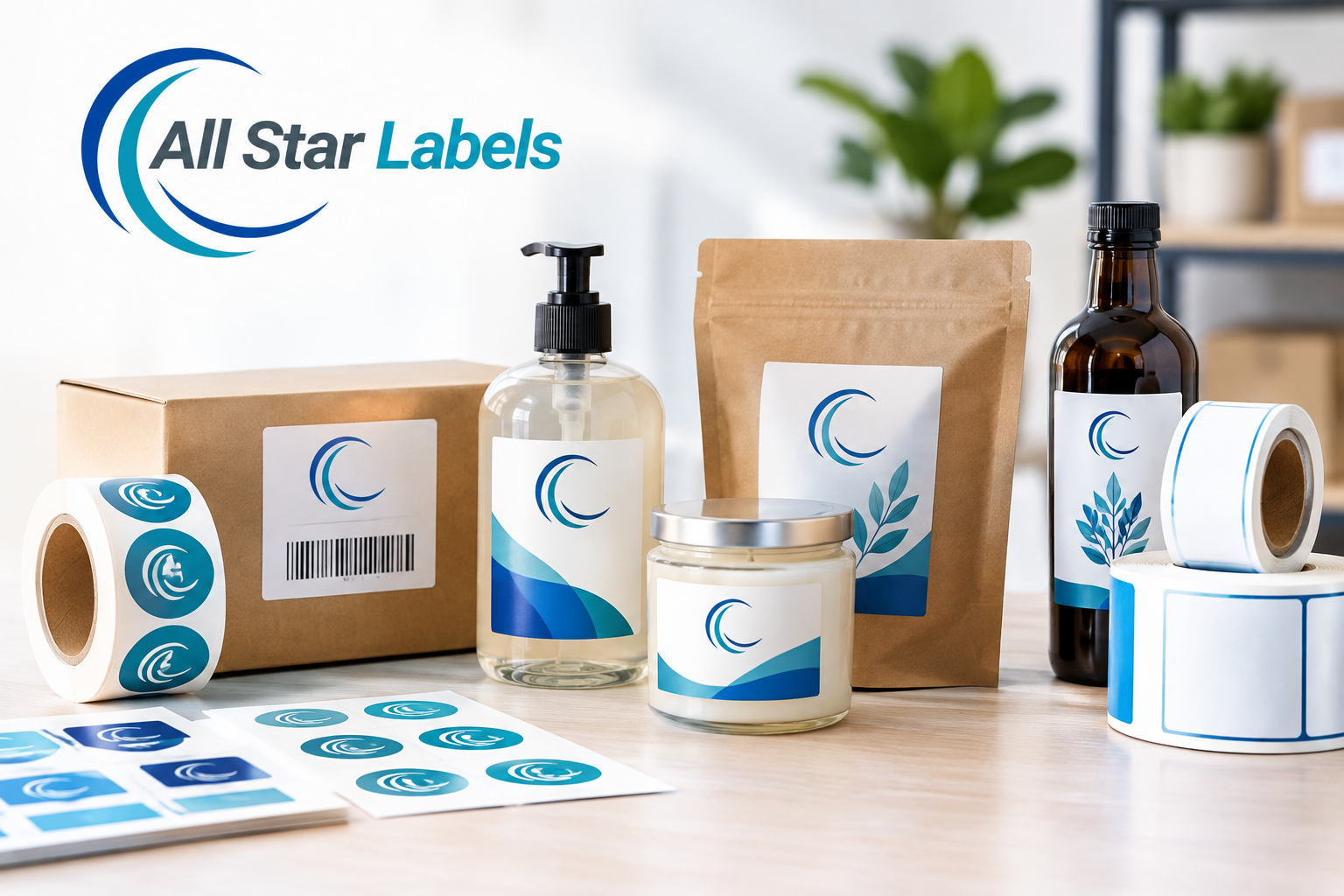
Labels are part of everyday business operations, even though people don't always pay much attention to them. From product packaging and shipping boxes to retail items and warehouse inventory, labels help businesses share important information, organize products, and maintain a professional appearance. Choosing the right label, however, involves more than simply picking a design. The printing method, material, and intended application all play an important role.
Different industries have different labeling requirements. Some need labels that withstand heat and moisture, while others prioritize clear product identification or long-lasting printed information. Understanding the available options makes it easier to choose a suitable solution for each application.
Understanding Different Types of Labels
Labels come in various materials, sizes, and finishes. Each type serves a particular purpose, depending on where and how it will be used. Here are some common options businesses rely on.
1. Paper Labels
Paper labels are among the most widely used options for everyday product identification and packaging. They are generally affordable and easy to customize, making them suitable for retail products, food packaging, price tags, and promotional purposes.
These labels work particularly well in indoor environments where exposure to moisture and rough handling is limited. Businesses can also choose between different finishes, including matte and glossy, depending on their packaging requirements.
2. Synthetic Labels
Synthetic labels are made from materials such as polypropylene and polyester. Unlike ordinary paper labels, they offer better resistance to moisture, tearing, and certain environmental conditions.
They are commonly used for chemical containers, industrial equipment, healthcare products, and outdoor applications. When durability matters, synthetic materials can be a more practical choice.
3. Thermal Transfer Labels
Thermal transfer labels are produced using heat to transfer ink from a ribbon onto the label surface. This printing method creates clear, durable text, barcodes, and other product information.
The quality of the printed result depends on selecting a compatible ribbon and label material. A suitable thermal transfer ribbon helps businesses achieve consistent printing while reducing issues such as smudging and poor barcode readability.
These labels are particularly useful in logistics, manufacturing, retail, and inventory management.
4. Direct Thermal Labels
Direct thermal labels use heat-sensitive paper that develops an image when exposed to a printer's heated printhead. Unlike thermal transfer printing, this method does not require an ink ribbon.
They are commonly used for shipping labels, receipts, delivery information, and short-term product identification. However, direct thermal prints can become less readable when exposed to excessive heat, sunlight, or friction.
Types of Thermal Transfer Ribbons and Their Uses
Selecting the right ribbon is just as important as choosing the label itself. Different ribbons offer different levels of durability and print quality.
Wax Thermal Transfer Ribbon
Wax ribbons are generally suitable for printing on paper labels. They provide good print clarity for everyday applications and are often selected for retail price tags, shipping labels, and warehouse identification.
They are an economical option for businesses that do not require exceptional resistance to chemicals or harsh environmental conditions.
Wax Resin Ribbon
A wax resin ribbon combines wax and resin components to provide greater durability than standard wax ribbons. It offers improved resistance to smudging, scratching, and everyday handling.
This type of ribbon is commonly used with coated paper and certain synthetic label materials. It works well for product identification, inventory tracking, and applications where printed information needs to remain readable for longer periods.
Resin Thermal Transfer Ribbon
For applications requiring stronger resistance, a resin thermal transfer ribbon is often a suitable choice. Resin ribbons are designed for demanding printing environments and are commonly paired with synthetic label materials.
They provide excellent resistance to abrasion, moisture, chemicals, and other challenging conditions, depending on the specific ribbon formulation and label combination.
Industries such as pharmaceuticals, automotive manufacturing, and chemical processing often use resin-based printing solutions for durable identification.
How to Choose the Right Label and Ribbon
With so many options available, selecting the right combination can feel confusing. A few practical considerations can make the decision easier:
-
Application environment: Consider whether the label will be used indoors, outdoors, or in an area exposed to moisture, heat, or chemicals.
-
Label material: Make sure the printing ribbon is compatible with the chosen label surface.
-
Required durability: Temporary shipping information may need a different solution than industrial product identification.
-
Printing requirements: Consider barcode clarity, text size, print speed, and overall image quality.
-
Budget: Compare the initial cost with the expected performance and replacement requirements.
A suitable thermal printer ribbon can make a noticeable difference in print quality and help prevent unnecessary printing problems. It is always worth checking printer compatibility before placing an order.
Why Businesses Choose All Star Labels
Finding reliable labeling products is an important part of maintaining smooth business operations. All Star Labels focuses on providing labeling solutions that support different business and industrial requirements.
Whether a company needs product labels, barcode printing supplies, or compatible thermal transfer ribbons, selecting the right materials can help maintain consistent results. The goal is to make everyday labeling tasks more manageable while ensuring printed information remains clear and professional.
Businesses should consider their specific printing needs before choosing a product, as the right combination of label material and ribbon can improve overall performance.
Final Thoughts
Labels do much more than display product names or prices. They support identification, inventory management, packaging, and communication across different industries. From basic paper labels to durable synthetic options, every type has its own purpose.
The same applies to printing ribbons. Wax, wax resin, and resin ribbons offer different performance levels, so choosing the right one depends on the application and required durability. By understanding these differences, businesses can make better purchasing decisions and achieve more reliable printing results.
Frequently Asked Questions
1. What are the most common types of labels?
Paper, synthetic, direct thermal, and thermal transfer labels are among the most commonly used options across retail, manufacturing, and logistics industries.
2. What is a thermal transfer ribbon used for?
It is used to transfer ink onto a label through heat, producing clear text, barcodes, and product information that can remain readable for extended periods.
3. What is the difference between wax and wax resin ribbons?
Wax ribbons are generally used for standard paper labels, while wax resin ribbons offer improved resistance to scratches and smudging and can work with suitable coated and synthetic materials.
4. When should businesses use resin thermal transfer ribbons?
Resin ribbons are suitable for applications requiring high durability, particularly when labels may face moisture, chemicals, abrasion, or challenging environmental conditions.
5. How can I choose the right thermal printer ribbon?
Consider your printer model, label material, printing environment, and durability requirements. Checking manufacturer compatibility recommendations can help you select the right ribbon.


