
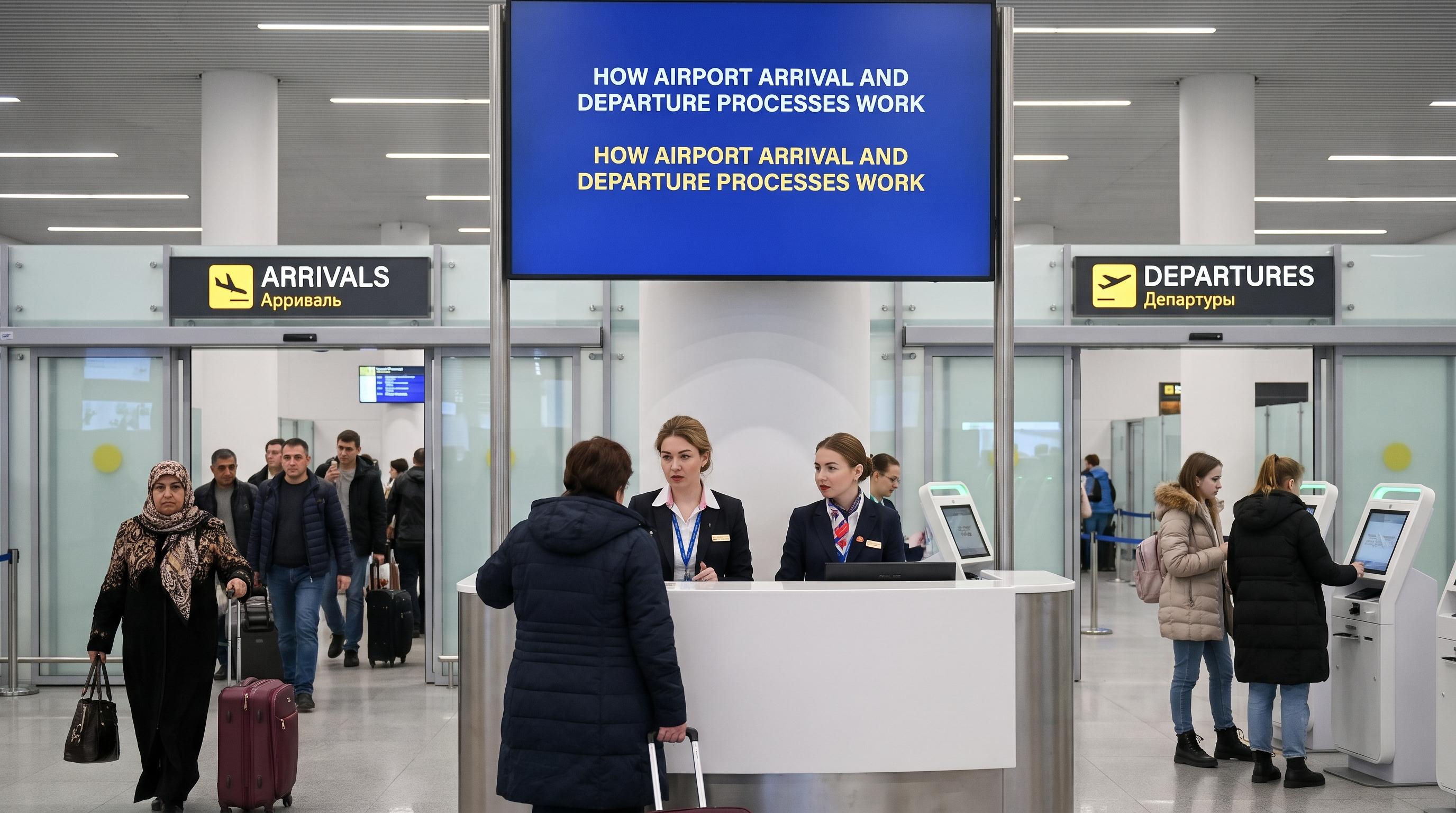

Air travel involves several coordinated steps that help passengers move safely and efficiently between destinations. From checking flight schedules and completing check-in to passing security and collecting baggage, every stage has a specific purpose. Understanding how airport procedures work allows us to prepare properly, manage time, and avoid unnecessary confusion.
The Airport arrival and departure process includes two main passenger journeys: preparing to board an aircraft and completing the required procedures after landing. Although individual airports may have different layouts and requirements, the general process remains similar across many domestic and international destinations.
Understanding Airport Arrival and Departure Procedures
Airport departure procedures begin when passengers arrive at the terminal and prepare for their flights. Travelers usually check their flight details, locate the correct airline counter or self-service kiosk, complete check-in, and drop off checked baggage if required.
After check-in, passengers proceed through security screening. International travelers may also need to complete departure immigration formalities. Once these procedures are finished, they can enter the departure lounge and wait near their assigned boarding gate.
Arrival procedures begin after an aircraft lands. Passengers leave the aircraft and follow signs toward immigration, baggage reclaim, and customs where applicable. Domestic passengers may proceed directly to baggage collection or the terminal exit, depending on airport arrangements.
Understanding these stages helps travelers know where to go and what documents or information they may need at each point.
How Airlines Manage Passenger Departures
Airlines coordinate many important aspects of the passenger journey. These include flight bookings, check-in facilities, boarding arrangements, baggage handling, schedule notifications, and assistance for passengers with special requirements.
Before leaving home, we should check the airline's official website or mobile application for updated flight information. These platforms commonly provide boarding times, baggage allowances, check-in deadlines, terminal details, and notifications about schedule changes.
Online check-in can save time at the airport, although passengers with checked baggage may still need to visit a designated baggage-drop counter. Some destinations also require document verification before boarding passes can be issued.
We should always follow the airline's instructions because check-in deadlines, baggage policies, and boarding procedures can differ between carriers and routes.
Using a Plane Tracker to Monitor Aircraft Movements
A plane tracker is a useful digital tool for following aircraft movements and checking flight progress. Depending on the tracking platform, users may be able to view aircraft positions, flight routes, estimated arrival times, departure information, and other operational details.
These services are particularly useful when coordinating airport pickups. For example, someone collecting a passenger can monitor the flight rather than relying entirely on the originally scheduled arrival time. This can help them adjust their journey if the aircraft is delayed or expected to land earlier.
Many tracking platforms allow users to search by flight number, airline, airport, or route. Some also display aircraft information and historical flight activity.
However, tracking data may be delayed, estimated, or unavailable for certain aircraft. A plane's position does not necessarily confirm its boarding status, gate assignment, or baggage availability. We should use official airline notifications and airport information screens for decisions that require confirmed operational updates.
How to Track Airline Flights Live
The ability to Track airline flights live makes travel coordination more convenient for passengers, families, and people arranging transportation. Flight-tracking services can display information such as departure progress, aircraft location, route details, estimated arrival times, and reported delays.
To follow a particular flight, we generally need its flight number or relevant route information. Entering the flight number into a tracking platform can help identify the correct aircraft and display available updates.
Live tracking can be useful in several situations:
-
Before departure: Check whether a flight is scheduled, delayed, or reported as departed.
-
During the journey: Follow available aircraft-position information and route progress.
-
Before arrival: Estimate when the aircraft may reach its destination.
-
For airport pickups: Coordinate transportation around updated arrival information.
-
For connecting journeys: Monitor the progress of an incoming flight when planning onward travel.
We should remember that the term "live" does not always mean every update is instantaneous. Coverage, reporting intervals, and data availability vary between tracking providers. For confirmed changes to a flight, the airline remains the primary source.
Airport Check-In and Security Screening
Check-in is one of the first important steps in the departure process. Passengers confirm their booking details, receive a boarding pass, and submit checked baggage when necessary. Online check-in may be available before reaching the terminal, depending on the airline and destination.
Security screening follows check-in or baggage drop. Passengers and their belongings are screened according to airport security requirements. Rules concerning liquids, electronic devices, restricted items, and carry-on baggage can vary, so we should review the relevant airport and airline guidance before packing.
International passengers may also need to complete passport control or departure immigration. Keeping travel documents accessible can make these procedures easier.
Once security and other required checks are complete, passengers should check the airport display screens and proceed to the correct departure gate.
What Happens During Airport Arrival?
After landing, passengers usually leave the aircraft and follow terminal signs. At international airports, immigration is often the first major arrival procedure. Travelers may need to present passports, visas, arrival forms, or other required documents.
After immigration, passengers collect checked baggage from the assigned carousel. The carousel number is generally displayed on airport screens, although information may change as baggage operations progress.
Customs procedures follow where applicable. Passengers should declare goods when required and comply with the destination country's customs regulations.
Once these formalities are complete, travelers can enter the public arrival area and continue to their accommodation, connecting transportation, or onward destination.
How Flight Information Screens Support Travelers
Airport information screens provide essential details about arriving and departing flights. Departure displays commonly show flight numbers, destinations, scheduled times, estimated times, check-in information, and boarding gates.
Arrival screens usually display origin airports, estimated arrival times, flight status, and baggage carousel details when available.
We should check these screens regularly because operational information can change. A flight may be assigned a different gate, experience a delay, or arrive at a different time than originally scheduled.
Combining airport display information with a plane tracker can provide a more complete picture of a journey, although official airport and airline announcements should take priority for confirmed passenger instructions.
Common Reasons for Flight Delays
Flight delays can occur for several reasons, including adverse weather, air traffic congestion, technical inspections, operational restrictions, and airport capacity issues.
When a delay occurs, passengers should monitor airline messages and airport displays. If the schedule changes significantly, the airline can explain available options according to its policies and applicable passenger regulations.
We should also allow flexibility when arranging airport transportation. A pickup planned around the original arrival time may need adjustment if the aircraft experiences an unexpected delay.
Practical Tips for a Smooth Airport Experience
A little preparation can make airport procedures easier to manage:
-
Check flight details: Confirm the flight number, date, terminal, and scheduled departure time.
-
Arrive early: Follow the airline's recommended airport arrival time.
-
Prepare documents: Keep identification, passports, visas, and boarding passes accessible.
-
Review baggage rules: Check weight limits and restrictions before packing.
-
Monitor flight updates: Use airline notifications and flight-tracking services.
-
Follow airport signs: Check directions for security, immigration, baggage reclaim, and boarding.
-
Plan transportation: Allow flexibility for delays and changes in arrival times.
These steps help us stay organized throughout the journey and respond more effectively to unexpected changes.
Conclusion
Understanding how airport procedures work makes air travel more organized and predictable. The Airport arrival and departure process involves several coordinated stages, from check-in and security to boarding, immigration, baggage collection, and customs.
By following instructions from Airlines, using a reliable plane tracker, and learning how to Track airline flights live, we can stay better informed about flight progress and coordinate travel arrangements more effectively.


