Most men don’t have a style issue — they have a tolerance issue. They tolerate sleeves that are slightly long. Jackets that pull a little at the button. Trousers that bunch just enough to look off.
You’ve probably done it too. Tried something on, noticed small flaws, and convinced yourself it’s fine.
It’s not fine. It’s compromise.
A Made to Measure tailor exists to eliminate that compromise without pushing you into the full bespoke process. It’s the intelligent middle ground between mass-produced clothing and fully hand-drafted suits.
What a Made to Measure Tailor Actually Changes
Let’s get practical.
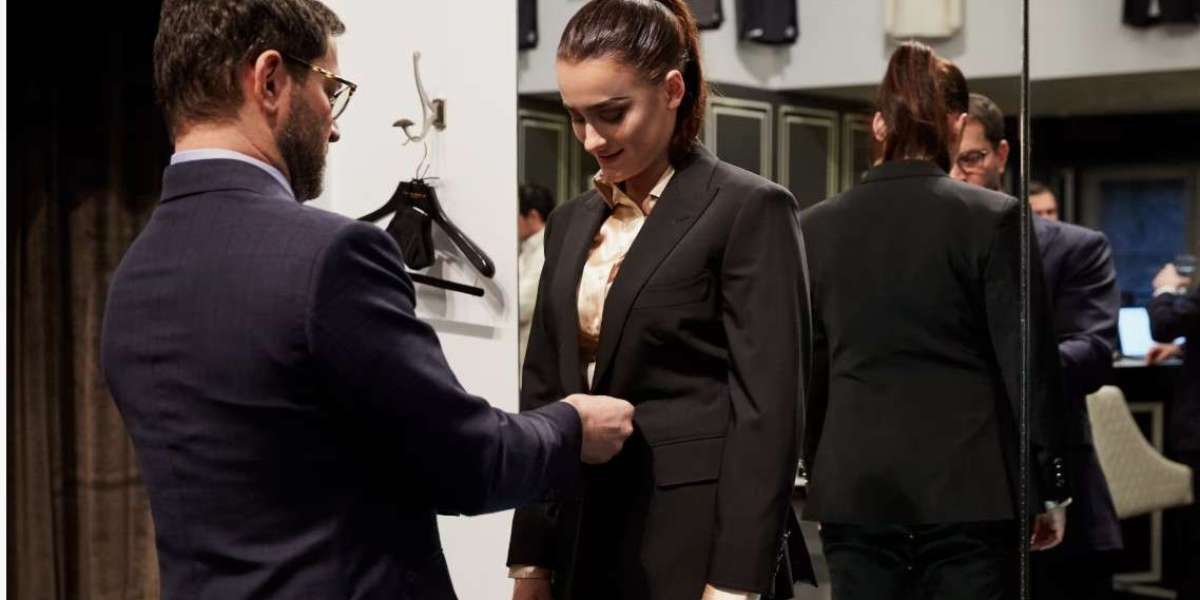
Instead of buying a standard size and altering it randomly, a Made to Measure tailor adjusts a structured base pattern according to your exact body measurements. That includes:
Shoulder width and slope
Chest depth and balance
Waist shaping
Sleeve pitch and length
Jacket length
Trouser taper and break
These adjustments create proportion. And proportion is what sharp dressing is built on.
When shoulders sit correctly and the waist contours naturally, the entire silhouette looks intentional — not accidental.
Why Off-the-Rack Is Designed to Fail You
Retail brands build clothing for scale. They need to sell to thousands of body types using limited sizing blocks. That means you are expected to adapt to the garment.
Your body doesn’t work like that.
Maybe your posture leans forward slightly. Maybe one shoulder sits lower. Maybe your arms rotate inward. Standard sizing ignores these realities.
A Made to Measure tailor corrects these imbalances at the pattern level, not just at the hemline.
That difference separates structured dressing from retail compromise.
The Process: Direct and Efficient
The process isn’t complicated, but it must be disciplined.
Consultation – Define the purpose: business, wedding, formal events, daily wear.
Detailed Measurement Session – More than chest and waist; posture and stance included.
Fabric & Design Selection – Choose cloth, lining, lapels, buttons, vents.
Fitting – Final refinements before completion.
Because the base pattern already exists, delivery is faster than bespoke. But don’t confuse speed with carelessness. If measurements feel rushed, quality will suffer.
Brands like tailorandbond prioritize measurement precision and structural integrity over quick sales. The focus remains on consistent fit and durable craftsmanship.
Fabric Is Not Decoration
You can’t separate fit from fabric.
Wool remains the most versatile choice — breathable, resilient, structured. High-twist wool holds shape well for frequent wear. Heavier fabrics provide stronger structure in colder climates. Lightweight weaves increase comfort in warm conditions.
A competent Made to Measure tailor explains how fabric behaves long term — not just how it looks in the showroom.
Cheap cloth loses structure. Quality cloth matures.
The Psychological Edge
When clothing fits precisely, your behavior changes.
You stop adjusting your jacket. You stop pulling at your sleeves. You stand straighter without trying.
Humans instinctively read symmetry and balance as signs of discipline. A clean silhouette communicates control. Control builds trust.
In professional environments, that subtle shift in presence can influence outcomes more than you realize.
Build Fewer, Better Pieces
Stop chasing quantity. Build foundation.
Start with:
A navy suit for versatility
A charcoal or grey suit for rotation
Two structured shirts
A sharp blazer
Once your measurements are accurately stored, repeat orders become consistent. No guessing sizes. No repeating alteration cycles.
A Made to Measure tailor turns your wardrobe into infrastructure — not impulse purchases.
Is It Worth the Investment?
If you’re content with “good enough,” then no.
If you value structure, proportion, and durability — yes.
Made-to-measure clothing costs more than ready-made, but less than bespoke. Spread across years of wear, the value becomes rational.
Replacing mediocre suits every season is not saving money. It’s repeating mistakes.
Final Thoughts
A Made to Measure tailor offers precision without unnecessary complexity. It’s the logical upgrade for men who want discipline in their wardrobe without entering full bespoke territory.
Fit is not a luxury. It’s the baseline for authority.
Once you experience clothing shaped intentionally around your body, settling for average becomes difficult to justify.