A new garage door is one of those home projects that sounds straightforward until you're actually staring at your calendar trying to figure out what the day is going to look like. How long will it take? Do you need to move your car? Will the crew need access to your house? Most homeowners going through this for the first time have no idea what to expect, and that uncertainty makes the whole thing feel bigger than it is. If you've already booked Garage Door Installation Services in Pottstown PA, or you're close to doing so, this breakdown will walk you through exactly what happens, from the first measurement visit to the final safety test.
The Pre-Installation Assessment Comes First
Before any door gets ordered, a technician will come out to measure your opening and check the structural condition of the surrounding framing. This part matters more than most people realize. A door that's even a quarter inch off can bind, gap, or just plain not work right. They're looking at the width, height, and depth of the opening, but also the condition of the header board above and the side jambs on either side.
If the framing is rotted or out of square, that gets flagged before the order goes in. Good. You don't want to find that out after the door arrives. The technician will also ask about your opener setup, whether you want to keep your existing motor or replace it, and whether you need any electrical work done before install day. That conversation saves a lot of headaches later.
For anyone in the area, garage door construction and components vary quite a bit by material and style, so this is also a good moment to nail down exactly what you've ordered and confirm the specs match the opening.
What Actually Happens on Installation Day
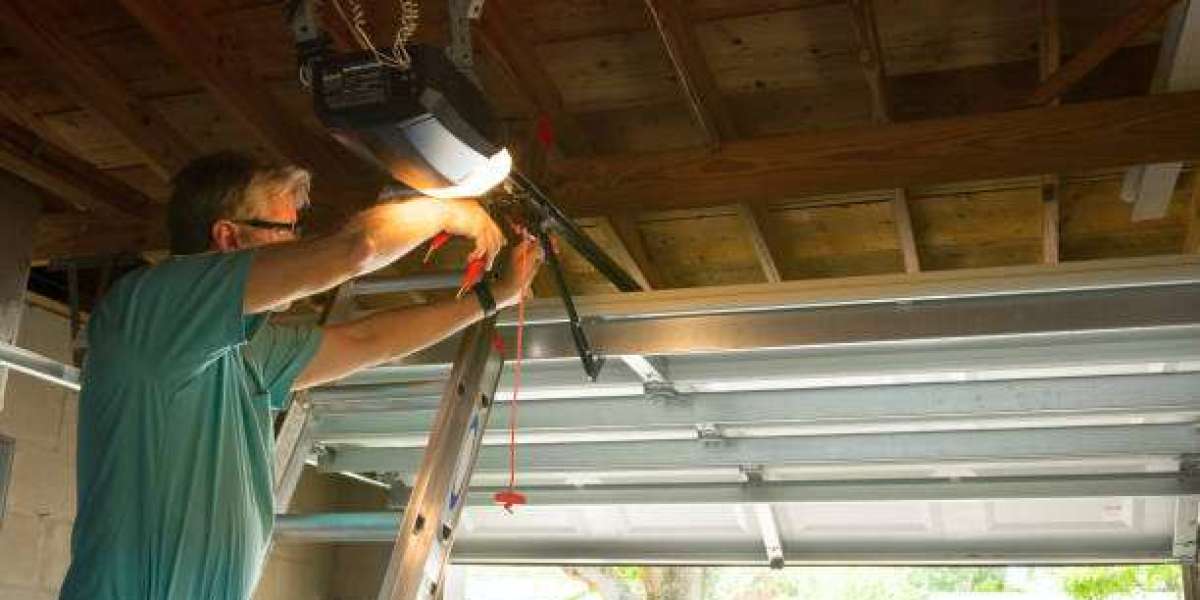
The crew shows up with the new door panels, hardware, tracks, and springs already staged. First thing they do is take out the old door. That means disconnecting the opener, releasing the spring tension (carefully, because those springs are under serious load), and pulling the panels off one section at a time. Old hardware gets removed too.
After that, the tracks get mounted. The vertical tracks on each side go up first, then the horizontal tracks that angle back toward the ceiling. Getting these level and properly spaced is where installers spend a good chunk of their time. It has to be right. Then the new panels go in from the bottom up, each section hinged to the next. Rollers get inserted into the tracks as they go.
Springs come last before the opener. Torsion springs sit on a bar above the door and do most of the heavy lifting. Getting the tension calibrated takes some experience. Once that's done, the opener gets mounted to the ceiling, the drive rail gets connected to the door bracket, and the whole system gets wired up. Then comes testing. The installer will run the door up and down several times, check the travel limits, and adjust the force settings on the opener.
How Long the Whole Thing Takes
For a standard single-car garage door, most installs run two to three hours. A double-wide door typically adds another hour or so. That's assuming no surprises. The things that stretch the timeline are usually structural issues discovered on the day, an old door that's been modified in weird ways, or an opener that fights back during removal.
If you're also getting a new opener installed at the same time as a new door, budget for the longer end of that range. Not because it's complicated, but because there's just more to do. Honestly, most homeowners are surprised by how fast it goes once the crew gets moving.
How to Prep Before the Crew Arrives
Clear the garage. Seriously. Move your car out the night before and leave it out. Pull bikes, lawn equipment, storage bins, and anything else away from the walls and ceiling on both sides. The crew needs room to work and room to move panels around. A cluttered garage slows everything down and creates a real risk of something getting damaged.
Your driveway needs to be clear too. The truck needs a place to park close to the door, and the panels need to be staged somewhere flat before they go up. Also make sure there's a working electrical outlet inside the garage if you're getting a new opener. If you're not sure, check before the day of. A missing outlet means a delay.
If you've been using Ollis Entry for this project, they'll usually walk you through a prep checklist when you confirm your appointment. That kind of heads-up keeps the day on schedule for everyone.
What to Check After Installation Is Done
Don't just close the garage and call it done. There are a few things worth checking before the crew leaves. Balance is the first one. Disconnect the opener by pulling the red emergency release cord, then manually lift the door to about waist height and let go. It should stay put. If it drops or shoots up, the spring tension needs adjustment.
Next, test the auto-reverse. Put a two-by-four flat on the ground in the door's path and close it. The door should reverse when it hits the board. If it doesn't, that's a safety issue and it needs to be fixed right then. Most modern openers also have a photo-eye sensor near the floor on each side. Wave your hand through the beam while the door is closing and confirm it reverses. Both features are required by federal safety standards for good reason.
Check the weatherstripping too. Run your hand along the bottom seal and both sides when the door is closed. You shouldn't feel a draft or see daylight. If the seal isn't sitting flush, the installer can adjust it before they pack up. Garage Door Installation in Pottstown PA done right means all of this gets checked as a standard part of the job, not as an afterthought.
One last thing. Get familiar with the manual release before the crew leaves. Power outages happen. Knowing how to open your door by hand is worth two minutes of your time.
Frequently Asked Questions
Do I need to be home the whole time during installation?
You don't have to stand there watching, but you should be reachable and available to do a walkthrough at the end. The installer will go over everything with you when they're done, and you'll want to be there to ask questions and sign off on the work. Plan to be home for the duration, even if you're just working inside.
Can the installers work in cold or rainy weather?
Usually yes, as long as conditions aren't extreme. Rain doesn't stop most crews since the work is happening in or right in front of the garage. Extreme cold can affect spring tension and lubrication, so the installer may note that a follow-up adjustment could be needed once temperatures stabilize. Ask your company about their weather policy when you book.
What happens to my old garage door?
Most installation companies haul it away as part of the job. Confirm this when you book, because not every crew does it automatically. If they don't include removal, you'll need to arrange disposal yourself, which can be a hassle with metal panels and hardware.
Will my existing garage door opener work with the new door?
It might. If your opener is less than ten years old and in decent shape, there's a good chance it'll pair fine with a new door. But if it's older or showing signs of wear, replacing it at the same time makes sense since the labor is already being done. Your technician can give you a straight answer during the assessment.
How soon can I use the garage after installation?
Right away, in most cases. Once the installer has run through all the safety checks and you've done your own walkthrough, the door is ready to use. There's no curing time or waiting period like you'd have with paint or concrete. Garage Door Installation in Pottstown PA handled by an experienced crew means you're operational the same day.