
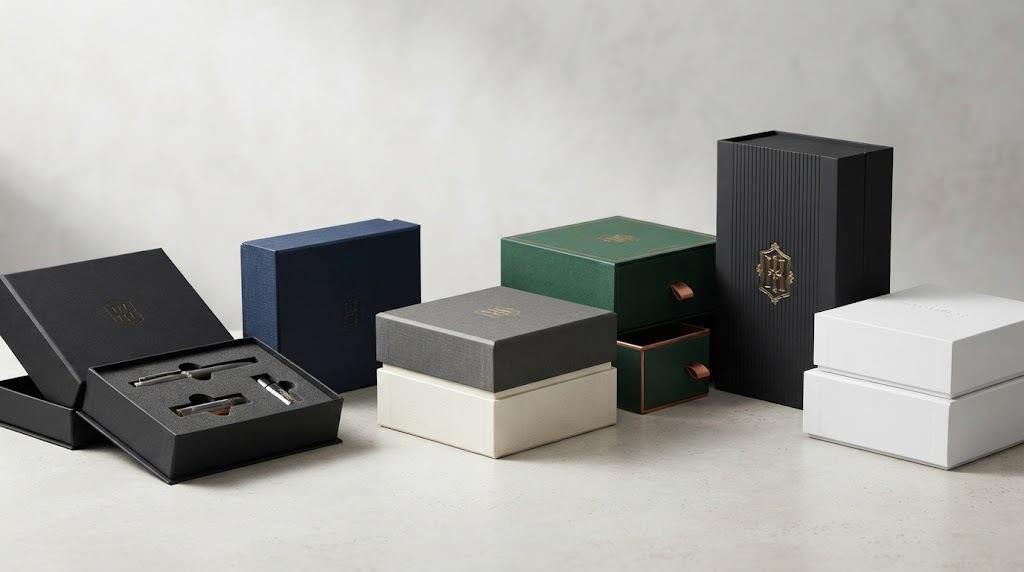

Choosing a custom rigid box manufacturer is an important decision for brands that want premium packaging, reliable product protection, and a better customer experience. Rigid packaging boxes are widely used for cosmetics, perfumes, jewelry, electronics, luxury gifts, apparel, and other high-value products because of their sturdy construction and refined appearance.
However, selecting the right manufacturer involves more than comparing prices. Businesses need to understand board thickness, box construction, dimensions, printing quality, finishing options, inserts, production timelines, minimum order quantities, and shipping costs.
This guide explains the key factors to consider when sourcing rigid packaging in 2026, helping businesses make informed decisions and avoid common manufacturing mistakes.
What Is a Custom Rigid Box Manufacturer?
A custom rigid box manufacturer produces premium packaging from thick paperboard, commonly called rigid board or chipboard. Unlike folding cartons, which are typically supplied flat and assembled during packing, rigid boxes are made with a strong board structure that retains its shape.
The board is usually wrapped with printed paper, specialty paper, textured stock, or other decorative materials. Manufacturers can customize the dimensions, opening mechanism, exterior appearance, interior lining, and protective inserts to suit a particular product.
A professional manufacturer may offer structural design, dieline development, digital mockups, sampling, printing, finishing, assembly, and bulk production under one process.
Why Do Brands Choose Custom Rigid Boxes?
Rigid packaging combines structural strength with a premium presentation. It is especially useful when the packaging contributes to the perceived value of the product.
-
Product protection: Thick paperboard provides a sturdy outer structure and helps protect products from everyday handling.
-
Premium brand presentation: High-quality wrapping papers, foil stamping, embossing, and elegant structures create a luxury appearance.
-
Product organization: Custom inserts keep products, accessories, and promotional materials arranged inside the box.
-
Better unboxing experience: Magnetic closures, lift-off lids, and drawer-style designs can make opening the package feel more considered.
-
Brand differentiation: Custom dimensions, colors, textures, and printed artwork help products stand out in retail settings.
-
Reusable packaging: Durable boxes may be kept for storage or reuse, extending their usefulness beyond the initial purchase.
Rigid boxes are not automatically the best option for every product. They generally cost more and require more storage space than standard folding cartons. Lightweight products, high-volume shipments, and cost-sensitive applications may be better served by alternative packaging structures.
Types of Custom Rigid Boxes Manufacturers Offer
The right box style depends on product dimensions, how customers will open the package, and the level of presentation your brand wants to achieve.
1. Magnetic Closure Rigid Boxes
These boxes feature a hinged lid with a magnetic closure. They are popular for cosmetics, apparel, corporate gifts, electronics, and promotional gift sets. They offer a convenient opening experience and can be designed with custom inserts.
2. Two-Piece Rigid Boxes
Also known as lift-off lid boxes, these consist of a separate base and lid. They work well for jewelry, premium apparel, confectionery gifts, and retail presentation sets. Their simple structure suits many product categories.
3. Drawer-Style Rigid Boxes
A sliding tray fits inside an outer sleeve and is often opened using a ribbon or finger notch. This design is suitable for jewelry, accessories, small electronics, and premium gift products.
4. Hinged-Lid and Book-Style Boxes
These boxes open like a book, keeping the lid attached to the base. They are often used for product launches, branded kits, luxury cosmetics, and corporate presentations.
5. Shoulder-Neck Rigid Boxes
A raised inner shoulder sits between the lid and base, creating a distinctive layered appearance. These are commonly selected for premium gifts, perfumes, watches, and luxury accessories.
6. Custom Rigid Boxes with Inserts
These boxes contain fitted compartments made from materials such as foam, paperboard, molded pulp, or other suitable substrates. They are useful for fragile products, multiple-item gift sets, and products with accessories.
1. Choose the Right Rigid Board Thickness
Board thickness is one of the most important technical decisions because it affects rigidity, weight, appearance, cost, and the finished box's ability to support its contents.
Rigid board is commonly specified in millimeters or points. Actual specifications vary by manufacturer, board grade, and application.
|
Approximate board thickness |
Typical applications |
|
1.0–1.5 mm |
Small, lightweight presentation boxes |
|
1.5–2.0 mm |
Cosmetics, jewelry, and smaller gift boxes |
|
2.0–2.5 mm |
General premium retail and gift packaging |
|
2.5–3.0 mm or more |
Larger boxes or applications requiring a heavier structure |
These are starting ranges, not universal specifications. A larger box may need thicker board or internal reinforcement, while a small box may perform well with a thinner grade.
Ask your manufacturer to recommend board thickness based on the box dimensions, product weight, insert design, stacking requirements, and distribution conditions. Also clarify whether the quoted thickness refers to the rigid board alone or the complete wrapped construction.
2. Select Suitable Materials and Wrapping Paper
A rigid box normally consists of a structural core and an outer wrapping material. Some designs also include a separate interior lining.
Common structural and wrapping materials include:
-
Greyboard or chipboard: The primary rigid core, available in different thicknesses and grades.
-
White-lined board: Useful when a cleaner board surface is needed for certain construction or finishing requirements.
-
Coated art paper: A popular wrapping option for high-quality printed graphics and detailed brand artwork.
-
Uncoated paper: Offers a natural, understated finish and can be suitable for minimalist designs.
-
Textured and specialty papers: Add tactile qualities for premium gift, jewelry, and perfume packaging.
-
Kraft paper: Provides a natural appearance for selected brand identities, including understated or sustainability-focused designs.
The outer wrap should be compatible with the chosen printing and finishing processes. Very thick laminations, deep textures, or complex decorative effects may affect how the paper folds around edges and corners.
For brands prioritizing environmental impact, ask about recycled board content, responsibly sourced paper, recyclable components, and the compatibility of coatings, adhesives, magnets, and other accessories with local recycling systems. Avoid assuming that every rigid box is fully recyclable simply because it contains paperboard.
3. Get the Box Dimensions Right
Incorrect dimensions can cause products to fit too tightly, move around inside the package, or become difficult to remove. A manufacturer should confirm both the product dimensions and the finished box's internal measurements before production.
Measure the product's length, width, and height, including any caps, handles, attachments, or accessories that need to fit inside.
Consider these factors:
-
Internal dimensions: Must accommodate the product and its insert without excessive pressure.
-
External dimensions: Affect storage, shipping cartons, palletization, and shelf space.
-
Clearance: Provides sufficient room for the product and insert, accounting for manufacturing tolerances.
-
Lid depth: Must suit the box construction and intended opening experience.
-
Insert dimensions: Need to be calculated alongside the box rather than designed separately at the end.
For products with irregular shapes, request a physical sample or test fit before approving mass production. A manufacturer should also specify its dimensional tolerances so you know how much variation to expect between finished boxes.
4. Choose Printing Methods That Match Your Brand
Printing quality influences how colors, product information, logos, and graphics appear on the finished packaging. The appropriate method depends on the artwork, order quantity, wrapping paper, and budget.
|
Printing method |
Best suited for |
|
Offset printing |
Consistent, high-quality graphics on medium and large production runs |
|
Digital printing |
Shorter runs, prototypes, variable designs, and selected personalized projects |
|
Screen printing |
Certain specialty applications requiring opaque ink or specific effects |
|
Foil stamping |
Metallic or specialty foil logos and decorative elements |
Offset and digital printing are common choices for printed wrapping paper, while foil stamping is typically a separate finishing process. Not every printing method works equally well on every specialty paper.
Before approving production, discuss color consistency, artwork resolution, bleed, safe areas, and the placement of graphics around folds and corners. If exact brand colors are important, request a color proof or production-equivalent sample. Screen colors and standard digital mockups do not always represent the final printed result accurately.
5. Select the Right Finishing Options
Finishes can improve the visual appeal and tactile quality of rigid packaging, but each option adds cost and may affect production time.
Matte lamination
Creates a smooth, low-gloss surface suited to minimalist and premium packaging.
Gloss lamination
Adds shine and can make printed colors appear more vivid.
Foil stamping
Adds metallic or specialty foil details to logos, borders, and decorative elements.
Embossing and debossing
Create raised or recessed details for a tactile, distinctive brand mark.
Soft-touch coating
Gives the surface a smooth, velvety feel when the chosen paper and coating are compatible.
Spot UV
Applies a localized glossy effect to selected artwork against a contrasting surface.
You do not need every finish on one box. A well-planned combination, such as matte lamination with a foil-stamped logo, can deliver a premium result without unnecessary complexity.
6. Consider Custom Inserts and Interior Design
The inside of a rigid box is just as important as its exterior when the product needs to stay secure, remain organized, or be presented attractively.
The best insert depends on product weight, shape, fragility, presentation requirements, and the conditions the package will encounter during handling.
-
Foam inserts: Provide a fitted cavity for delicate products, electronics, glass containers, and precision accessories. Select a suitable foam type and density.
-
Paperboard inserts: Offer lightweight compartments for cosmetics, gift sets, and products with multiple components.
-
Molded pulp inserts: Can be useful when a fiber-based protective structure is appropriate.
-
Fabric or velvet-covered inserts: Add a premium interior for jewelry, watches, and luxury accessories.
-
Cardboard dividers: Separate multiple items and help prevent them from colliding.
Make sure the insert holds the product securely without putting excessive pressure on fragile surfaces or components. For heavier or breakable products, conduct appropriate transit testing rather than relying solely on the box's appearance.
Interior details can also include ribbon pulls, printed messages, product instructions, brand stories, and accessory compartments. These elements should enhance usability instead of making the box unnecessarily difficult to open.
7. Evaluate the Manufacturer's Customization Capabilities
Not every supplier offers the same level of design and production flexibility. Before choosing a custom rigid box manufacturer, determine whether it can produce your required structure, size, artwork, insert, and finishing combination.
A capable supplier should be able to discuss:
-
Custom dimensions and structural development.
-
Box styles, opening mechanisms, and lid configurations.
-
Printing and decorative finishing options.
-
Insert design and material compatibility.
-
Prototype development and sampling.
-
Packaging assembly and quality control.
-
Bulk production and repeat-order consistency.
Ask whether design support, dieline preparation, and 3D mockups are included in the quotation or charged separately. A digital mockup is useful for evaluating the overall concept, but it does not replace a physical sample when fit, texture, color, and structural performance matter.
8. Request a Prototype Before Bulk Production
A sample is one of the most effective ways to identify errors before they affect an entire production run.
A good sample review should cover:
-
Dimensions and fit: Confirm the product fits properly and can be removed comfortably.
-
Structure: Check whether the lid closes correctly, corners are neat, and panels remain aligned.
-
Printing: Review color accuracy, logo placement, text readability, and image quality.
-
Finishing: Check for wrinkles, scratches, bubbles, uneven foil, or poorly aligned decorative effects.
-
Insert performance: Confirm the product remains stable and accessories stay in place.
-
Opening experience: Test the closure, lid movement, drawer, ribbon, or other opening feature.
There may be differences between a handmade prototype and a production-line sample. If the packaging is a major part of the customer experience, request a sample made with production-intended materials and processes.
Approve the final sample and artwork in writing. Keep the approved reference for comparison during future production runs.
9. Understand Minimum Order Quantities and Production Capacity
Minimum order quantity (MOQ) affects how much you must invest before receiving your packaging. Rigid boxes can require several manufacturing and assembly steps, so unit economics often improve at higher volumes.
A manufacturer may offer different pricing tiers based on order quantity. However, there is no universal MOQ for custom rigid boxes; it depends on the box design, materials, finishing, production setup, and supplier.
|
Business requirement |
What to discuss with the manufacturer |
|
Small startup order |
Availability of short runs, sample charges, and setup costs |
|
Growing brand |
Price breaks and the ability to reorder the same specification |
|
Large wholesale order |
Production capacity, quality controls, and delivery scheduling |
|
Multiple product variants |
Separate setup charges and the feasibility of combining production |
|
Seasonal packaging |
Advance booking, storage, and repeat-order lead times |
Do not choose a supplier solely because it advertises a low MOQ. Confirm the unit price, sample costs, tooling or setup charges, and whether the same quality can be maintained if you reorder later.
10. Compare the Total Cost, Not Just the Unit Price
The cheapest quotation may not be the most economical choice once all production and delivery costs are included.
The total price of custom rigid packaging may depend on:
-
Box dimensions and board thickness.
-
Type and quality of wrapping paper.
-
Printing method and number of printed colors.
-
Decorative finishes and specialty materials.
-
Inserts, ribbons, magnets, and other accessories.
-
Order quantity and production setup.
-
Sampling, tooling, and design fees.
-
Assembly, packaging, and quality inspection.
-
Shipping, duties, taxes, and storage where applicable.
For example, a rigid box with a magnetic lid, foam insert, foil-stamped logo, and soft-touch coating will generally cost more than a simpler two-piece box with standard wrapping paper. Whether the extra investment is worthwhile depends on the product's price point, brand positioning, and customer expectations.
When comparing quotations, make sure every supplier is pricing the same dimensions, materials, finishes, quantities, and delivery terms.
11. Confirm Production Time and Delivery Arrangements
Production schedules vary depending on order volume, material availability, sample approval, finishing complexity, and the manufacturer's workload. Do not assume that all custom rigid boxes can be manufactured within the same number of days.
Ask the supplier to separate the estimated timeline into the following stages:
-
Design and artwork approval.
-
Sample production and revisions.
-
Material sourcing and printing.
-
Rigid box construction and wrapping.
-
Finishing, insert installation, and assembly.
-
Final inspection and dispatch.
-
Shipping and delivery.
Clarify when the production clock starts. Some suppliers count from deposit payment, while others start only after final artwork and sample approval.
For international orders, also account for customs clearance, transport delays, and local delivery. If the boxes are needed for a product launch or holiday campaign, place the order early enough to allow for corrections or unexpected delays.
12. Check Quality Control and Manufacturing Standards
Consistent quality is particularly important for premium packaging because small imperfections can be highly visible.
A reliable manufacturer should explain how it checks raw materials, printing, dimensions, assembly, and finished products. Depending on the order, inspection may involve measuring samples, examining box corners, testing closure alignment, checking the finish, and verifying the order quantity.
Ask these questions before placing a large order:
-
Does the manufacturer use documented quality-control procedures?
-
Are dimensional tolerances agreed upon before production?
-
How are printing and finishing defects handled?
-
Can the supplier provide a pre-shipment inspection or inspection report?
-
What is the process for reporting defective or damaged boxes?
-
Are replacement, credit, or rework terms included in the agreement?
If the packaging must meet specific industry or retailer requirements, identify those requirements before production. A general packaging supplier should not be assumed to provide certified food-contact, pharmaceutical, or other regulated packaging unless the relevant specifications and evidence are confirmed.
13. Consider Sustainability and Material Choices
Sustainability is an increasingly important consideration for brands evaluating packaging. Rigid boxes use paperboard, but their overall environmental impact depends on the materials, coatings, adhesives, accessories, manufacturing processes, shipping distance, and whether customers reuse or recycle the packaging.
To make a more informed decision, ask your manufacturer about:
-
Recycled-content rigid board and responsibly sourced paper.
-
Paper wraps and coatings compatible with local recycling facilities.
-
Reducing unnecessary layers, decorative components, and oversized dimensions.
-
Replacing plastic inserts with suitable paperboard or molded fiber alternatives.
-
Minimizing packaging waste during manufacturing.
-
Material documentation and any environmental certifications being claimed.
A recyclable material claim should be based on the complete packaging construction and the recycling infrastructure available to the intended market. Magnets, foam, laminated wraps, fabric, and mixed-material components can complicate recycling.
The goal is to balance environmental considerations with product protection and the required presentation quality.
14. Choose Packaging According to Your Industry
Different products have different requirements, so a good manufacturer should understand the intended application rather than offering the same design for every customer.
Cosmetics and perfumes
Use fitted inserts, premium paper wraps, elegant finishes, and suitable clearance for bottles and jars. Glass packaging may require additional protection during shipping.
Jewelry and watches
Consider small, rigid structures with secure closures, velvet or fabric-covered inserts, and carefully positioned branding.
Electronics and accessories
Prioritize protective inserts, cable compartments, product stability, and testing suited to the expected shipping conditions.
Corporate gifts and promotional kits
Magnetic closures, custom compartments, printed messages, and coordinated branding help organize several products in one presentation box.
Apparel and luxury retail
Two-piece or magnetic rigid boxes can provide an elevated presentation for clothing, accessories, and limited-edition collections.
For food, medical products, or other regulated applications, verify material suitability, applicable safety requirements, and any necessary documentation. Standard decorative rigid board should not automatically be treated as suitable for direct food contact or sterile applications.
15. Understand Shipping, Storage, and Logistics
Rigid boxes are sturdy, but their construction can make them bulkier to transport and store than folding cartons. This is an important factor for businesses ordering in wholesale quantities.
Before placing the order, ask whether the boxes will arrive fully assembled or in another configuration. Most conventional rigid boxes are supplied in their formed shape, so they can require substantial warehouse space.
Review these logistics considerations:
-
Shipping carton dimensions: Confirm how many finished boxes fit into each master carton.
-
Protection during transit: Ask how the supplier prevents scuffs, crushed corners, and surface damage.
-
Palletization: For larger orders, confirm pallet dimensions, stacking limits, and loading arrangements.
-
Storage conditions: Keep paper-based packaging dry and protected from excessive humidity.
-
Delivery terms: Clarify who pays freight, who handles import duties, and when responsibility for the goods transfers.
-
Reorder planning: Maintain enough stock to cover expected demand and manufacturing lead times.
For export orders, compare the delivered cost rather than just the factory price. A lower unit price can be offset by higher freight charges, additional protective packing, or longer delivery times.
How to Choose the Best Custom Rigid Box Manufacturer in 2026
Once you understand your packaging requirements, evaluate potential suppliers against a consistent set of criteria.
|
Evaluation factor |
What to look for |
|
Manufacturing experience |
Experience with your required box style and industry |
|
Design support |
Structural guidance, artwork preparation, and mockups |
|
Material options |
Suitable board thicknesses, wraps, and insert materials |
|
Printing and finishing |
Demonstrated ability to reproduce your required design |
|
Sampling process |
Clear sample costs, timelines, and approval procedures |
|
Pricing transparency |
Itemized costs, quantity breaks, and delivery charges |
|
Production capacity |
Ability to meet your required quantity and schedule |
|
Quality assurance |
Defined inspection criteria and defect-handling procedures |
|
Communication |
Prompt answers and clear production updates |
|
Shipping capabilities |
Reliable packing, logistics support, and delivery terms |
Request comparable quotations from at least two or three qualified suppliers when practical. Review physical samples, clarify specifications, and check references or independently verifiable customer feedback before committing to a large order.
A manufacturer that communicates limitations honestly and explains technical trade-offs may be a better long-term partner than one that simply promises the lowest price or fastest turnaround.
Common Mistakes to Avoid When Ordering Rigid Boxes
Even a well-designed box can create problems if key production details are overlooked.
-
Choosing board thickness by appearance alone: Match the board to the box size, contents, and handling requirements.
-
Using external dimensions for product fit: Confirm internal dimensions and insert clearance.
-
Approving only a digital mockup: Request a physical sample when fit, materials, or finish are critical.
-
Adding too many finishes: Extra decoration increases cost and may complicate production.
-
Ignoring storage requirements: Fully formed boxes can occupy substantial warehouse space.
-
Overlooking shipping protection: Premium surface finishes can be scratched or damaged during transit.
-
Failing to confirm specifications in writing: Record the approved dimensions, materials, finishes, quantities, tolerances, and delivery schedule.
-
Ordering too close to a launch date: Allow time for sampling, corrections, production, and transport.
-
Comparing prices without comparing scope: A quotation that excludes inserts, assembly, or shipping is not directly comparable to an all-inclusive offer.
Addressing these issues before production can reduce avoidable expenses and help ensure the finished packaging meets your expectations.
Conclusion
Choosing the right custom rigid box manufacturer in 2026 requires a balance of structural quality, visual presentation, customization, production capacity, pricing, and reliable delivery. The best supplier is one that understands your product requirements, recommends suitable materials, provides clear specifications, and maintains consistent quality throughout the production process.
Before committing to a wholesale order, compare complete quotations, review physical samples, and confirm every important specification in writing. For luxury products, gift sets, cosmetics, jewelry, electronics, and premium retail collections, a well-designed rigid box can strengthen brand presentation while providing a practical packaging solution USA.
Ultimately, the right manufacturer should deliver packaging that fits your product, reflects your brand, meets your budget, and performs reliably from production to the customer's hands.


