
Aviation Course After 12th: Admission Process and Requirements | Pilots Pathway
Choosing the right career after Class 12 is an important decision, especially for students who want to build a future in the aviation industry. Aviation offers several career paths, including becoming a commercial pilot, working in airport operations, learning aircraft-related subjects, and exploring other areas of the aviation sector. However, every course has different eligibility requirements, training methods, costs, and career opportunities. Understanding these options before making a decision can help students choose a course that matches their interests, education, and long-term goals. An Aviation Course After 12th can be a good starting point for students who want to enter this exciting field and develop the knowledge and skills needed for their chosen career.
At Pilots Pathway, students can explore pilot training options and learn about the different stages involved in preparing for an aviation career. Whether you want to become a commercial pilot or understand how professional flight training works, having the right information can help you plan your next steps with greater confidence. This guide explains the major aviation courses available after Class 12, the basic eligibility requirements, training options, fees, simulator practice, and important points to consider before selecting an aviation training institute in India.
What Is an Aviation Course After 12th?
An Aviation Course After 12th is a programme that prepares students for a particular role in the aviation industry. The course may focus on flying aircraft, understanding aviation theory, managing airport operations, providing ground services, or learning about other aviation-related activities. The right programme depends on the career a student wants to pursue, because becoming a pilot requires a different training path from working in airport management or ground operations.
Students who want to fly aircraft professionally generally need to follow the commercial pilot training pathway, which includes theoretical subjects, medical fitness requirements, practical flight training, examinations, and the applicable licensing process. Other students may prefer courses related to airport management, cabin crew preparation, aviation hospitality, or airline operations. Before applying, it is important to check the eligibility criteria, recognition of the qualification, course content, and career options associated with the programme. Choosing a course based only on its name or popularity may lead to confusion later, so students should first identify the type of aviation work they want to do.
Types of Aviation Courses Available After Class 12
There are several aviation education options for students who have completed their higher secondary education. Each option serves a different purpose, and students should understand the difference between professional pilot licensing and other aviation courses before making a decision.
1. Commercial Pilot Training
Commercial Pilot Course Fees is suitable for students who want to build a career flying aircraft for professional purposes. The training involves aviation theory, flight planning, navigation, meteorology, aircraft technical knowledge, aviation regulations, and practical flying. Students must also meet the applicable medical, examination, flying-hour, and licensing requirements established by the Directorate General of Civil Aviation (DGCA) in India.
This pathway requires careful planning because flight training can be a significant financial commitment. Students should research approved training organisations, understand the complete cost structure, and check the availability of aircraft and instructors before enrolling. It is also important to understand that completing a training course does not automatically guarantee an airline job. Employment depends on meeting the required qualifications, passing relevant assessments, and satisfying an airline's recruitment criteria.
2. Private Pilot License Training
A Private Pilot License (PPL) is designed for people who want to learn to fly primarily for private, non-commercial purposes, subject to the privileges and restrictions of the licence. It provides a foundation in aviation knowledge and practical flying skills. Students interested in recreational flying or developing their understanding of aircraft operations may consider this option.
A PPL should not be confused with the qualification needed to work as a commercial pilot. Students who intend to pursue a professional flying career should understand the licensing pathway required for commercial operations before choosing their first course. Comparing the training objectives and future opportunities of each licence can help students avoid spending money on a programme that does not match their intended career.
3. Cabin Crew and Aviation Hospitality Courses
Students who enjoy customer service, communication, teamwork, and working with people may consider cabin crew or aviation hospitality programmes. These courses may cover passenger safety, professional communication, grooming, customer handling, emergency procedures, and service standards. The exact course content and eligibility requirements depend on the institute and the intended role.
These programmes offer a different route into aviation from pilot training. Students should check whether the course provides practical preparation, whether the qualification is recognised by relevant employers, and what additional requirements airlines may apply during recruitment. A well-informed choice allows students to focus on a career that suits their abilities rather than choosing a programme simply because it is associated with airlines.
4. Airport Management and Ground Operations
Airport management and ground operations courses introduce students to the activities that keep airports functioning efficiently. Depending on the programme, subjects may include passenger handling, baggage procedures, airport safety, airline operations, customer support, and basic aviation management. These roles can suit students who want to work in aviation without pursuing a pilot licence.
Before joining an institute, students should review the curriculum, practical learning opportunities, placement support, and employer expectations. They should also distinguish between a private training certificate and a formal qualification with specific recognition. Understanding these details helps students evaluate the actual value of a course.
Eligibility for Pilot Training After 12th in India
Students planning to become commercial pilots should check the educational and medical requirements before paying any admission fees. Under the applicable Indian licensing requirements, candidates seeking a Commercial Pilot Licence generally need to be at least 18 years old for licence issuance, have passed Class 12 or an equivalent examination with Physics and Mathematics, and meet the required medical fitness standards. They must also complete the required theoretical examinations and practical flying experience. Students should confirm the latest requirements with the DGCA before starting the process.
Students who have completed Class 12 without Physics or Mathematics should not assume that the pilot career path is closed to them. They can investigate the recognised options for completing the required subjects and then verify their eligibility with the relevant authorities. Medical fitness is another important consideration, so it is sensible to understand the applicable examination process early. Pilots Pathway can help students understand the different stages of pilot preparation and make a more informed training plan.
How to Choose the Right Pilot Training Academy in India
Selecting the right institute is one of the most important steps for students who want to become pilots. A good training decision should be based on approval status, teaching quality, practical facilities, instructor experience, safety practices, and transparent fees rather than advertisements alone. Students should also check whether the institute provides the specific training they need or offers only ground classes and preparation support.
When comparing a Pilot Training Academy In India, first identify whether you need theoretical coaching, practical flight training, simulator sessions, or a combination of these services. A coaching institute that teaches aviation subjects is not automatically authorised to provide practical flight training for a pilot licence. For the actual flying experience required for pilot licensing, students should verify the relevant flying training organisation's current DGCA approval. The Ministry of Civil Aviation publishes information about approved flying training organisations and their operating bases.
Students should request a written fee breakdown and ask what is included in the advertised package. They should also enquire about additional charges, aircraft availability, instructor access, training schedules, accommodation where applicable, and the process for handling delays. Speaking with current students or recent graduates may provide useful information about the institute's day-to-day training experience. Taking time to compare these details can help families make a more confident decision.
Understanding Commercial Pilot Course Fees
The cost of becoming a commercial pilot depends on several factors, including the training organisation, location, aircraft used, flying-hour requirements, training duration, and the services included in the programme. For this reason, students should avoid relying on a single advertised amount when planning their education budget. The total expense may include ground training, practical flying, examinations, medical assessments, licence-related charges, accommodation, travel, and other personal costs.
Commercial Pilot Course Fees can vary considerably between institutes, so students should compare complete written quotations instead of looking only at the initial admission amount. Some packages may include certain training services but exclude additional flying hours, repeat examinations, accommodation, or other expenses. These differences can make two programmes with similar advertised prices very different in their actual total cost.
What Are DGCA Approved Pilot Training Fees?
The phrase DGCA Approved Pilot Training Fees is often used by students searching for the cost of recognised pilot training in India. However, DGCA approval of a flying training organisation should not be confused with government-set course pricing. The Ministry of Civil Aviation has stated that the cost of commercial pilot training is determined by the individual flying training organisations rather than regulated by DGCA as a standard CPL fee.
Before paying an institute, ask for a clear explanation of the complete fee structure, payment schedule, refund conditions, and possible extra costs. Students should also check whether fees are linked to a fixed training package or the actual hours and services used. A realistic budget should include a contingency for unexpected expenses and possible training delays. This approach can reduce financial pressure and help students focus on their studies and practical development.
Why Flight Simulator Training Is Important
Modern pilot education uses different learning methods to help students understand aircraft operations, practise procedures, and improve decision-making. One useful training method is simulation, which allows learners to practise selected flying tasks in a controlled environment before or alongside practical flight lessons. Simulators can help students become familiar with cockpit instruments, checklists, navigation concepts, communication procedures, and responses to different training scenarios.
A Flight Simulator For Pilot Training can provide a structured way to practise procedures without requiring an aircraft to be used for every learning activity. Instructors can introduce different situations, observe student performance, and explain where improvements are needed. This gives students opportunities to build confidence and develop a more organised approach to learning. The exact benefits depend on the simulator's capabilities, the quality of instruction, and how the sessions fit into the wider training programme.
What Is Pilot Simulator Training?
Pilot Simulator Training is a learning process in which students practise selected aviation tasks using a simulated cockpit or flight environment. Depending on the equipment and course, sessions may cover instrument familiarisation, flight planning exercises, navigation, radio communication, cockpit coordination, and standard operating procedures. The instructor can pause a session, explain an error, and allow the student to repeat a task until the process becomes clearer.
Simulator practice is valuable because it allows learners to concentrate on specific skills in a controlled setting. However, simulator sessions do not automatically replace the practical flying hours or other requirements needed for a pilot licence. Students should confirm which simulator activities form part of their course and whether they count towards any formal training requirement. A strong training programme explains how classroom learning, simulator practice, and actual flight lessons work together.
Courses and Training Support at Pilots Pathway
Students often need support with more than one part of their aviation preparation. Some may need help understanding theoretical subjects, while others want to learn how Flight Simulator Training In Bengaluru works or prepare for future flight training. A structured learning plan can help students understand what they need to study, which examinations they must prepare for, and how different stages fit into their long-term career goals.
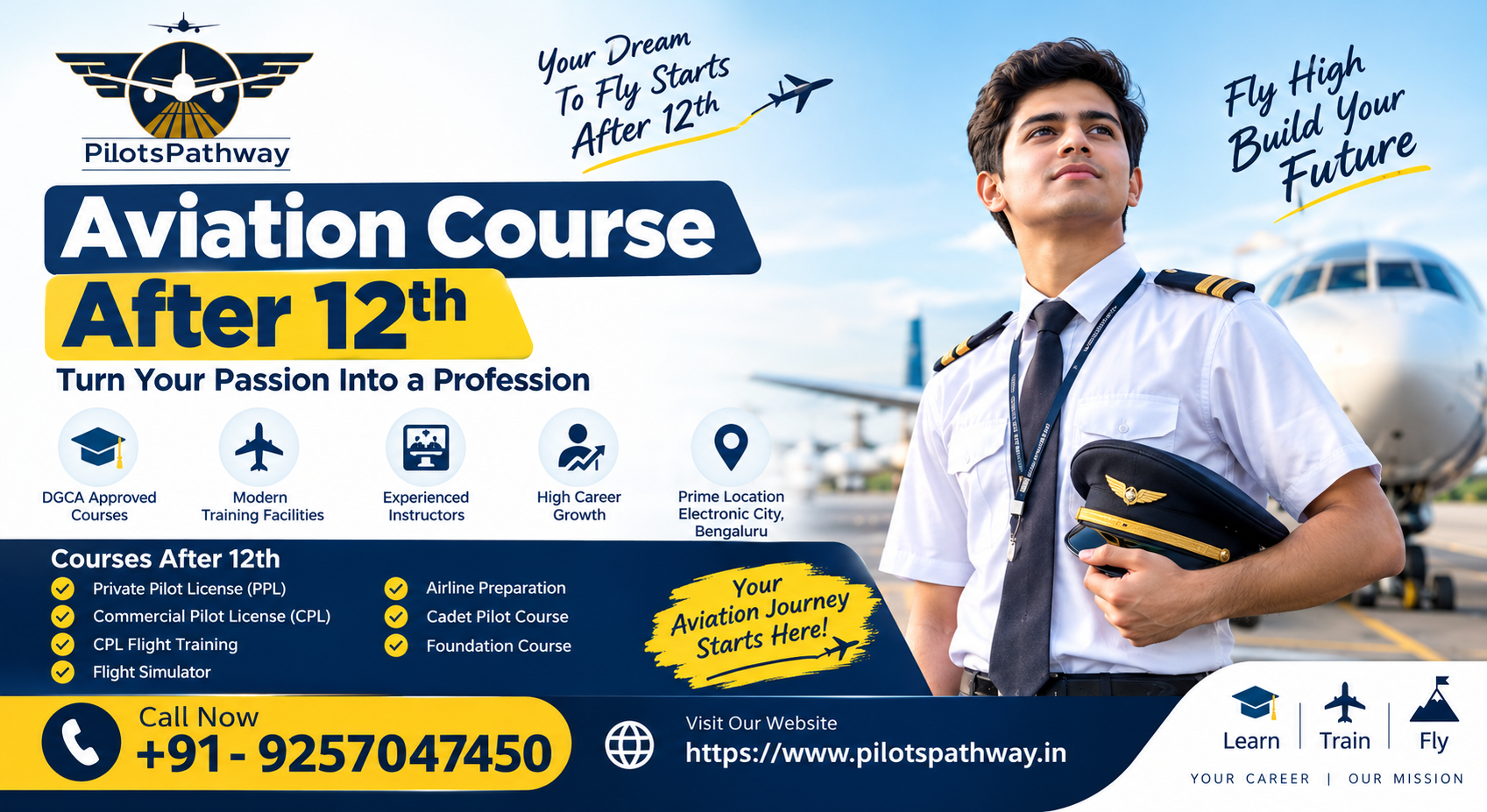
Pilots Pathway offers aviation learning options that include Private Pilot License (PPL) preparation, CPL Ground Training, CPL Flight Training, Flight Simulator, Airline Preparation, Cadet Pilot Course, Foundation Course, and DGCA ground classes. Students can explore the available programmes according to their educational background and career interests. Before enrolling, they should confirm the specific services, practical training arrangements, eligibility requirements, and course details applicable to their chosen programme.
Aviation education also requires regular practice and a willingness to learn from mistakes. Students should develop a habit of revising their subjects, asking questions when concepts are unclear, and following a planned study schedule. With suitable guidance and consistent effort, they can build a stronger understanding of aviation and prepare themselves for the demands of professional training.
How Long Does Pilot Training Take After 12th?
The duration of pilot training depends on the training pathway, the student's progress, examination schedules, aircraft availability, weather conditions, and the completion of required flying hours. Some students may progress through their training more quickly than others, while unexpected delays can extend the overall timeline. Therefore, students should be careful about institutes that promise a guaranteed licence within a fixed period without explaining the conditions involved.
Before joining a programme, ask for an estimated timeline covering ground classes, examinations, practical flying, and the remaining licensing requirements. It is also useful to understand how the institute manages delays and whether additional costs may arise if training takes longer than expected. A realistic schedule helps students and their families plan finances, accommodation, and future career decisions more effectively.
Career Opportunities After an Aviation Course
Career opportunities depend on the qualification a student completes, the skills they develop, and the requirements of the role they want to pursue. Students who follow the commercial pilot pathway may aim for airline pilot positions after meeting the required licensing, experience, assessment, and recruitment conditions. Other aviation courses can lead towards opportunities in airport operations, passenger services, ground handling, cabin crew recruitment, or aviation management, depending on the qualification and employer requirements.
Students should understand that an aviation course does not guarantee employment. Airlines and aviation employers may assess candidates through interviews, aptitude tests, technical evaluations, medical checks, and other selection procedures. Building communication skills, professional discipline, decision-making ability, and a strong understanding of safety can help students prepare for these expectations. Researching job requirements before choosing a course also helps students select a programme that supports their intended career.
Common Mistakes Students Should Avoid
One common mistake is choosing an institute only because it advertises low fees or promises quick career success. A low initial price may not include all the services needed to complete training, while an attractive placement claim may not reflect a guaranteed job. Students should carefully check the course structure, approval status where relevant, written fee details, and actual training facilities before making a payment.
Another mistake is confusing simulator practice or ground classes with the complete process of obtaining a pilot licence. Both can be valuable parts of learning, but students must understand the separate requirements for theoretical examinations, medical fitness, practical flying, and licensing. It is equally important to avoid making decisions based on social media claims without checking official information. Reviewing the latest DGCA requirements and asking clear questions before admission can help students avoid unnecessary expenses and misunderstandings.
How to Prepare for an Aviation Course After 12th
Students can begin preparing for aviation education by reviewing their academic background and deciding which career path interests them most. Those planning to become commercial pilots should pay particular attention to the required Physics and Mathematics qualifications, medical fitness, and the licensing process. They can also start building their English communication skills, numerical ability, concentration, and understanding of basic aviation concepts.
The next step is to compare suitable institutes and prepare a realistic budget. Students should collect information about admission requirements, training facilities, examination support, practical experience, and additional costs. They should also discuss the financial commitment with their families, especially if the chosen programme includes substantial flight training expenses. Keeping educational documents organised and checking official requirements before applying can make the admission process easier.
With the right preparation, students can approach aviation education with a clearer understanding of what lies ahead. Pilots Pathway can help learners explore suitable aviation training options and understand the learning stages involved in preparing for a pilot career.
Conclusion
Choosing an Aviation Course After 12th is an important step for students who want to explore opportunities in the aviation industry. The best course depends on individual interests, educational qualifications, career plans, and available budget. Students interested in flying professionally should understand the commercial pilot licensing pathway, check the relevant medical and academic requirements, and compare recognised training organisations carefully. Those interested in other aviation careers can explore airport operations, cabin crew preparation, and aviation management programmes.
Understanding Commercial Pilot Course Fees, the role of a Flight Simulator For Pilot Training, and the benefits of Pilot Simulator Training can help students make better decisions before joining an institute. It is equally important to verify the details of a Pilot Training Academy In India and understand that DGCA Approved Pilot Training Fees are not a standard price fixed by DGCA. Careful research, a realistic budget, and consistent learning can help students begin their aviation journey with confidence.
At Pilots Pathway, students can explore aviation courses and training support designed to help them understand the steps involved in their chosen career path. Start by identifying your goal, checking the requirements, and selecting a training programme that matches your plans. A well-informed decision today can provide a stronger foundation for your future in aviation.


