

What Is the Form 720 Filing Deadline for 2026?
Businesses that are required to report federal excise taxes must understand the Form 720 filing deadline to avoid unnecessary penalties and interest. Form 720, also known as the Quarterly Federal Excise Tax Return, is used by businesses to report and pay certain federal excise taxes to the Internal Revenue Service (IRS).
For 2026, Form 720 must generally be filed four times a year. Each return covers a specific three-month period, and the filing deadline falls on the last day of the month following the end of that quarter.
If the regular due date falls on a Saturday, Sunday, or legal holiday, the IRS allows businesses to file on the next business day.
Understanding the instructions form 720 requirements helps businesses prepare their returns correctly, calculate their tax liability, and submit the necessary information before the deadline.
Form 720 Filing Deadlines for 2026
The IRS follows a quarterly filing schedule for Form 720. Businesses should check the deadline for each reporting period and prepare their returns in advance.
Here are the Form 720 filing deadlines for the 2026 tax year:
| Tax Quarter | Reporting Period | Regular Due Date | Adjusted Filing Deadline |
|---|---|---|---|
| Q1 2026 | January – March | April 30, 2026 | April 30, 2026 |
| Q2 2026 | April – June | July 31, 2026 | July 31, 2026 |
| Q3 2026 | July – September | October 31, 2026 | November 2, 2026 |
| Q4 2026 | October – December | January 31, 2027 | February 1, 2027 |
Important: The third-quarter filing deadline was adjusted because October 31, 2026, falls on a Saturday. The fourth-quarter deadline is also adjusted because January 31, 2027, falls on a Sunday.
Businesses filing their Q3 2026 return should be aware that the adjusted deadline, November 2, 2026, has already passed. If you have not filed, consider submitting your return as soon as possible.
The Q4 2026 return must be filed by February 1, 2027.
What Is Form 720 and Why Is It Required?
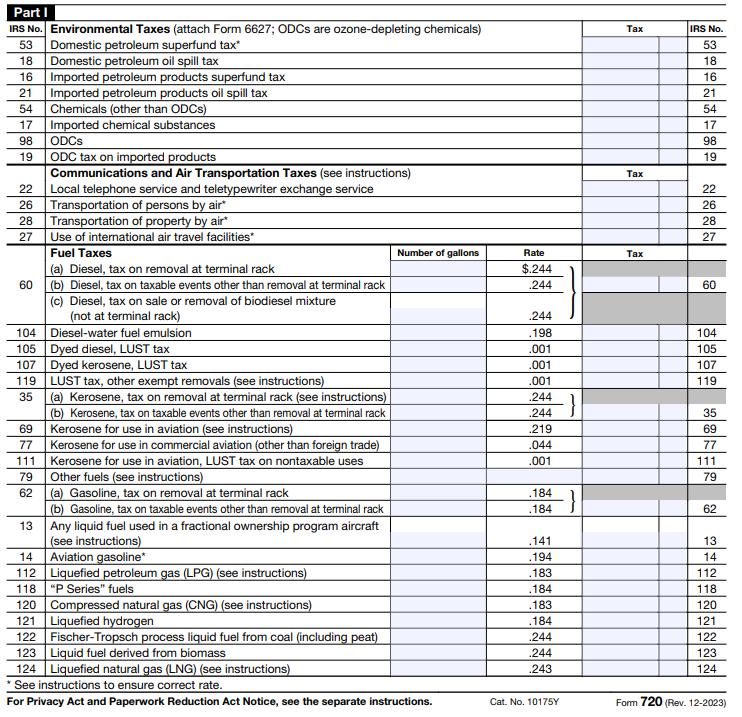
Form 720 is a federal tax return used to report various excise taxes collected or paid by businesses. These taxes apply to specific goods, services, and business activities rather than general business income.
Some common taxes reported through Form 720 include:
-
Fuel and certain transportation-related taxes
-
Communications and air transportation taxes
-
Environmental taxes
-
Certain manufacturers' excise taxes
-
Patient-Centered Outcomes Research (PCOR) fees
The exact tax requirements depend on the business activity and the applicable IRS rules.
Businesses should review the official Form 720 instructions to determine whether they are required to file for a particular quarter.
Who Needs to File Form 720?
Not every business is required to submit Form 720. The filing obligation depends on whether the business is liable for, or responsible for collecting, federal excise taxes listed in the form.
You may need to file Form 720 if your business:
-
Sells products subject to federal excise taxes
-
Provides services that require excise tax reporting
-
Collects certain federal excise taxes from customers
-
Is responsible for reporting applicable excise tax liabilities
-
Must report a tax or fee under the Form 720 filing rules
Some businesses may also have filing obligations even when they do not have a tax amount to report for a particular quarter. This depends on their previous filing status and whether they have submitted a final return.
Reviewing the instructions form 720 requirements before filing can help you understand your reporting responsibilities.
How to Prepare for the Form 720 Filing Deadline
Preparing your Form 720 return before the deadline can make the filing process easier and reduce the risk of errors.
Here are some practical steps businesses can follow.
1. Identify the Correct Reporting Quarter
First, determine which quarter you are filing for. Form 720 is generally based on the calendar year, with four reporting periods.
Make sure you select the correct quarter and enter the appropriate period-ending date.
2. Gather Your Business and Tax Information
Before preparing the return, collect the necessary information, including:
-
Business name and address
-
Employer Identification Number (EIN)
-
Applicable excise tax details
-
Taxable sales, services, or transactions
-
Supporting records and calculations
Having this information ready can help prevent delays during filing.
3. Calculate Your Excise Tax Liability
Review the applicable tax categories and calculate the amount your business owes.
Some excise taxes may require deposits during the quarter rather than payment only when the return is filed. Businesses should review the IRS deposit rules to determine whether they must make semimonthly deposits.
4. Review the Form 720 Instructions
The official IRS instructions explain how to complete the return, report different tax categories, and follow the applicable payment requirements.
Businesses should review the instructions carefully, especially when reporting multiple excise taxes or claiming eligible credits.
5. Submit the Return Before the Deadline
Once the return is prepared and reviewed, submit it before the applicable filing deadline.
Electronic filing can help businesses complete the process online without preparing and mailing a paper return.
What Happens If You Miss the Form 720 Filing Deadline?
Missing the Form 720 filing deadline can create additional financial and administrative problems for your business.
Depending on the circumstances, the IRS may impose penalties and interest for late filing, late payment, or failure to make required tax deposits.
The amount may depend on the tax liability, how late the return or payment is, and whether the business has a reasonable cause for the delay.
If you missed a deadline, do not ignore the return. Review your filing status, calculate the outstanding liability, and take steps to complete the required filing.
Filing as soon as possible can help you address the outstanding obligation and avoid further delays.
Can You File Form 720 Online?
Yes. Businesses can electronically file Form 720 through IRS-authorized excise tax e-file providers.
Online filing allows businesses to prepare and submit their quarterly federal excise tax returns electronically. It can also make it easier to review the information entered before submission.
With Simple720, businesses can file Form 720 online through a straightforward filing process.
The platform is designed to help users complete their federal excise tax filing requirements without making the process unnecessarily complicated.
Before submitting your return, make sure your business details, tax information, and reporting quarter are correct.
Frequently Asked Questions About Form 720
When is Form 720 due for the fourth quarter of 2026?
The fourth-quarter 2026 Form 720 return covers October, November, and December. The regular deadline is January 31, 2027. Since that date falls on a Sunday, the adjusted filing deadline is February 1, 2027.
Is Form 720 filed every month?
No. Form 720 is generally filed quarterly. However, certain businesses may have additional tax deposit requirements during the quarter.
Do I need to file Form 720 if I have no excise tax to report?
The filing requirement depends on your business's previous filing obligations and whether you have submitted a final return. Review the official IRS instructions to determine whether you must file for the quarter.
Where can I find the official instructions for Form 720?
You can find the latest instructions on the IRS website. The instructions explain filing requirements, tax categories, payment rules, and how to complete the return.
File Your 2026 Form 720 with Simple720
Keeping track of quarterly deadlines is an important part of managing federal excise tax responsibilities. Businesses should review their reporting periods, prepare the required information, and submit their returns on time.
If you are preparing your 2026 Form 720 return, make sure you understand the applicable deadline and follow the IRS filing requirements.
Simple720 provides an online filing solution to help businesses complete their Form 720 filing process efficiently.
Ready to file your federal excise tax return? Visit Simple720 to get started with your Form 720 online filing.


